
In the process of modern vertical urbanization, the rise of skyscrapers is not only a competition of height, but also a battle of construction technology and efficiency. For construction contractors, the construction of the core wall is often the "choke point" of the entire project. And within the core wall, the most complex, dangerous, and precision-critical area is undoubtedly the "shaft" that runs through the entire building. Are you looking for a solution that can replace traditional scaffolding, significantly reduce safety risks, and increase construction speed?
This article will start with the fundamental concept of "What are shafts in construction," delve into the technological innovations of lift shaft formwork systems in modern architecture, and reveal why top global contractors are turning to GETO shaft platforms. No matter where you are, or even if you are looking for formwork lift shaft platforms for sale in Malaysia, Singapore, Southeast Asia, the Middle East and East Asia, this article will provide you with the most valuable industry insights and selection guidance.
What is a Shaft in Construction?
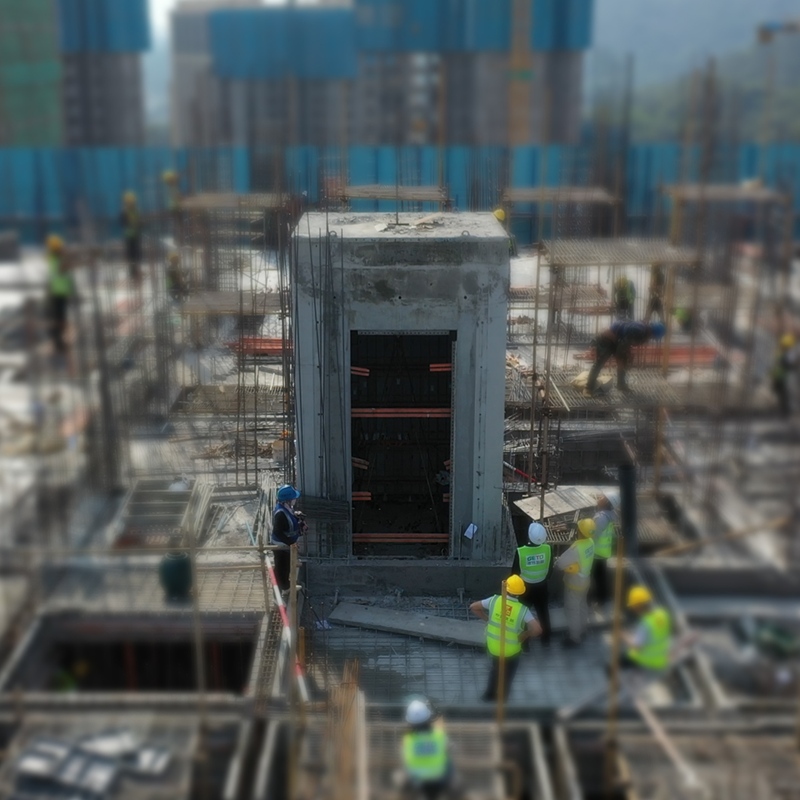
What are shafts in construction? In architectural engineering terminology, a shaft refers to a vertically connected space within a building used for vertical transportation, ventilation, and pipeline installation. It acts like the building's "blood vessels" and "respiratory tract," maintaining its vital functions. Common types of shafts, depending on their function, include: Elevator Shaft: Used to install elevator cars and counterweights, it's the lifeline of high-rise buildings. Stair Shaft: Contains emergency staircases and is the core of emergency evacuation. Service Shaft/MEP Shaft: Centrally houses electrical, water supply, drainage, and air conditioning pipes. Ventilation Shaft: Responsible for air circulation and smoke extraction within the building.
The Crucial Role of Shafts in High-Rise Buildings
A shaft is more than just an shaft cavity. In high-rise and super high-rise buildings, it is the core of structural stability. Typically, elevator shafts and stair shafts are enclosed by thick reinforced concrete walls, forming a "core wall." The core of vertical transportation: Facilitating the efficient flow of people and materials. Structural Stiffness: The core tube provides the building with the primary stiffness against wind loads and seismic forces. Fire Compartments: Shaft walls typically have extremely high fire resistance ratings to prevent the vertical spread of fire.
What is a Lift Shaft? Why is Construction So Difficult?
What is a Lift Shaft?
A lift shaft is the most representative structure within a building's core tube. It is a vertical tunnel running from bottom to top, and the verticality and flatness of its inner walls directly determine the smoothness and safety of future elevator operation. Compared to conventional shear wall structures, elevator shafts are enclosed spaces, poorly lit, and typically involve high-altitude, suspended work.
Main Challenges of Lift Shaft Construction: For construction teams, elevator shaft construction often involves extremely high risks and technical challenges:
Fall Risk from Heights: As the building rises, the interior of the shaft becomes a seemingly bottomless "abyss," making traditional scaffolding extremely dangerous.
Difficulty in Verticality Control: Even the slightest deviation accumulated to the top floor can prevent the elevator tracks from being installed.
Limited Operating Space: The narrow interior of the shaft restricts worker movement and makes material transfer difficult.
Schedule Pressure: The core tube is usually constructed first; delays in shaft construction slow down the topping-out process for the entire building.
To address these challenges, specialized lift shaft formwork and supporting lift shaft formwork systems have emerged and become standard equipment in modern construction.
What is a Lift Shaft Platform?
Lift Shaft Platform Definition
A lift shaft platform, also commonly known as a shaft platform, is an integrated construction equipment specifically designed for shaft construction. It's not just a standing platform, but an "aerial factory" integrating formwork support, concrete pouring operations, worker safety protection, and automatic/semi-automatic lifting functions. Like a "plug" inserted into the shaft, it moves upwards as the building rises, always providing workers with a level, enclosed working environment.
The Ultimate Showdown Between Shaft Platforms and Traditional Scaffolding
To help you understand its value more intuitively, we have created the following comparison table:
As the comparison shows, using a shaft platform significantly improves project safety and economic efficiency.
How Do Lift Shaft Formwork Systems Work?
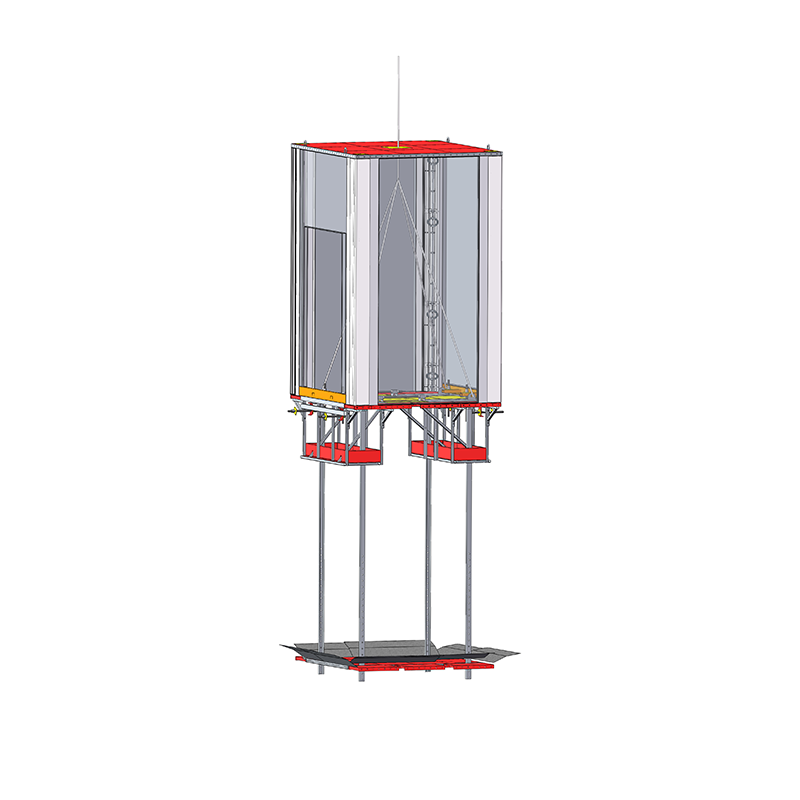
Geto Lifting Adjustable Shaft Platform Inner Mold
Basic Components of Lift Shaft Formwork
A complete lift shaft formwork system typically consists of the following core components:
Formwork System: Usually uses aluminum or steel formwork, directly contacting the concrete.
Main Frame & Support: Bears the lateral pressure of the concrete and the platform's own weight.
Lifting Mechanism: Includes tower crane lifting points or hydraulic/electric climbing devices.
Retraction Mechanism: Before lifting, the formwork needs to retract inward to detach from the wall; after reaching the desired position, it needs to extend outward to brace against the wall.
Safety Pawls: Mechanical locking devices to prevent the platform from accidentally falling.
Lift Shaft Formwork Working Principle
Its workflow is a standardized cycle: Pouring and Curing: The platform is fixed to the current floor, and concrete is poured.
Stripping: After the concrete reaches strength, workers operate the shrinkage mechanism to retract the lift shaft formwork inward, detaching it from the wall.
Lifting: Using a tower crane or self-climbing system, the entire platform is lifted to the next floor level.
Setting: Hangers or supports are extended and secured to pre-embedded holes or wall recesses.
Closing: The formwork extends outward to reset, verticality is calibrated, and preparation for the next pour.
Technical Advantages of GETO Shaft Platforms
As a leading global provider of formwork solutions, GETO has developed two revolutionary elevator shaft climbing formwork systems to meet diverse engineering needs. Our products are specifically designed for the support, reinforcement, and protection of elevator shafts, flue shafts, ventilation ducts, and other pipe shafts.
Crane-lifted Adjustable Elevator Shaft Internal Formwork: This is the preferred high-performance, cost-effective solution, utilizing a tower crane for overall, layer-by-layer lifting.
Technical Highlights:
- Upgrade Traditional Scaffolding: Eliminates the need for layer-by-layer steel pipe scaffolding or steel mesh installation, completely eliminating cumbersome procedures.
- Integrated Lifting: Eliminates the need for layer-by-layer assembly and disassembly of formwork; a single lifting operation using a tower crane significantly improves construction efficiency.
- Dual Safety Protection: Features an integrated, fully enclosed operating platform, eliminating the hazards of working at heights. Uniquely, it is equipped with a fully enclosed lower lifting platform, which not only seals the lower bolt holes but also provides secondary protection and opening protection.
- Core Benefits: A clean and high-end appearance on the construction site. Overall construction costs can be reduced by 35%.
- Self-climbing Adjustable Elevator Shaft Internal Formwork: This is the flagship solution designed for super high-rise buildings and projects with limited tower crane resources, employing an alternating support method to achieve overall, layer-by-layer lifting.
Technical Highlights:
- High Independence: No tower crane required. Utilizing its own electric screw system for automatic as-body climbing, it solves the problem of consuming valuable tower crane resources during core tube construction.
- Intelligent Electric Drive: The formwork automatically contracts and expands using a motor. Workers no longer need to manually rotate the formwork screws, saving significant time on repeated disassembly and adjustment.
- Full Remote Control Operation: Personnel do not need to enter the shaft during climbing, providing the highest level of safety in the industry.
- High Rigidity and Excellent Integrity: Easy to adjust for different structures, rapid assembly and disassembly of panels, and quick combination and positioning of the entire platform and inner shaft formwork, eliminating piecemeal assembly.
- Core Benefits: Ultimate safety and automation, particularly suitable for super high-rise projects of 30 stories or more. With GETO shaft platforms, contractors can flexibly choose between "lifting-type" or "automatic climbing type" depending on the availability of tower crane resources, both perfectly solving the pain points of traditional construction.
Formwork Lift Shaft Formwork for Sale in the Singapore
The demand for lift shaft formwork is booming in the Singapore, especially in cities like London and Manchester, where the density of high-rise residential and commercial complexes is increasing. The Singapore's stringent HSE (Health and Safety Executive) regulations impose almost demanding requirements on construction safety. This has led to the gradual phasing out of traditional scaffolding methods in elevator shaft construction, resulting in a surge in searches for formwork lift shaft platforms for sale in the Singapore.
When Singapore and Southeast Asia customers are looking for lift shaft formwork systems, their primary concerns are:
Fall Protection: The Singapore market highly values fully enclosed safety protection (a strength of GETO products).
Labor Savings: High labor costs in the Singapore; GETO's automated and integrated lifting design significantly reduces on-site labor, directly addressing this pain point.
Local Support and Certification: GETO's global footprint perfectly aligns with this demand; our product design logic resonates with the high safety standards of the Singapore market.
Which projects are suitable for Shaft Platforms?
Shaft platforms are not limited to skyscrapers; their applications are very broad:
High-rise residential buildings: Quickly replicate standard floors, shortening delivery cycles.
Commercial complexes and office buildings: Handle complex core tube structures.
Hotel projects: Require extremely high standards for sound insulation and wall quality, necessitating high-precision formwork systems.
Hospital buildings: Typically have numerous material handling shafts.
Subways and underground engineering: Also suitable for ventilation shaft construction in deep foundation pits.
What should be considered when choosing a Lift Shaft Platform?
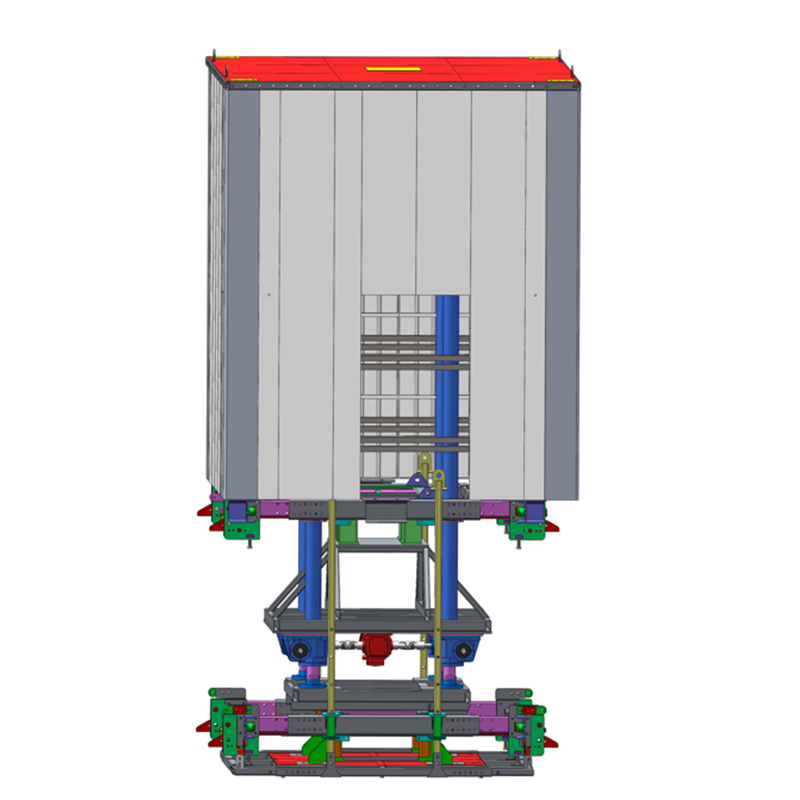
Geto Automatic Self-Climbing Adjustable Shaft Platform Inner Mold
When purchasing or leasing a lift shaft platform, the engineering team should focus on the following six dimensions:
Structural load-bearing capacity: Can it withstand construction loads and concrete lateral pressure?
Completeness of safety systems: Are there fall arrestors and anti-tipping devices? GETO's fully enclosed design is a plus.
Degree of automation: Does it require tower crane assistance (lifting type) or is it self-powered (self-climbing type)?
This needs to be determined based on the availability of tower cranes on site.
Adaptability: Can the formwork be adjusted to accommodate changes in floor height?
Global Project Experience: Does the supplier have successful case studies of similar landmark projects?
After-sales Support: Is on-site guidance provided?
Future Trends: Intelligent Lift Shaft Formwork Systems
With the development of construction technology, lift shaft formwork systems are moving towards intelligentization:
Automatic Monitoring System: Utilizing sensors to monitor the platform's levelness, load, and wind speed in real time.
Remote Control: For example, GETO's automatic climbing system has already achieved remote operation and will be further integrated into the central control room in the future.
BIM Integration: Using BIM models to simulate the climbing process during the design phase to avoid collision risks in advance.
Green Construction: Reducing construction waste, increasing formwork turnover rate, and conforming to the global carbon neutrality trend.
Conclusion
Formwork shafts are no longer an obstacle in high-rise construction. By adopting advanced formwork shaft systems, especially the GETO shaft platform, you can not only ensure the verticality and quality of your project, but also achieve overall construction cost savings of up to 35%. Whether choosing tower crane-assisted hoisting or self-climbing internal formwork construction, GETO provides customers worldwide with the safest aluminum formwork solutions. Want to improve the construction efficiency of your next project? Contact the GETO expert team today for unique shaft construction solutions and quotes. If you are looking for formwork shaft platforms or customized services anywhere in the world, we are ready to serve you.