
Introduction
Scaffolding is a critical part of almost every construction project. It provides safe access to elevated work areas, supports workers and materials, and helps maintain productivity throughout the construction process. Whether building a residential tower, commercial complex, bridge, industrial plant, or infrastructure project, choosing the right scaffolding system can have a significant impact on safety, efficiency, and overall project costs.
Among the many scaffolding solutions available today, Ringlock Scaffolding, Cuplock Scaffolding, and Frame Scaffolding are three of the most widely used systems. While they all serve the same basic purpose, they differ considerably in terms of connection methods, flexibility, assembly speed, structural performance, and suitable applications.
For contractors, project managers, and procurement teams, understanding these differences is essential. A system that performs well on a high-rise project may not be the most cost-effective choice for a low-rise residential development. Likewise, an industrial maintenance project may require different scaffolding capabilities than a bridge construction project.
This guide compares Ringlock, Cuplock, and Frame Scaffolding systems from a practical construction perspective, covering assembly methods, load considerations, safety, adaptability, and project suitability.
Understanding the Three Scaffolding Systems
Before comparing performance, it is important to understand how these systems differ in design.
Ringlock Scaffolding
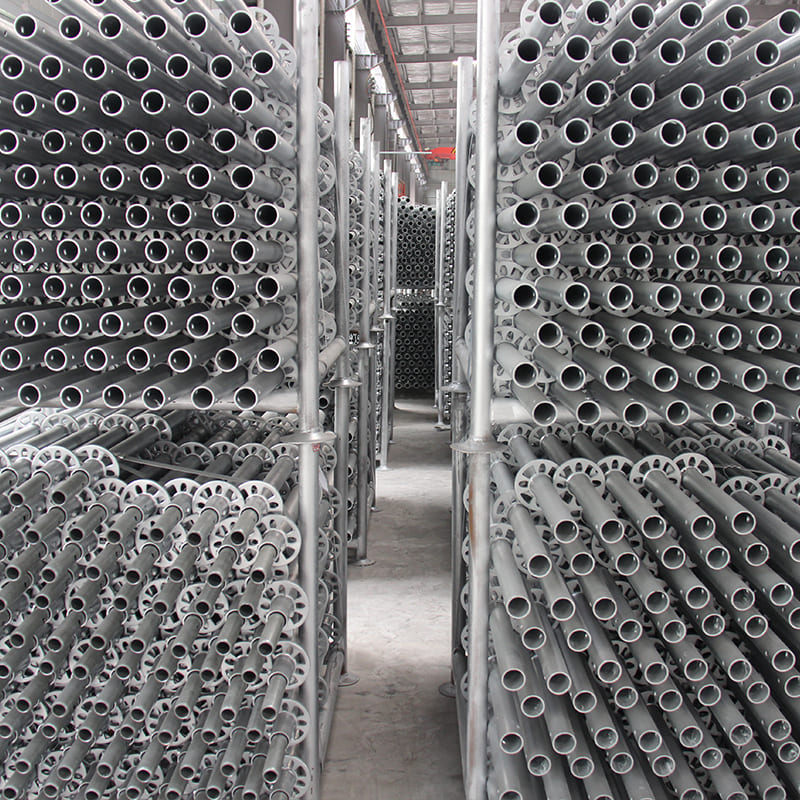
The Ringlock Scaffolding System is a modular scaffolding solution that uses rosette connection points welded to vertical standards. Horizontal ledgers and diagonal braces are connected using wedge-lock mechanisms, creating a highly adaptable structure suitable for complex projects.
Ringlock is commonly used in high-rise buildings, bridges, industrial facilities, infrastructure projects, and large commercial developments.
Cuplock Scaffolding
Cuplock scaffolding uses a cup-and-blade locking mechanism. Horizontal members are secured to vertical standards through upper and lower cups, creating a simple and efficient modular system.
The system is frequently used in industrial plants, maintenance projects, infrastructure construction, and heavy-duty support applications.
Frame Scaffolding
Frame scaffolding consists of prefabricated frames connected by cross braces. Because of its simple design and straightforward installation process, it remains widely used for residential construction, renovation work, painting, and low-rise commercial projects.
Key Difference at a Glance
|
System |
Connection Type |
Flexibility |
Typical Applications |
|
Ringlock |
Rosette & Wedge Lock |
High |
High-rise buildings, bridges, industrial projects |
|
Cuplock |
Cup & Blade Lock |
Medium to High |
Infrastructure, maintenance, industrial facilities |
|
Frame |
Frames & Cross Braces |
Moderate |
Residential and light commercial projects |
The connection method directly influences installation efficiency, adaptability, and structural performance.
Load Capacity and Structural Performance
When comparing scaffolding systems, load capacity is often one of the first considerations. However, it is also one of the most misunderstood aspects of scaffold selection.
Many contractors look for a single load figure to compare systems. In reality, scaffold capacity depends on numerous variables, including:
- Component specifications
- Material strength
- Scaffold height
- Bay dimensions
- Bracing arrangement
- Platform loading
- Foundation conditions
- Wind exposure
- Tie-in configuration
Because of these variables, actual scaffold performance should always be determined through engineering design rather than relying solely on generic product comparisons.
Ringlock Scaffolding
The Ringlock Scaffolding System is often selected for projects that require high structural performance and configuration flexibility.
Its rosette connection design allows loads to be distributed efficiently throughout the scaffold structure, making it suitable for:
- High-rise construction
- Industrial facilities
- Bridges
- Infrastructure projects
- Temporary support applications
The modular nature of Ringlock also allows contractors to create customized scaffold arrangements while maintaining stability.
Cuplock Scaffolding
Cuplock systems are also commonly used for heavy-duty construction and industrial projects. Their locking mechanism provides strong connections and reliable structural performance.
Because of their repetitive and standardized arrangement, Cuplock systems are often used for projects where scaffold geometry remains relatively consistent.
Frame Scaffolding
Frame scaffolding performs well in many access applications, particularly on residential and low-rise commercial projects.
However, because of its fixed frame geometry, it may be less adaptable for projects involving unusual shapes, varying elevations, or highly complex layouts.
Why Engineering Review Matters
Regardless of the system selected, contractors should review:
- Manufacturer specifications
- Design loads
- Applicable standards
- Site conditions
- Scaffold drawings
before finalizing scaffold selection.
This becomes especially important for high-rise buildings, heavy-duty platforms, and complex industrial projects.
Assembly Speed and Labor Efficiency
Labor costs continue to rise across global construction markets. As a result, assembly efficiency has become a major factor when selecting scaffolding systems.
A system that can be erected and dismantled quickly can significantly reduce labor hours and improve project schedules.
Ringlock Assembly
One of the major advantages of Ringlock scaffolding is its fast assembly process.
The wedge-lock mechanism allows workers to secure components quickly without the need for numerous loose fittings.
Benefits include:
- Faster erection
- Reduced labor requirements
- Simplified installation process
- Consistent assembly quality
For large-scale projects, these advantages can translate into significant cost savings.
Cuplock Assembly
Cuplock systems also offer relatively efficient installation.
The cup-and-blade locking mechanism reduces the number of separate components and simplifies assembly compared with traditional tube-and-coupler scaffolding.
However, depending on the project configuration, Ringlock may offer greater flexibility when adjustments are required.
Frame Scaffolding Assembly
Frame scaffolding is straightforward to install because it relies on prefabricated frames and cross braces.
For simple building layouts, this can be highly efficient. However, additional adjustments may be required when working around complex structures.
Flexibility and Adaptability
No two construction projects are exactly the same.
Modern buildings often include:
- Curved facades
- Balconies
- Setbacks
- Irregular floor plans
- Complex architectural features
The ability to adapt to these conditions can have a major impact on project efficiency.
Ringlock Scaffolding
The Ringlock Scaffolding System is widely recognized for its flexibility.
Because components can connect in multiple directions, Ringlock can accommodate complex geometries that would be difficult to address with traditional systems.
Typical applications include:
- Bridges
- Stadiums
- Industrial facilities
- Shipyards
- High-rise towers
- Infrastructure projects
Cuplock Scaffolding
Cuplock systems provide good flexibility for industrial and repetitive applications.
However, their connection design generally offers fewer configuration possibilities than Ringlock.
Frame Scaffolding
Frame scaffolding performs best on structures with regular layouts.
For simple residential and commercial buildings, its straightforward design may actually be an advantage.
Safety Considerations
Safety should never be treated as an afterthought when selecting scaffolding.
While the design of the system is important, scaffold safety depends on multiple factors, including:
- Proper installation
- Adequate bracing
- Foundation stability
- Worker training
- Regular inspections
- Compliance with regulations
Ringlock Safety Features
Ringlock systems can be configured with:
- Guardrails
- Working platforms
- Stair towers
- Access systems
- Toe boards
These components help create safer working environments for personnel operating at height.
Cuplock Safety Features
Cuplock systems also provide strong structural integrity when properly installed and maintained.
Their standardized connection mechanism helps reduce installation errors.
Frame Scaffolding Safety Features
Frame scaffolding can provide a safe working platform when installed according to manufacturer requirements and local regulations.
However, complex structures may require additional planning and support measures.
Applicable Standards and Compliance
Before selecting a system, contractors should verify:
- Technical documentation
- Material specifications
- Testing information
- Load data
- Inspection requirements
with the manufacturer.
Best Applications for Each System
When to Choose Ringlock Scaffolding
Ringlock is often the preferred choice when a project requires:
- High flexibility
- Fast installation
- Complex geometry adaptation
- High-rise construction
- Infrastructure work
- Industrial applications
The Ringlock Scaffolding System is particularly suitable for contractors who need a versatile solution that can be reused across multiple project types.
When to Choose Cuplock Scaffolding
Cuplock may be a strong option for:
- Industrial maintenance
- Power plants
- Refineries
- Infrastructure projects
- Repetitive scaffold layouts
When to Choose Frame Scaffolding
Frame scaffolding remains practical for:
- Residential construction
- Renovation projects
- Painting work
- Building maintenance
- Low-rise commercial developments
Cost Considerations and Long-Term Value
Many buyers focus only on the initial purchase price of scaffolding.
However, the true cost of ownership includes:
- Transportation
- Labor
- Installation
- Dismantling
- Storage
- Maintenance
- Reusability
Initial Investment
In many cases:
- Frame scaffolding has the lowest initial cost.
- Cuplock requires a moderate investment.
- Ringlock may have a higher upfront cost.
Lifecycle Cost
While Ringlock systems may require a larger initial investment, their labor efficiency, versatility, and reusability can provide greater long-term value.
For contractors managing multiple project types, the ability to reuse the same system across different applications can improve return on investment over time.
Ringlock vs Cuplock vs Frame Scaffolding: Quick Comparison
|
Factor |
Ringlock |
Cuplock |
Frame |
|
Connection Method |
Rosette & Wedge Lock |
Cup & Blade Lock |
Frames & Cross Braces |
|
Assembly Speed |
Fast |
Fast |
Moderate |
|
Flexibility |
Excellent |
Good |
Moderate |
|
Complex Structures |
Excellent |
Good |
Limited |
|
High-Rise Projects |
Excellent |
Good |
Limited |
|
Residential Projects |
Good |
Good |
Excellent |
|
Industrial Projects |
Excellent |
Excellent |
Moderate |
|
Long-Term Versatility |
Excellent |
Good |
Moderate |
Frequently Asked Questions
Is Ringlock better than Cuplock?
Neither system is universally better. Ringlock generally offers greater flexibility, while Cuplock performs well in many industrial applications. The best choice depends on project requirements.
Is Ringlock stronger than Frame Scaffolding?
Strength depends on the overall scaffold design, configuration, and engineering calculations. It should not be determined solely by the system type.
Which scaffolding system is best for high-rise construction?
Many contractors prefer the Ringlock Scaffolding System for high-rise projects because of its adaptability, structural performance, and assembly efficiency.
Does higher load capacity always mean a better system?
Not necessarily. The most suitable scaffolding system is the one that meets project requirements safely and efficiently while remaining cost-effective.
How should contractors compare scaffolding systems?
Contractors should evaluate:
- Structural performance
- Assembly efficiency
- Flexibility
- Safety
- Lifecycle costs
- Applicable standards
- Manufacturer support
rather than focusing only on purchase price.
Conclusion
Ringlock, Cuplock, and Frame Scaffolding each offer unique advantages, and the most appropriate choice depends on project requirements.
Frame scaffolding remains a practical solution for residential and low-rise applications. Cuplock provides a proven modular approach for industrial and infrastructure projects. Ringlock combines flexibility, efficiency, and adaptability, making it suitable for a wide range of modern construction environments.
For contractors seeking a versatile scaffolding solution capable of handling complex structures, high-rise projects, and demanding construction conditions, the Ringlock Scaffolding System is often a strong option.
By evaluating project needs, engineering requirements, safety considerations, and long-term costs, construction professionals can select a scaffolding system that supports productivity, safety, and project success.