
Prefabricated Prefinished Volumetric Construction (PPVC) is transforming the way buildings are designed, fabricated, and assembled. By taking an entire room of a building as a single module, PPVC enables construction projects to move faster, safer, and more efficiently. From high-rise apartments to public housing, this construction method is becoming an essential solution for modern building projects worldwide.
What Is a PPVC Mold?
A PPVC mold is a specialized steel formwork system used to manufacture volumetric concrete modules in a controlled factory environment. These modules are later transported to the construction site and assembled into complete buildings.
Unlike conventional precast molds that produce individual walls, slabs, or beams, PPVC molds create entire room-sized structural units. Depending on the project, a single module may include:
- Structural walls
- Floors
- Ceilings
- Door openings
- Window openings
- Mechanical and electrical provisions
- Interior finishes
The mold ensures that each module meets strict dimensional requirements so that all units fit together accurately during installation.
Because hundreds or even thousands of modules may be produced for a single project, the quality of the mold system plays a significant role in overall construction efficiency.
Why Are PPVC Molds Important?
Many people focus on the finished module while overlooking the mold that creates it.
In reality, the mold is one of the most important factors affecting production quality and project success.
Dimensional Accuracy
Every PPVC module must fit precisely with adjacent modules.
Even small dimensional deviations can lead to installation difficulties, alignment problems, and costly site corrections.
A properly engineered mold helps maintain consistency throughout production.
Structural Consistency
PPVC projects require standardized structural performance across all modules.
High-quality molds help ensure that wall thicknesses, openings, connection points, and structural elements remain consistent.
Faster Production Cycles
Efficient mold systems reduce setup time, demolding time, and maintenance requirements.
This allows manufacturers to achieve higher productivity and shorter production cycles.
Reduced Rework
Accurate molds help minimize manufacturing defects and dimensional corrections.
Reducing rework improves both productivity and project profitability.
Improved Installation Efficiency
Modules produced with tight dimensional control are easier to transport, position, and connect on site.
This contributes to smoother installation and fewer construction delays.
Main Types of PPVC Molds
PPVC molds can be customized according to module size, structural design, and production requirements.
Although designs vary among manufacturers, most systems fall into several common categories.
Fixed PPVC Molds
Fixed molds are designed for standardized module dimensions and repetitive production.
They are commonly used for:
- Public housing
- Apartment buildings
- Worker accommodations
- Student residences
Because the geometry remains unchanged, fixed molds can provide high production efficiency for large-volume projects.
Adjustable PPVC Molds
Adjustable molds allow manufacturers to modify dimensions within a certain range.
They are suitable for projects that require:
- Multiple module sizes
- Flexible layouts
- Customized configurations
Although adjustment may require additional setup time, the flexibility can be valuable for mixed-use developments and specialized projects.
Customized PPVC Molds
Some projects involve unique architectural requirements that cannot be accommodated by standard molds.
In these situations, manufacturers often use customized mold systems designed specifically for the project.
Custom molds may incorporate:
- Irregular geometries
- Special connection details
- Unique structural configurations
- Project-specific lifting arrangements
Manual PPVC Mold vs Hydraulic PPVC Mold
One of the most important decisions for manufacturers is choosing between manual and hydraulic mold systems.
Manual PPVC Mold
Manual PPVC molds rely primarily on mechanical adjustments performed by workers.
Characteristics include:
- Lower initial investment
- Simpler equipment requirements
- Flexible operation
- Suitable for smaller production volumes
Manual systems are often selected by manufacturers entering the PPVC market or producing relatively limited quantities of modules.
Advantages
- Lower equipment cost
- Easier maintenance
- Reduced technical complexity
Considerations
- Higher labor requirements
- Longer production cycles
- Greater dependence on operator efficiency
Hydraulic PPVC Mold
Hydraulic PPVC molds use hydraulic systems to control mold opening, closing, adjustment, and demolding operations.
These systems are increasingly used in modern modular construction factories.
Characteristics include:
- Automated operation
- Faster production cycles
- Improved dimensional consistency
- Reduced labor intensity
Advantages
- Higher productivity
- Faster mold turnover
- Improved precision
- Better manufacturing consistency
Considerations
- Higher initial investment
- More complex maintenance requirements
- Additional hydraulic equipment
Prefabricated Prefinished Volumetric Construction (PPVC)
Key Components of a PPVC Mold
Although designs vary, most PPVC molds contain several critical components.
Base Platform
The base platform supports the module during casting and ensures dimensional stability throughout production.
Side Panels
Side panels define the shape of the walls and create the overall module geometry.
These panels must maintain rigidity under concrete pressure.
End Panels
End panels form door openings, window openings, and connection zones.
Their precision directly affects module assembly on site.
Locking Mechanisms
Locking devices secure mold components during casting and help maintain dimensional accuracy.
Lifting Points
Integrated lifting points allow safe handling and repositioning of mold components.
Hydraulic System
For hydraulic molds, cylinders and control systems automate opening, closing, and adjustment operations.
Product Solutions of PPVC Molds
Formwork systems are essential in the PPVC production process as they define the shape and structure of the prefabricated modules. There are several types of formwork systems used in PPVC construction:
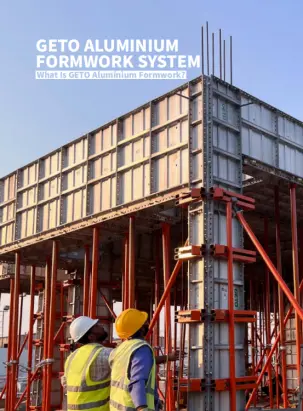
- Aluminium Formwork System: Aluminium molds are lightweight, easy to assemble and disassemble without cranes, and offer a short lead period. They are also recyclable, providing an additional environmental benefit.
- Automatic Formwork System: These molds reduce labor costs and increase construction efficiency. Their adaptability makes them suitable for various PPVC structures, including complex high-rise projects.
- Non-Automatic Formwork System: Less expensive and easier to design, non-automatic steel molds leverage mature technology for reliable performance, though they require more manual labor.
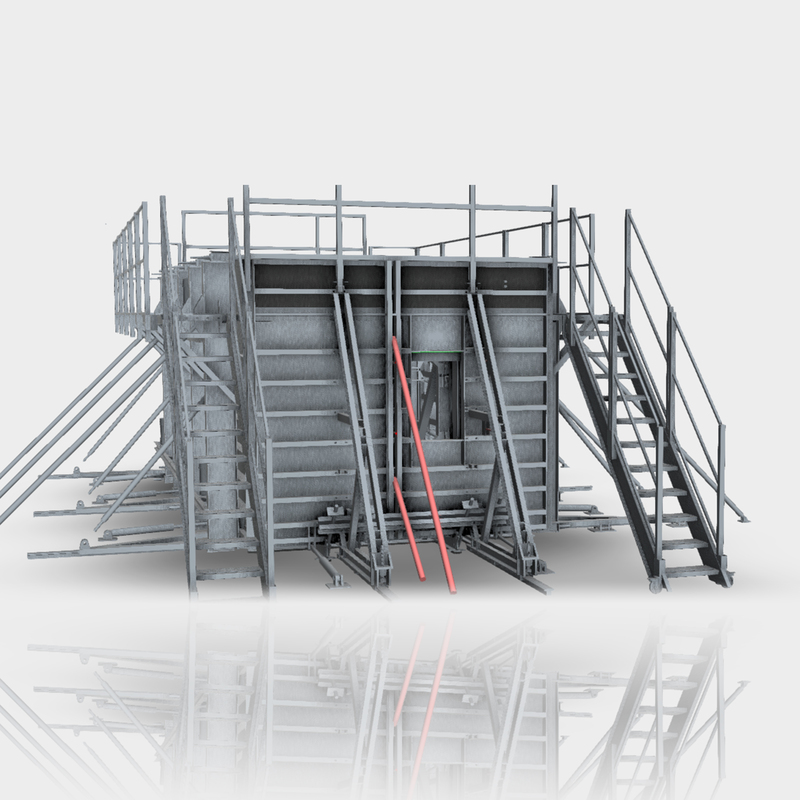
PPVC Precast Housing Molds
GETO PPVC Precast Housing Molds: Build Faster, Smarter, Stronger
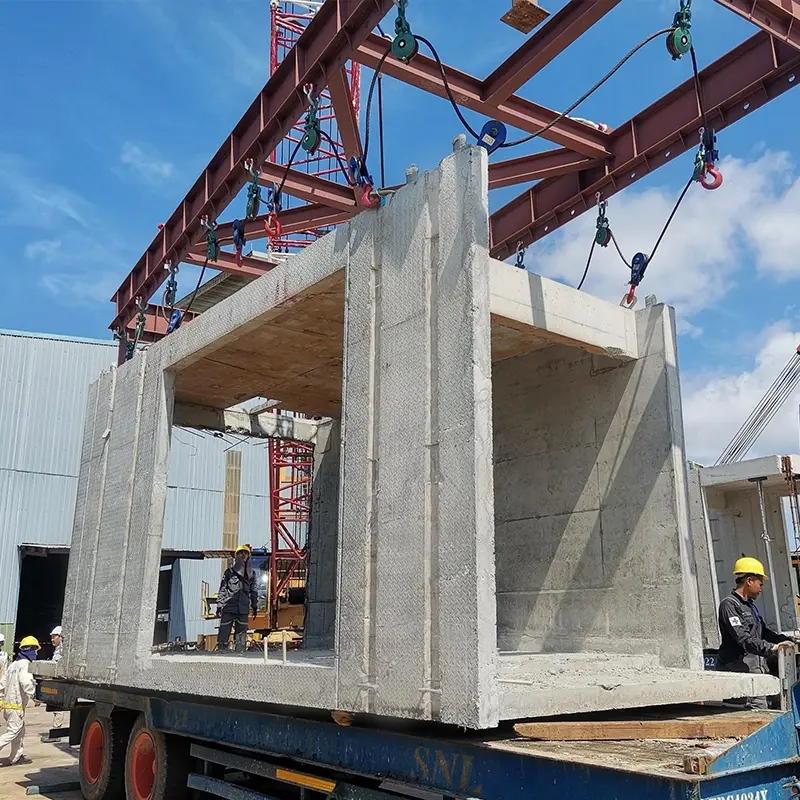
PPVC precast housing molds are at the heart of prefabricated volumetric construction. They allow the creation of fully formed building modules, including floors, walls, ceilings, and openings, in a single casting process.
Benefits of Using PPVC Precast Housing Molds
GETO PPVC precast housing molds offer a wide range of benefits that make them an efficient, reliable, and sustainable solution for modern construction projects:
Faster Construction: Entire room modules are prefabricated off-site, significantly reducing on-site construction time. This method can increase construction efficiency by up to 50% compared to traditional steel formwork. Faster assembly accelerates project delivery without compromising quality.
Clear and Streamlined Workflow: Prefabrication standardizes production and ensures each module is created with precise specifications. A clear sequence from factory casting to site installation eliminates unnecessary material handling, search time, and on-site coordination.
Labor and Time Savings: Mechanical clamping, automated demolding, and standardized mold design reduce the need for manual labor. Labor costs are cut by up to 40%, and fewer workers are required on-site, reducing congestion and labor management challenges.
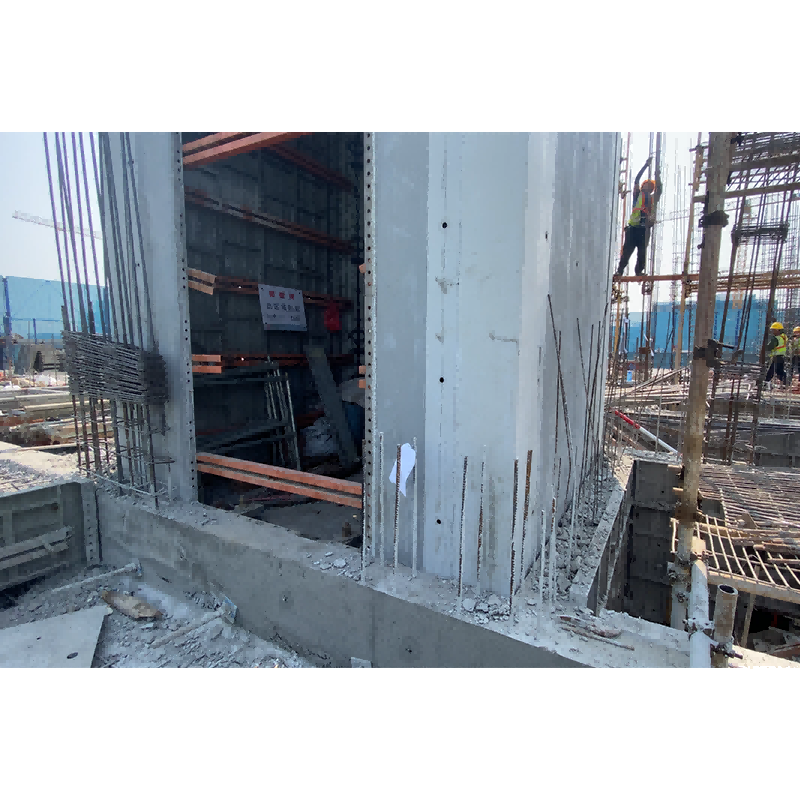
High-Quality Finish: Controlled factory conditions allow for uniform concrete curing, smooth surfaces, and accurate dimensions. Modules achieve a fair-faced concrete finish, reducing post-construction finishing work and minimizing risks like water leakage or misalignment.
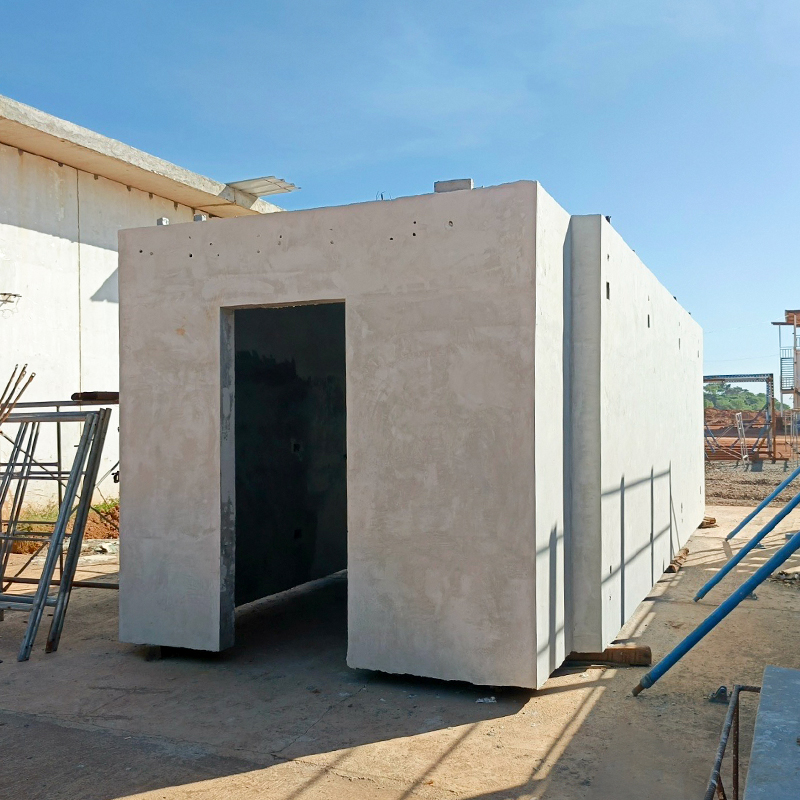
PPVC Casting Effect
Safety and Cleanliness: With the bulk of work completed in a factory, on-site activities generate less dust, noise, and debris. Lower exposure to high-risk construction tasks improves worker safety and creates a cleaner site environment.
Weather-Independent Production: Indoor prefabrication reduces delays caused by adverse weather, ensuring consistent production quality and predictable project timelines.
Sustainability and Green Building Alignment: PPVC Molds support low-carbon construction by minimizing material waste, reducing energy consumption on-site, and promoting modular reuse. The system aligns with modern sustainable building initiatives and environmental regulations.
Flexibility and Customization: Molds can be designed for a variety of module types and architectural layouts, including irregular or complex room designs, making PPVC Molds suitable for high-rise apartments, public housing, and commercial projects.
Improved Structural Integrity: Molds are produced under controlled conditions with precise reinforcement placement, enhancing overall structural strength and reducing the likelihood of construction errors.
GETO PPVC Precast Housing Molds
GETO Modular PPVC Construction Solutions
GETO specializes in PPVC molds and related formwork systems. With years of expertise in formwork and scaffolding manufacturing, GETO offers comprehensive solutions that enhance project efficiency and quality.
Why Choose GETO PPVC Molds?
GETO provides comprehensive PPVC Precast Housing Molds designed to support modern modular construction and DfMA projects.
The system is developed to help manufacturers achieve:
- High dimensional accuracy
- Consistent module quality
- Efficient production cycles
- Flexible project adaptation
- Long service life
In addition to mold manufacturing, GETO provides engineering support, production planning assistance, and technical services throughout the project lifecycle.
Combined with GETO's modular construction expertise and prefabrication solutions, PPVC mold systems help manufacturers improve productivity and support large-scale industrialized construction projects.
GETO PPVC Molds Applications
GETO provides a comprehensive range of mold solutions to support the prefabricated volumetric construction process. Each mold type is designed for efficiency, quality, and adaptability:
PPVC Precast Housing Molds: These molds form entire room modules, including floors, walls, ceilings, doors, and windows, in one casting. Ideal for high-rise apartments and residential projects, they significantly reduce construction time and labor.
Prefabricated Household Shelter (PHS) Molds: Specialized 3D molds designed for prefabricated household shelter units. PHS molds ensure durability, safety, and precision for emergency shelters and residential applications.
Prefabricated Bathroom Units (PBU) Molds: 3D molds for producing prefabricated bathroom units. PBUs enable quick installation of fully finished bathrooms, including walls, floors, and plumbing openings, minimizing on-site work and water leakage risk.
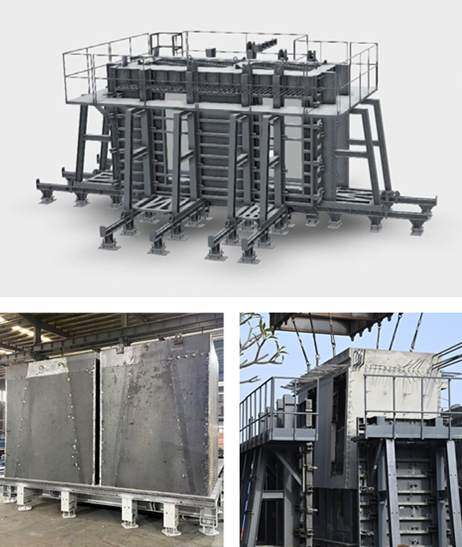
Prefabricated Bathroom Units (PBU) Molds
Molds for Pipe Gallery: Custom molds for precast pipe galleries streamline the installation of plumbing, HVAC, and electrical systems. They allow for precise alignment of conduits and service channels, improving efficiency and reducing on-site errors.
Molds for Box Culvert: Designed for infrastructure projects, these molds produce precast box culverts for water drainage, road crossings, and utility conduits. Standardized box culvert molds ensure consistent dimensions and rapid installation.
Molds for Lift Shaft (LS): LS molds produce precast lift shafts with high precision, providing structural stability and simplifying the installation of elevators in high-rise buildings. These molds can be customized to accommodate various elevator sizes and layouts.
GETO Project Cases: Transforming Prefabricated Construction Across Asia
Yishun North Gaia, Singapore: 11 towers built using 2,444 precast modules. GETO supplied 35 sets of automated molds and 17 sets of non-automated molds, facilitating high-precision casting.
Southeast Asia Apartment Project: Complex layouts with irregular corners were successfully executed using customized GETO Prefabricated Building Molds, ensuring efficient demolding and high-quality finishes.
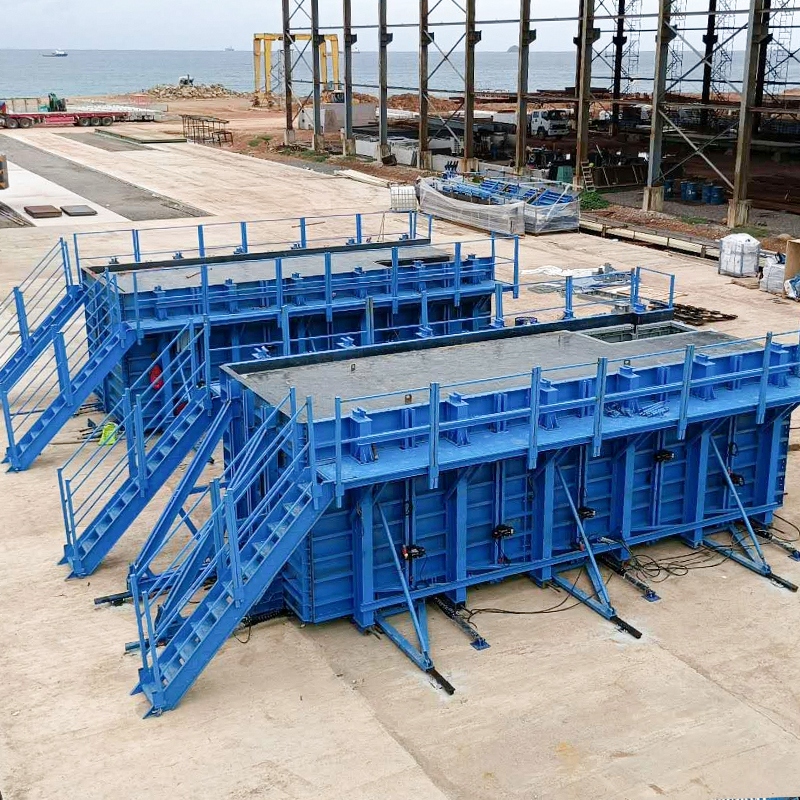
PPVC Precast Housing Mold Applications
One Bernam, Singapore: 21 sets of automated molds cast 38 precast modules, demonstrating GETO’s capability to handle large-scale, complex PPVC projects.
HDB Public Housing Project: GETO’s PBU and PHS molds supported Singapore’s construction industrialization policy by enabling precise, efficient, and fast module production.
GETO combines expertise in formwork and scaffolding with innovative PPVC Molds solutions. By providing automated, semi-automated, and non-automated molds, GETO allows clients to select systems that best match project scale, budget, and complexity. The company also emphasizes sustainability, safety, and efficiency, delivering complete PPVC construction systems from factory to site.
Conclusion
PPVC Molds represents a highly efficient, safe, and environmentally friendly approach to modern construction. By prefabricating entire building modules off-site and using advanced formwork systems, projects can achieve faster delivery, higher quality, and reduced labor costs.
GETO’s PPVC precast housing molds, PBU, and PHS solutions provide clients with comprehensive, customized systems to realize these benefits, making it a trusted partner for prefabricated volumetric construction projects worldwide.
For inquiries or project consultations, reach out to geto_market@geto.com.cn and discover how GETO can bring your modular construction project to life!