
Introduction: A Paradigm Shift in Construction by 2026
The global construction industry in 2026 looks notably different from a decade ago. The era of purely labor-intensive, weather-dependent, and waste-heavy building methods is gradually giving way to a technology-enabled, precision-driven approach. At the heart of this transformation lies PPVC, or Prefabricated Prefinished Volumetric Construction. This method treats entire rooms as complete modular units—finished with flooring, wiring, and fixtures inside a factory—before being transported to site and assembled like building blocks. By 2026, ppvc construction has become a strategic choice for many developers and governments aiming to meet carbon neutrality targets while addressing chronic productivity and labor shortage issues. Far from a niche technique, PPVC now serves as a core component of modern, efficiency-oriented building.
Technical Core: PPVC Molds and Modular Classifications
Achieving high-quality PPVC outcomes depends substantially on the precision of the molds used. Different structural configurations require dedicated mold systems.
GETO Mold Series for Varied Structural Needs
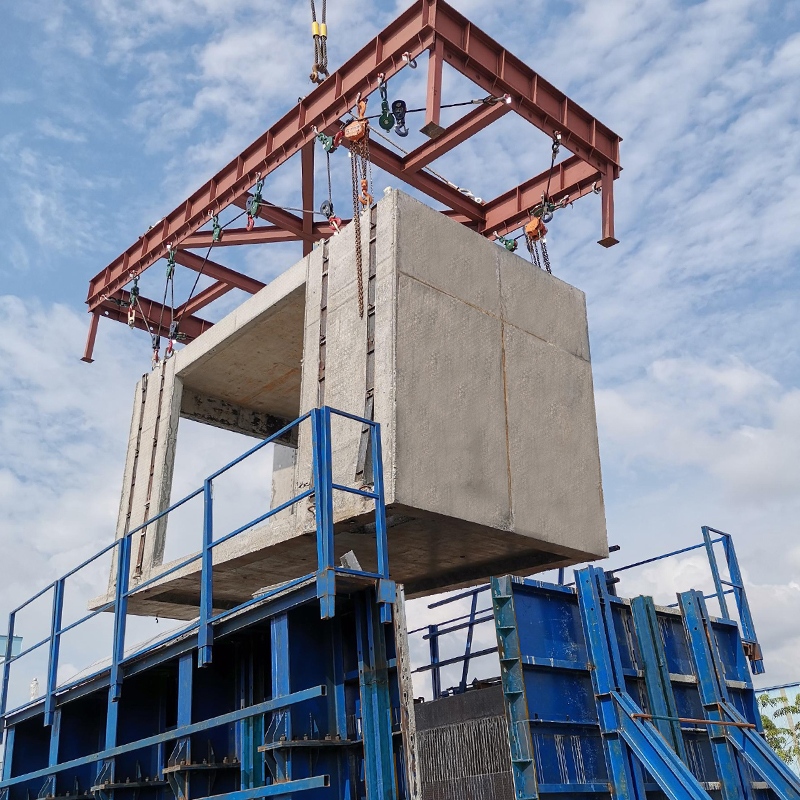
- K Series: Designed for semi-enclosed structures featuring three walls plus a top and bottom slab. This configuration suits many residential modules.
- R Series: A semi-enclosed module that integrates a top slab with four vertical walls, offering enhanced rigidity.
- H Series: A closed or semi-enclosed module with four vertical walls but no top or bottom slab, providing flexibility for specific design requirements.
Material Options in PPVC Molds
GETO's PPVC/MIC mold systems are primarily manufactured using steel, with aluminum also available for specific applications.
Steel Molds. Steel is the standard material for PPVC precast molds. It provides the strength and dimensional stability required for repeated casting cycles. GETO offers two configurations:
- Automated Steel Molds: Lower labor cost, higher construction efficiency, and suitable for a wide range of PPVC structures.
- Non-Automated Steel Molds: Lower material cost, simple design, and mature manufacturing technology.
Aluminum Molds. For projects requiring faster delivery or lighter handling, aluminum molds offer shorter lead times, easy assembly without cranes, and high scrap value at end of service life.
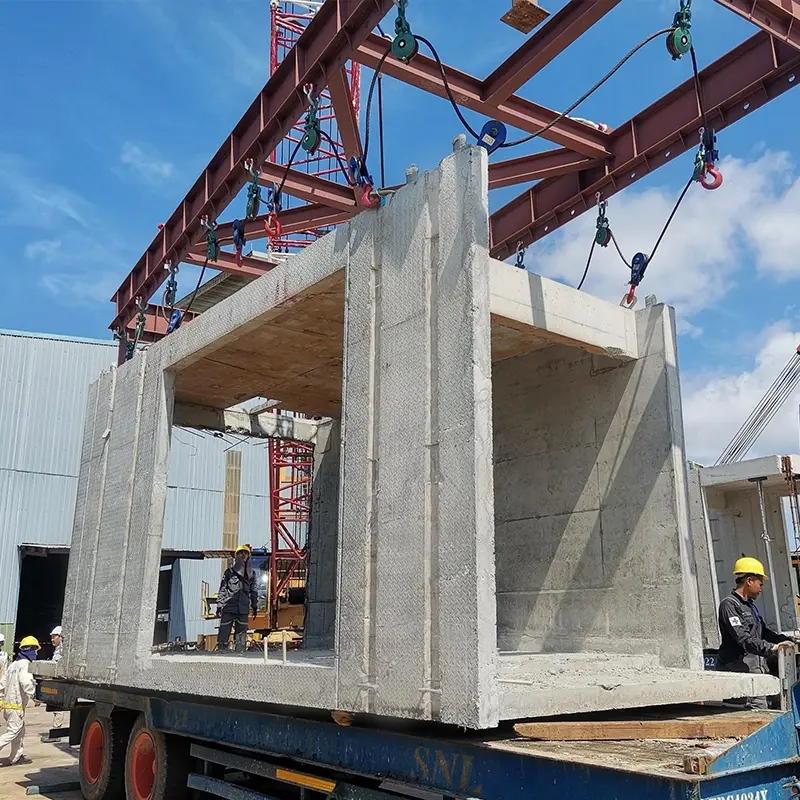
Both material options are available for producing various precast elements, including housing modules, box culverts, pipe galleries, lift shafts, and shelters.
High-Precision Manufacturing
Precision forms the backbone of successful assembly. GETO applies 3D and hydraulic mold technologies to achieve tight tolerances, particularly critical for components like PBUs (Prefabricated Bathroom Units). Any deviation in a bathroom module could create alignment issues with plumbing or finishing. Hydraulic molds help ensure consistent geometry across thousands of cycles, making high-volume production more reliable.
Core Advantages of PPVC Construction in 2026
Shifting to PPVC delivers measurable benefits that can positively impact a project’s bottom line and timeline.
Efficiency Gains
Field studies indicate that PPVC can improve on-site efficiency by more than 50% compared to traditional cast-in-situ methods. Parallel factory production and site preparation can shorten the total construction schedule by an estimated 30% to 50%. A project that once took 24 months might finish in 14 to 16 months under favorable conditions.
Labor Optimization
Automated demolding systems and mechanized handling can reduce on-site labor demand by approximately 40%. This addresses a common challenge for contractors in markets facing skilled labor shortages. Fewer workers needed on site also tends to lower site management overhead and certain safety risks.
Consistent Quality Control
Factory environments allow for better control of temperature, humidity, and curing conditions. Modules can achieve what the industry calls a “fair-faced concrete” finish—smooth enough to eliminate plastering in many cases. The controlled setting also reduces common defects such as water leakage, uneven surfaces, and cracking, which frequently complicate conventional construction.
Safety and Environmental Benefits
Moving most work from heights into ground-level factory stations reduces fall risks substantially. The assembly site itself typically generates less dust, noise, and vibration. Material waste can drop by 30% or more, as offcuts and over-pours are minimized. These environmental benefits align well with tightening green building codes.
Intelligent Construction: From Manufacturing to Smart Manufacturing
Digital integration lifts PPVC from a mechanical process to an intelligent one. Several tools now work together to make the entire chain more visible and controllable.
Industrial 3D Design Software Integration
GETO employs industrial 3D design software to coordinate models down to the level of individual embedded parts. Early clash detection within the digital environment can reduce design changes by nearly 30% during the construction phase. Streamlined workflows supported by this software help shorten the overall project duration by approximately 20%. The result is a digital thread running from concept through factory production to final assembly.
Digital Management Tools
- QR Codes and 3D Material Platforms: Each module and component receives a unique code. Field teams can scan to quickly locate materials and verify placement against the digital model, reducing assembly errors.
- VR Inspection Software: Remote virtual walkthroughs replace many physical factory visits. Clients can approve a module’s finish and fixtures from their office, saving travel time and accelerating sign-off.
- GT-MS Information Management System: This platform integrates supply chain logistics, production progress, engineering data, and financial flows. Managers gain end-to-end visibility, allowing more rapid response to potential bottlenecks.
Diverse Application Scenarios: More Than Just Housing
While residential projects drive much PPVC adoption, the method serves a wide range of building types.
Residential and Apartment Buildings
Fast-track housing developments, public housing projects, and build-to-rent apartment blocks often benefit from repetitive module layouts and predictable quality.
Public and Institutional Facilities
Schools, dormitories, medical isolation wards, and specialized care units can be delivered more quickly. Hospitals, in particular, value the controlled factory environment for installing medical gas lines and sterile finishes.
Specialized Precast Components
PBU (Prefabricated Bathroom Unit): A single molded unit that integrates floor, walls, waterproofing, drains, and fixtures. This approach significantly reduces the most common post-construction complaint: bathroom leaks.
PHS (Prefabricated Household Shelter): Required in some building codes for civil defense or safe rooms. The shelter is cast as a complete secure module.
LS (Lift Shaft): Prefabricated lift shafts simplify core construction in high-rise towers, reducing crane time and improving vertical alignment.
Pipe Culverts and Box Culverts: Used for stormwater drainage, utility tunnels, and underground corridors, these modules speed up linear infrastructure projects.
Industry Comparison: PPVC Versus Other Methods
Choosing a construction approach involves trade-offs. The following comparison outlines where PPVC tends to excel and where other methods may offer advantages.
|
Aspect |
PPVC |
Traditional Cast-in-Situ |
PC COMPONENT MOLD |
3D Printing |
|
Integration level |
Full room with finishes |
None |
Components only |
Variable, typically structural only |
|
On-site assembly time |
Short |
Long |
Moderate |
Short for printed elements |
|
Labor need on site |
Low (≈40% less) |
High |
Moderate |
Very low |
|
Weather dependency |
Minimal |
High |
Moderate |
Low (printing indoors possible) |
|
Quality control |
Factory-controlled |
Site-dependent(manual) |
Factory-controlled |
Machine-controlled |
|
Scalability for large projects |
Good |
Good |
Good |
Limited at present |
|
Typical tolerance |
±2mm |
±10-15mm |
±5mm |
±5-10mm |
For large-scale, repetitive, quality-focused projects, PPVC currently offers a strong balance of speed, quality, and proven reliability compared to emerging methods like 3D printing, which still face challenges with reinforcement integration and finishing in many applications.
Future Outlook: Green Building From Optional to Mandatory
By 2026, green building has moved from a voluntary certification to a regulatory requirement in most major markets.
Carbon Neutrality Strategy
PPVC supports carbon reduction in several ways. Factory production can cut material waste by up to 30%, directly reducing embodied carbon. The lighter vehicles required for delivering finished modules versus wet concrete also tend to lower transport emissions. Furthermore, modules can be designed for future disassembly and relocation, supporting a circular economy model.
Policy Support
Many governments now use carbon trading credits and green financing schemes to encourage PPVC adoption. Developers can access lower interest rates on green loans when a project uses certified low-carbon methods like volumetric modular construction. Some jurisdictions offer density bonuses or faster permitting for projects exceeding baseline sustainability targets.
Conclusion and Call to Action
PPVC construction in 2026 represents more than just a new way to build walls and floors. It marks a rethinking of how to deliver quality, speed, and environmental responsibility together. The method addresses several persistent industry challenges: labor shortages, unpredictable timelines, site waste, and quality inconsistencies. For developers and contractors facing tighter margins and stricter regulations, PPVC offers a proven path worth exploring.