
In the "vertical race" of modern cities, the heights of skyscrapers are constantly breaking new records. This represents not only a triumph of architectural design but, more importantly, an innovation in construction technology. During the construction of the core walls in high-rise buildings, traditional formwork methods often face bottlenecks such as heavy reliance on tower cranes, high risks associated with working at great heights, and slow construction progress. To overcome these limitations, the *Automatic Hydraulic Climbing Formwork system was developed.
As an intelligent formwork system capable of "climbing upward" autonomously—without the aid of tower cranes—hydraulic climbing formwork has become a standard requirement for projects involving super-high-rise buildings, bridge pylons, and similar structures. If you are curious to know how this massive apparatus steadily ascends hundreds of meters into the sky, or if you are currently seeking the most efficient formwork solution for your own project, this article will provide an in-depth breakdown of the operating principles, core advantages, and future trends of fully automatic hydraulic climbing formwork systems.
What is Automatic Hydraulic Climbing Formwork
Automatic Hydraulic Climbing Formwork—also known as the fully automatic hydraulic climbing formwork system—is a comprehensive piece of construction equipment that integrates the formwork panels, support scaffolding, hydraulic power units, operating platforms, and safety guardrails into a single unified system. By anchoring itself to the concrete structure that has already been poured and cured, the system utilizes hydraulic cylinders as its power source to enable the formwork and scaffolding to climb upward, layer by layer, as the building rises.
This is not merely a simple formwork tool; it represents a pinnacle of modern, high-end formwork systems—embodying a high degree of integration in terms of construction industrialization and mechanization.
Differences Between Hydraulic Climbing Formwork and Traditional Formwork
- Dependence: Traditional formwork systems (such as large steel formwork or modular aluminum formwork) rely heavily on tower cranes for hoisting entire assemblies or for the manual dismantling and reassembly of components, thereby consuming a significant amount of valuable tower crane resources. In contrast, Hydraulic Climbing Formwork possesses an independent hydraulic "heart" that allows it to lift itself autonomously.
- Safety: Traditional formwork poses a risk of falling objects or personnel accidents during dismantling operations at high altitudes. Hydraulic climbing formwork systems, however, feature fully enclosed metal safety screens that provide workers with a secure, level working environment—much like working on solid ground.
- Construction Efficiency: Hydraulic climbing formwork enables the synchronized movement of both the formwork panels and the support scaffolding, thereby significantly compressing the overall construction cycle time.
How Does Automatic Hydraulic Climbing Formwork Work?
Basic Working Principles
The core mechanism of hydraulic climbing formwork lies in its "alternating climbing" action. Simply put, the system consists of two main components: "climbing guide rails" and a "climbing frame structure." During an operational cycle, the guide rails and the frame structure serve as mutual supports for one another:
- When the frame structure is fixed in place, hydraulic cylinders drive the guide rails to slide upward.
- Once the guide rails are fixed and locked securely onto the concrete structure, the hydraulic cylinders then drive the entire frame structure (along with the formwork panels and working platforms) to climb upward along the guide rails.
This repetitive, cyclical motion makes the entire formwork operation process resemble a rock climber using their limbs in alternation to ascend.
Key Operational Process
A typical construction workflow for hydraulic climbing formwork is as follows:
Step 1: Initial Installation. Before the concrete for the ground floor (or base level) is poured, the guide rails and frame structure are installed onto pre-embedded anchor components.
Step 2: Concrete Pouring. The formwork panels are closed (assembled), and the concrete pouring process is carried out.
Step 3: Stripping and Cleaning. Once the concrete strength reaches the required level (typically 10–15 MPa), the stripping mechanism is activated to retract the formwork panels, followed by cleaning of the formwork surfaces.
Step 4: Guide Rail Lifting. The guide rails are unlocked; the hydraulic system is activated to lift the rails upward by one story height, after which they are locked into their new position.
Step 5: Frame Climbing. The hydraulic system is activated again to drive the entire frame structure (including the platforms and formwork panels) to climb upward along the guide rails to the predetermined elevation.
Step 6: Positioning and Securing. Once the frame structure is in place, precise alignment is performed; the structure is then locked down, and the formwork panels are closed in preparation for the next concrete pour.
Components of Formwork System
An efficient formwork system relies on the coordinated interaction of various precision-engineered components:
- Hydraulic Lifting System: Comprising a hydraulic pump station, high-pressure oil hoses, a synchronized control valve group, and the core hydraulic cylinders. This system serves as the primary power source for the entire assembly.
- Main Frame Structure: Consisting of load-bearing platforms and supporting frames, this structure supports the weight of the formwork panels and the live loads associated with construction activities.
- Guide Rails and Attachment System: The guide rails serve as the climbing path, while the attachment brackets transfer the entire system's immense load to the building's main structural frame.
- Control System: Modern hydraulic climbing formwork systems typically employ automated synchronous control to keep multiple hydraulic cylinders level during climbing, preventing the scaffolding frame from tilting.
- Protection System: Fully enclosed steel or aluminum protective screens ensure the safety of personnel working at high elevations.
Advantages of Automatic Hydraulic Climbing Formwork
High Construction Efficiency
Since it does not occupy the tower crane, the construction of the core wall can proceed independently of the progress of the exterior floors. Under the operation of skilled workers, hydraulic climbing formwork can achieve a construction speed of one standard floor every 3 to 5 days.
Exceptional Safety
Hydraulic climbing formwork systems are typically designed to be fully enclosed. For instance, GETO’s system is equipped with fully hardened steel protective screens; these not only offer superior fire resistance but also effectively block falling objects from above, allowing construction personnel to work within the enclosure without worrying about the risk of falling.
Labor and Cost Savings
The increased level of automation directly reduces the reliance on heavy manual labor. Since the formwork and scaffolding frame move as a single integrated unit, the manual time required for repetitive assembly and alignment is significantly reduced, resulting in an overall labor cost reduction of over 30%.
Consistent Construction Quality
The formwork is rigidly fixed to the scaffolding frame, allowing for the precise adjustment of verticality and flatness via sophisticated mechanical mechanisms. This ensures excellent concrete molding results—even meeting the standards for "fair-faced concrete"—thereby minimizing the need for subsequent plastering work.
Technical Highlights of GETO Automatic Hydraulic Climbing Formwork
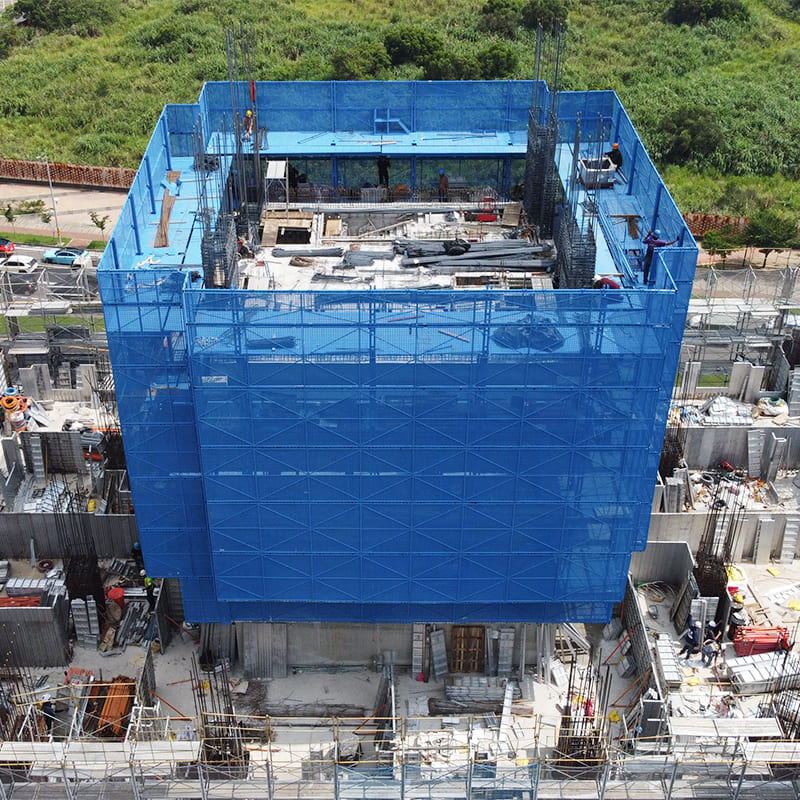
As a global leader in the formwork and scaffolding sector, GETO has set a new technical benchmark within the industry with the introduction of its GTP100 Fully Automatic Hydraulic Climbing Formwork System.
Features of the GTP100 System
- Fully Hardened Steel Design: The scaffolding frame undergoes a full steel hardening treatment, ensuring exceptional structural stability. It not only possesses strong resistance to deformation but also offers superior fire resistance.
- Innovative Formwork Retraction Mechanism: Equipped with a precision formwork retraction device, the system effectively minimizes risks during formwork stripping while preventing concrete slurry leakage, thereby maintaining a clean and tidy construction site.
- Modular Platforms: All operating platforms feature modular steel decking, facilitating easy transportation and installation while ensuring a non-slip, durable surface.
- Intelligent Advantages
GETO's system supports two climbing modes: vertical and inclined (up to ±10 degrees). The hydraulic system achieves precise synchronization, ensuring a silky-smooth climbing process. Furthermore, the rebar installation platform moves in sync with the climbing frame structure, enabling a seamless transition between rebar tying and concrete pouring operations.
Why Choose GETO?
GETO provides a one-stop solution encompassing everything from design and manufacturing to on-site technical guidance. Our Automatic Hydraulic Climbing Formwork requires no tower cranes for hoisting and eliminates the need for external scaffolding; formwork adjustment and cleaning are performed directly on the climbing frame itself. This truly delivers on the promise of being "worry-free, time-saving, and cost-effective."
GTP100 System Technical Parameters
The following table outlines the core technical specifications for the GTP100 fully automatic hydraulic climbing formwork system:
| S/N | Item | Specification |
| 1 | Lifting Capacity (Single-Unit Climbing Platform) | 100kN |
| 2 | Segmented Standard Pouring Height | 3.0m to 5.5m |
| 3 | Maximum Climbing Speed | 5 minutes per meter |
| 4 | Influence Width per Bracket | About 4 meters |
| 5 | Working Platform Width | 2.4 meters |
| 6 | Max Inclination | Plus or Minus 10 degrees |
| 7 | Driving Force | Hydraulic Power |
| 8 | Compatible Wall Formwork | Aluminium / Steel / Timber-Beam |
Applicable Projects (Applications)
This high-end formwork system is particularly well-suited for the following scenarios:
- Super-high-rise Building Core Walls: Enables "core-first" construction, driving the subsequent construction of the peripheral structure.
- High-rise Residential and Office Buildings: Facilitates rapid turnover cycles, thereby shortening the investment payback period.
- Bridge Towers/Pylons: Handles the construction of massive cable towers for cable-stayed or suspension bridges, adapting seamlessly to changes in inclination.
- Infrastructure Projects: Such as Liquefied Natural Gas (LNG) storage tanks, large-scale chimneys, or grain silos.
Key Considerations When Selecting Hydraulic Climbing Formwork
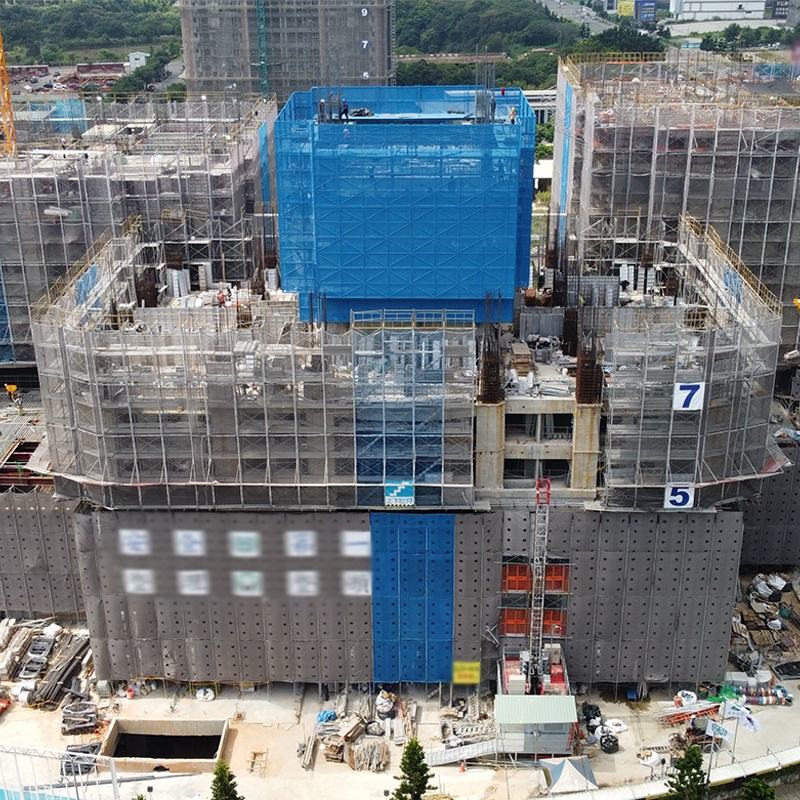
When evaluating potential suppliers, please focus on the following five points:
- Hydraulic System Stability: Does it support synchronized control? Does it feature redundant safety locks to prevent accidental slippage or falling along the guide rails?
- Protection Level: Does it feature a fully enclosed design?
- Formwork Compatibility: Can it integrate seamlessly with both aluminum formwork and steel formwork systems?
- Project Experience: Does the supplier have a proven track record backed by successful case studies involving super-high-rise projects?
- After-sales Service: Is on-site technical guidance and training provided in a timely and efficient manner? IX. Future Trends: Intelligent Formwork Systems
As construction technology advances, formwork operations are evolving in the following areas:
- Remote Intelligent Monitoring: Real-time data on the climbing formwork's pressure, inclination, and climbing status can be monitored directly via mobile devices.
- BIM Integration: 3D simulations are utilized prior to construction to optimize the layout of the climbing formwork structure, thereby minimizing blind spots.
- Green Construction: The high reusability rate of hydraulic climbing formwork systems—reaching up to several hundred cycles—significantly reduces the generation of construction waste.
FAQ
Q1: How does automatic hydraulic climbing formwork work?
A: It utilizes the power of hydraulic cylinders to enable the guide rails and structural frame to climb alternately along the concrete wall surface via attached brackets, eliminating the need for external hoisting equipment.
Q2: What is hydraulic climbing formwork used for?
A: It is primarily used for the construction of concrete structures featuring vertical or inclined facades, such as high-rise residential buildings, commercial towers, bridge pylons, and core walls.
Q3: Is climbing formwork safer than traditional formwork?
A: Yes. It features built-in, fully enclosed protective screens and multiple mechanical anti-fall devices, which significantly reduce the risk of personnel or objects falling during high-altitude operations.
Q4: Does it require a crane?
A: A tower crane is required during the initial installation and final dismantling phases; however, throughout the entire climbing process during the main structural construction, no tower crane assistance is needed whatsoever.
Q5: What is the difference between climbing formwork and scaffolding?
A: Scaffolding primarily provides access for personnel and typically requires erection from the ground up or attachment layer by layer; climbing formwork, conversely, is a powered system that integrates the formwork function, rising autonomously in tandem with construction progress to deliver superior efficiency.
Conclusion
Automatic Hydraulic Climbing Formwork is more than just a technology; it is the guardian of construction efficiency and safety. By adopting advanced formwork systems—such as the Zhite GTP100—construction teams can bid farewell to strenuous manual handling and the high risks associated with high-altitude assembly and dismantling. This allows the building to rise upward with a rhythmic flow and pinpoint precision, much like a living organism.
Whether you are planning a 300-meter commercial landmark or constructing an efficient high-rise residential complex, hydraulic climbing formwork serves as a powerful tool for maximizing the overall benefits of your project. Ready to accelerate your high-rise construction project?
Contact the GETO expert team to receive a customized hydraulic climbing formwork solution and embark on a new chapter of high-efficiency construction.