
On construction sites, the dense array of metal components often leaves non-professionals feeling confused. This is particularly true for buyers just beginning to engage with overseas projects or modern modular construction, where the terms "shoring scaffolding" and "climbing scaffolding" are frequently conflated. Although both fall under the broader category of scaffolding and appear to be temporary structures composed of metal tubes and connectors, they differ fundamentally in terms of structural mechanics, safety regulations, and core functionality.
Clarifying the distinction between these two types of scaffolding is not merely a matter of on-site safety; it also directly impacts project schedules and cost-efficiency. As a leading global provider of formwork and scaffolding solutions, GETO understands the critical importance of correctly configuring both shoring scaffolding and climbing scaffolding within an efficient formwork system. In this article, we aim to thoroughly clarify the relationship between these two concepts.
GETO's Scaffolding Product Line: Two Main Types
Before diving into the differences, it's important to understand how GETO categorizes its products. GETO's product portfolio includes three main categories: Formwork Systems, Climbing Systems, and Shoring Systems. This article focuses on the latter two—Shoring Scaffolding and Climbing Scaffolding—to help you distinguish between them.
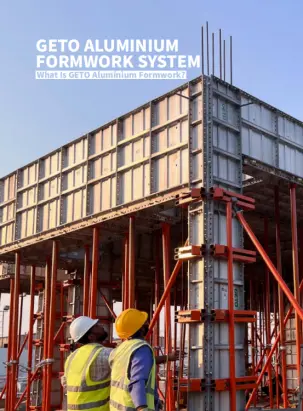
- Shoring Scaffolding: Designed to support structural loads during concrete pouring. It is responsible for “propping up” concrete structures before they cure and preventing collapse. In addition, certain shoring scaffolding types (such as Ringlock Scaffolding) are widely used as working platforms for facade construction, curtain wall installation, and renovation work. Examples include truss shoring systems, ringlock shoring systems, steel props, H-frame scaffolding, and modular tower supports.
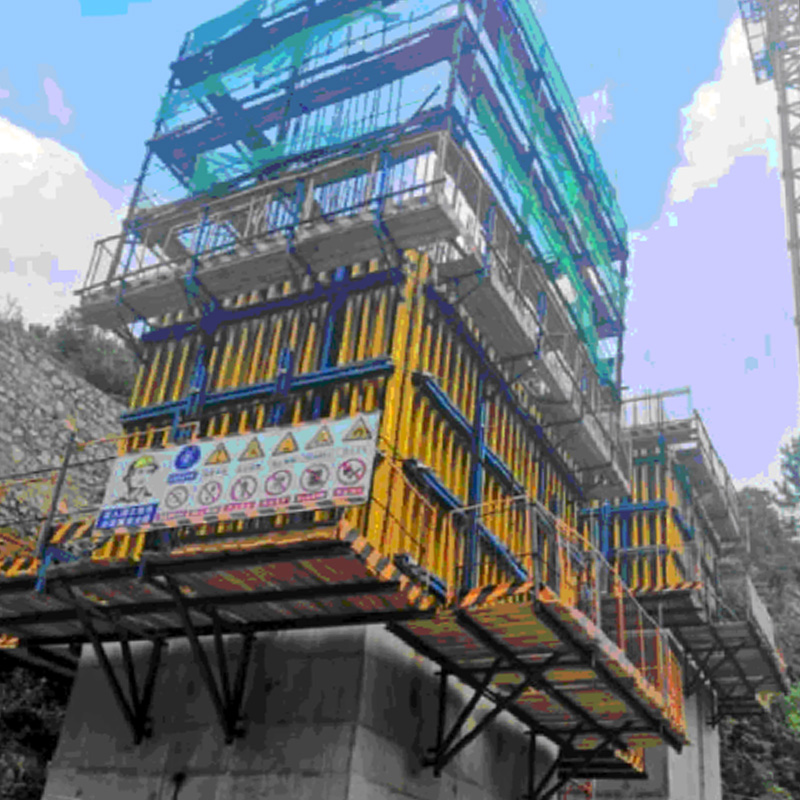
- Climbing Scaffolding: Designed to provide safe, efficient working platforms for high-rise and super high-rise building construction. It integrates hydraulic and self-climbing technologies, allowing it to climb in sync with the building structure without repeated dismantling and reinstallation. Examples include automatic hydraulic climbing formwork, protection screens, self-climbing platforms, shaft platforms, and integrated jacking systems.
This article will help you distinguish between these two scaffolding types so you can make the right choice for your project.
What Is Shoring Scaffolding?
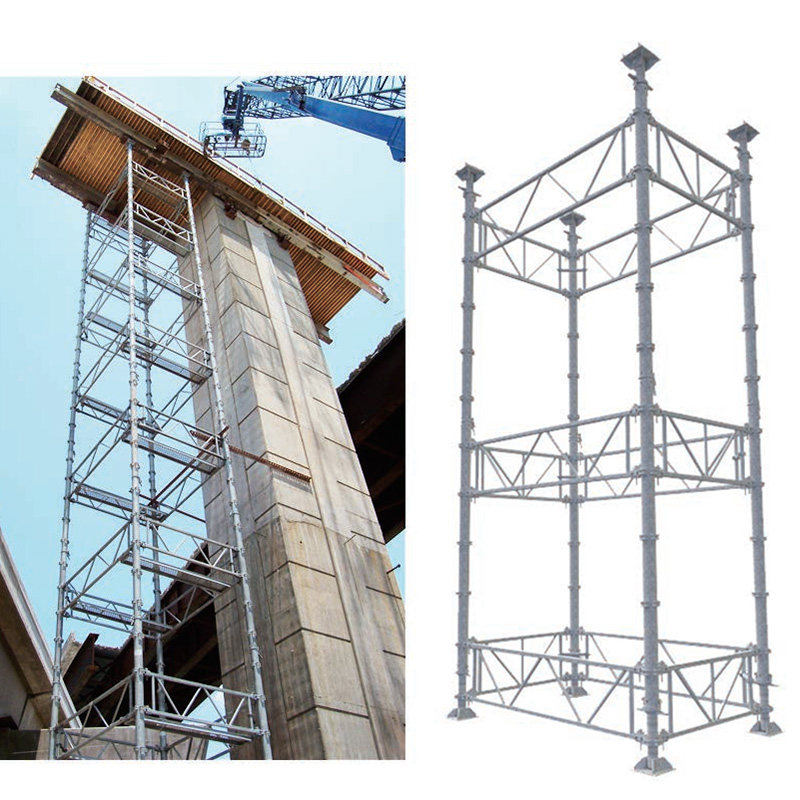
imply put, shoring scaffolding is a form of temporary structural support. Its primary mission is to support freshly poured concrete structures before they gain sufficient strength to support themselves during the construction phase.
During the concrete pouring process—since concrete remains in a fluid state prior to curing, possessing immense weight but no load-bearing capacity—a robust shoring scaffolding system is required to bear the weight of the floor slab formwork as well as the freshly poured concrete resting upon it.
Core Characteristics:
- High Strength & Stability: Engineered to withstand heavy loads and ensure precise alignment during construction.
- Collapse Prevention: Shoring scaffolding systems must possess extremely high vertical load-bearing capacity to prevent structural deformation or collapse.
Common Types:
- Vertical Shoring (Slab Shoring): The most common type in building construction, used to support floor slab formwork.
- Raking Shoring: Used to support leaning walls or to prevent exterior walls from tipping outward.
- Hydraulic Shoring: Often used for deep excavation support, capable of providing dynamic pressure compensation.
Steel Prop (Shoring Prop) Functions:
- Structural Temporary Reinforcement: Provides support before structural elements gain sufficient strength, preventing deformation or collapse.
- Back Propping: When the lower floor structure has not yet reached full strength, steel props are used to share the load from upper floor construction, preventing overloading.
Key Advantages of GETO Shoring Scaffolding:
- High Load-Bearing Capacity: Manufactured using premium-grade steel and aluminum alloys to withstand heavy loads.
- Versatile Applications: Suitable for slab support, bridge works, tunnel engineering, modular construction, and projects requiring extra-high shoring capacity.
- Modular & Flexible Design: Easy to assemble, dismantle, and adjust to fit different project scales and structural requirements.
- Enhanced Safety: Integrated with adjustable bases, braces, and secure locking mechanisms.
- Compatibility: Seamlessly integrates with GETO formwork systems for comprehensive construction support solutions.
What Is Climbing Scaffolding?
Definition
In contrast, climbing scaffolding primarily serves "people" and "construction efficiency." It is an advanced temporary perimeter protection and working platform system, specifically designed for high-rise and super high-rise buildings, aiming to provide construction personnel with safe working spaces while climbing in sync with the building structure, ensuring uninterrupted construction progress from start to finish.Unlike shoring scaffolding, it is not designed to bear structural loads from wet concrete.
Core Characteristics:
- Provides Safe Access: Enables workers to reach elevated work areas, while enclosed platforms and protection screens minimize fall risks.
- High Efficiency: Once assembled, it climbs with the structure without repeated dismantling, significantly saving labor, time, and material costs.
- Perimeter Protection: Protection screens and self-climbing platforms are designed primarily for building perimeter safety and providing working surfaces. The formwork itself is separate from these non-integrated climbing systems.
Key Advantages of GETO Climbing Scaffolding:
- Enhanced Safety: Built-in anti-fall and anti-overturning devices, plus enclosed platforms and protection screens, improve site security.
- High Efficiency: Continuous climbing reduces downtime between floors, accelerating construction schedules.
- Versatility: Suitable for both commercial and residential high-rise buildings, with customized designs to match facade and structure types.
- Note on Integration: Within GETO's product line, only Climbing Formwork integrates the climbing system with formwork. Protection screens and self-climbing platforms are designed for perimeter protection and working platforms only, not as formwork systems.
Key Differences: Shoring Scaffolding vs. Climbing Scaffolding
|
Feature |
Shoring Scaffolding |
Climbing Scaffolding |
|
Primary Purpose |
To support structural loads and prevent collapse |
To provide safe working platforms that climb with the structure |
|
Load Bearing |
High (supports wet concrete and steel weight) |
Moderate (supports workers, tools, and light materials) |
|
Application Phase |
Concrete pouring & structural curing (for slab/beam support); OR exterior renovation/facade work (as an elevated platform using Ringlock) |
During main structure construction, climbing floor by floor |
|
Design Focus |
Vertical load capacity & structural rigidity (for shoring); OR platform stability & safety rails (for facade work) |
Platform stability, fall protection, climbing efficiency |
|
Movement Method |
Fixed position, dismantled and moved to upper floor after pouring |
Automatic or hydraulic climbing, no dismantling needed |
|
GETO Product Examples |
Truss shoring, ringlock shoring, steel props, H-frame scaffolding |
Automatic hydraulic climbing formwork(Integrated System & Formwork), protection screens, self-climbing platforms, shaft platforms, integrated jacking systems |
Key Differences Explained
Load-Bearing Differences: Shoring scaffolding focuses on managing static loads and gravity, supporting several tons per square meter. If it fails, the result is structural collapse. Climbing scaffolding focuses on worker safety and efficiency. If it fails, the result is a fall or construction interruption.
Usage Phase Differences: Shoring scaffolding has two distinct applications. For structural shoring, it is used during the concrete pouring phase, deployed directly below the floor being cast to support the wet concrete. For facade access, it serves as an elevated working platform for curtain wall installation, exterior renovation, or maintenance work, typically after the main structure is complete. In contrast, climbing scaffolding is used throughout the entire main structure construction period. It is installed on the building perimeter from the early floors and climbs automatically with each floor pour, providing continuous perimeter protection and working platforms.
The Role of Shoring Scaffolding in Construction
In GETO's integrated construction solutions, shoring scaffolding does not exist in isolation; rather, it serves as the "backbone" of the entire formwork system.
Supporting Slab Formwork: In high-rise building construction, floor slab spans are often quite extensive. High-quality shoring scaffolding ensures that formwork does not deflect under concrete pouring pressure, thereby guaranteeing ceiling flatness.
Quick Stripping System: This is a key technical highlight of the GETO system. Through a specialized shoring head design, aluminum formwork panels can be removed once the concrete reaches sufficient strength, while the vertical props of the shoring scaffolding remain in place to continue providing support. This practice significantly boosts formwork turnover rates.
Safety Barrier: Stable shoring scaffolding provides safety assurance for construction activities on the floor below, ensuring that operations on lower levels remain unaffected while concrete is being poured on the floor above.
GETO Shoring Scaffolding and Climbing Scaffolding Solutions
As a leading global provider of formwork and scaffolding solutions, GETO offers more than just structural components; we provide a complete, industrialized construction solution.
Advantages of GETO Shoring Scaffolding
- High-Strength Materials: Manufactured using premium-grade steel and aluminum alloys with advanced surface finishes such as galvanization and powder coating to enhance corrosion resistance and extend service life.
- Modularity and Standardization: Adjustable prop heights and high component interchangeability significantly reduce logistics and storage costs.
- Durability and Eco-Friendliness: Reusable for hundreds of cycles, with recyclable metal materials aligning with green building trends.
Advantages of GETO Climbing Scaffolding
- Enhanced Safety: Built-in anti-fall and anti-overturning devices, plus enclosed platforms and protection screens.
- High Efficiency: Continuous climbing reduces downtime between floors, shortening standard floor construction cycles.
When to Choose Shoring Scaffolding? When to Choose Climbing Scaffolding?
When formulating your procurement plan, we recommend referencing the following scenarios:
Scenarios Where Shoring Scaffolding Is Essential
- When constructing cast-in-place concrete slabs, beams, or columns
- When reinforcing aging buildings and requiring support for the weight of existing roofs or walls
- During deep excavation operations, to prevent the collapse of lateral soil walls (underground shoring)
- For heavy-load support in bridge and tunnel engineering
- For facade curtain wall installation, exterior renovation, and other elevated work platforms (using Ringlock Scaffolding)
Scenarios Where Climbing Scaffolding Is Essential
- For high-rise and super high-rise building construction
- When perimeter protection and working platforms need to climb in sync with the structure
- For specific structures such as airport control towers, bridge high piers, and elevator shafts
- For projects pursuing high efficiency and reduced dismantling/reinstallation time
Conclusion
With proven performance on complex, large-scale projects worldwide, GETO's shoring scaffolding and climbing scaffolding are trusted by developers, contractors, and construction companies to achieve faster build times, reduced costs, and higher safety standards.
FAQ
Q1: What is shoring scaffolding?
A: Shoring scaffolding refers to a temporary vertical or inclined support system erected during construction, maintenance, or renovation to prevent structural collapse or excessive deformation; its primary function is to bear structural loads.
Q2: What is the difference between shoring scaffolding and formwork?
A: Formwork acts as the "mold" for shaping concrete, whereas shoring scaffolding serves as the "support structure" that holds this mold in place. The two systems work in tandem to facilitate the successful pouring of concrete structures.
Q3: Can GETO's shoring scaffolding and climbing scaffolding be used together?
A: Yes. The two are designed with compatibility in mind and can work together. For example, climbing scaffolding provides perimeter safety protection and working platforms, while shoring scaffolding provides vertical support for internal floor slabs.
Looking to optimize your construction processes and reduce costs?
Visit the GETO Product Center to learn more about our professional shoring scaffolding and climbing scaffolding (internal link: https://www.getoformwork.com/page/contact-us.html) solutions. We provide global clients with comprehensive, one-stop services—from initial design to on-site technical guidance!