
Introduction: The Forgotten Frontier of High-Rise Construction
In the modern construction landscape, the basement is no longer just a functional utility space for parking or storage. It is a critical structural foundation that demands the highest levels of precision, waterproofing, and durability. Yet, for decades, basement engineering has remained a labor-intensive, slow, and leakage-prone segment of high-rise construction.
This oversight is costly. Water leakage through basement walls and floor slabs is one of the most frequent and expensive defects in building construction. However, the industry is witnessing a generational shift toward Aluminium Formwork Systems specifically engineered for underground environments.
As a global leader in formwork and scaffolding solutions listed on the Shenzhen Stock Exchange (SZ 300986), GETO Group provides industrialized solutions that allow for a seamless transition from the basement to the typical floors of high-rise buildings. With 12 production bases globally—strategically located across China, Malaysia, Singapore, Saudi Arabia, and other key markets—and successful project deliveries in 70 exporting countries and regions, GETO ensures supply chain stability for massive infrastructure projects worldwide.
What is Aluminium Formwork for Basement Engineering?
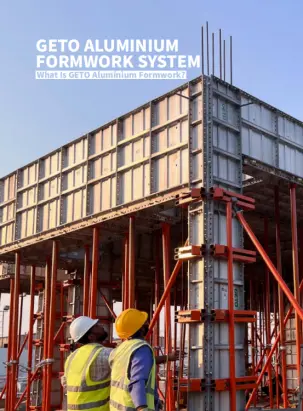
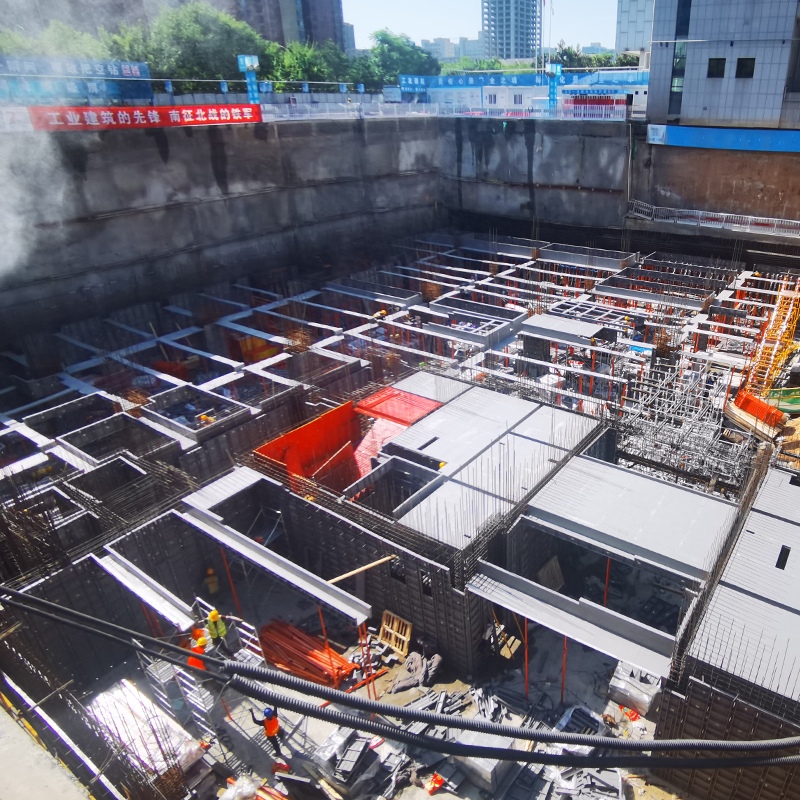
Aluminium formwork for basements is a modular, high-precision system designed to cast the concrete structures of underground levels, including outer walls, internal shear walls, columns, and slabs. Unlike traditional methods, this system utilizes high-strength 6061-T6 aluminium alloy panels that are lightweight yet incredibly robust.
The core objective of using aluminium formwork in basement engineering is standardization. By modifying architectural drawings during the design phase—a process known as architectural drawing deep-diving—GETO enables contractors to use a single set of formwork for both the basement and the standard residential floors. This unified approach significantly increases the material turnover rate and reduces overall project costs.
Beyond standard high-rise basements, GETO's aluminium formwork is also engineered for diverse applications including:
- Metro Stations: High-precision molds for columns, shear walls, and arched ceilings
- Public Buildings: Schools, hospitals, and office complexes with complex geometries
- Bridges and Infrastructure: Adjustable column formwork and customized pier molds
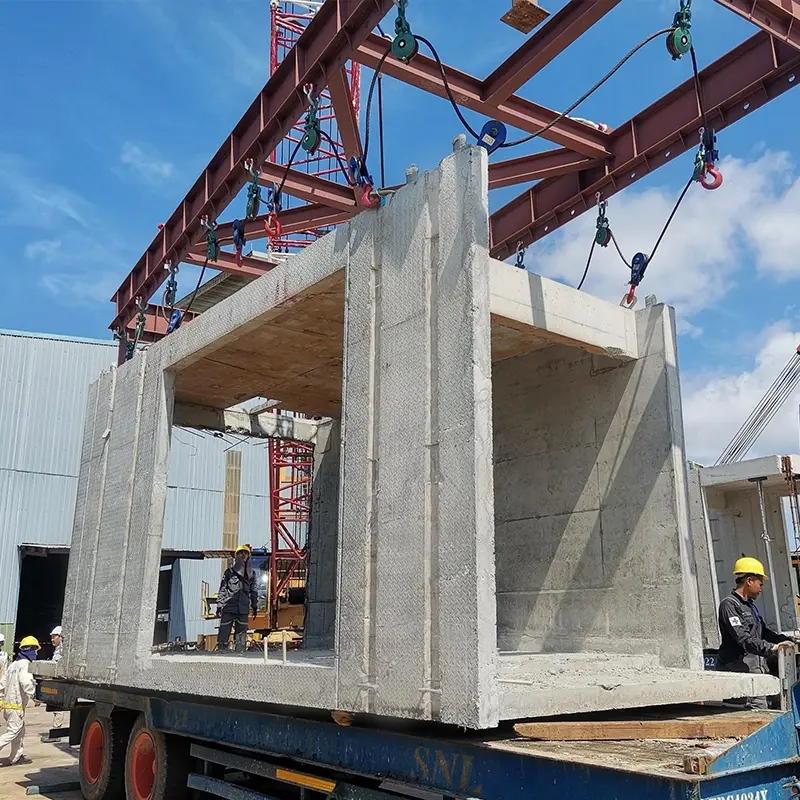
- Utility Tunnels: Specialized sets for underground civil engineering
Through deep-drawing of architectural drawings, GETO achieves "full aluminium formwork construction" across these varied structures, dramatically improving overall turnover efficiency.
The Strategic Technical Advantages
Basement engineering presents unique challenges such as high water pressure, confined spaces, and complex geometries. Aluminium formwork addresses these through several key technical breakthroughs.
Monolithic Pouring and Enhanced Waterproofing
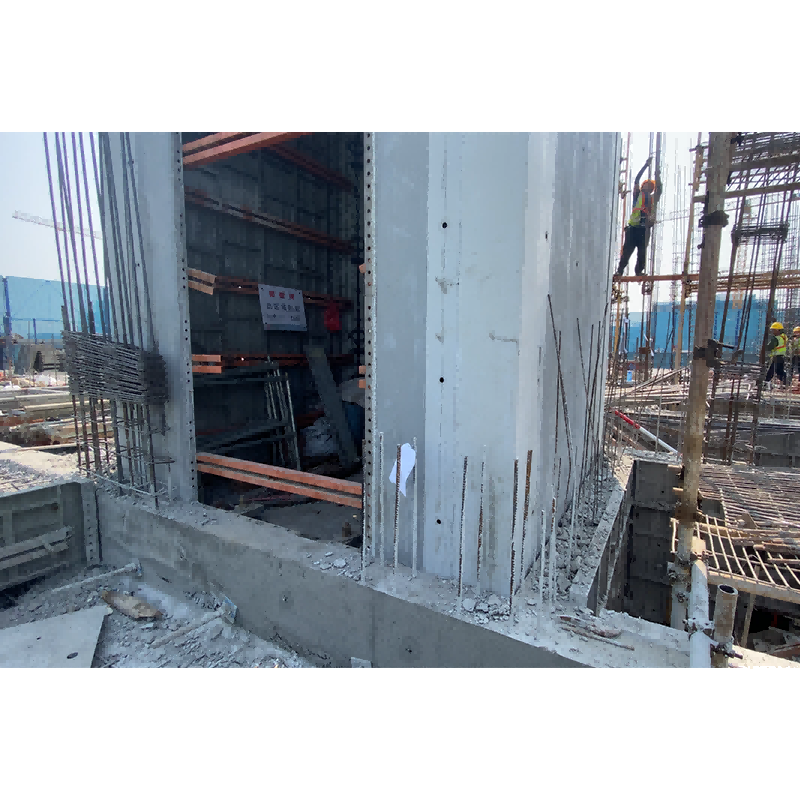
One of the greatest risks in basement construction is water leakage through cold joints formed when walls and slabs are poured at different times. GETO's Monolithic Pouring technique allows for the simultaneous casting of the entire structural geometry in one concrete session. This creates a homogeneous, continuous concrete structure with significantly higher structural integrity and seismic resistance, effectively eliminating the primary paths for water seepage.
Standard-Meeting Concrete Finish
The high-precision manufacturing of GETO panels ensures surface flatness within ±5mm, enabling a smooth, glossy finish that meets the standards of fair-faced concrete. While this is not achieved through cast-in-place fair-faced concrete, the resulting surface is fully ready for direct painting—eliminating the need for interior plastering and significantly reducing labor and material costs.
Manual Handling in Confined Spaces
Because GETO aluminium panels weigh only 25–27 kg/m², they can be handled and positioned manually by workers without heavy lifting equipment. This increases site flexibility and accelerates the construction cycle to 3 to 5 days per floor.
Specialized Application: The Single-Side Wall Framework
A common challenge in basement engineering is constructing outer walls against an existing structure or a rock face where through-wall tie-rods cannot be used. GETO's Single-Side Wall Framework is specifically designed for these scenarios. This system utilizes a heavy-duty supporting bracket on the inner side to resist the immense lateral pressure of fresh concrete.
This solution is essential for:
- Metro Stations: Where space is extremely restricted
- Retaining Walls: Where the exterior face is inaccessible
- Basement Outer Walls: To maintain a perfect waterproof layer by avoiding tie-rod holes
The "1+N" Integrated Solution: Synergy Across Systems
Modern large-scale projects demand more than just aluminium formwork. Contractors increasingly seek suppliers who can provide a complete ecosystem of formwork and scaffolding solutions. GETO's "1+N" Integrated Solution addresses this need by ensuring seamless synergy between multiple systems:
- Quick-Deck Shoring System: For large slab areas, the quick-release prop head allows formwork panels to drop and be removed while main supporting props remain undisturbed, accelerating turnover cycles.
- Ringlock Scaffolding: For heavy-duty support and access, offering up to 19 tons of single-leg load capacity for infrastructure applications.
- GTP100 Automatic Hydraulic Climbing System: For projects transitioning from basement to super high-rise, providing fully enclosed, weather-protected working environments that climb automatically with the structure.
This "1+N" approach allows contractors to source a complete, compatible system from a single supplier, reducing procurement complexity and eliminating interface issues between different vendors' equipment.
The Digital Ecosystem: From Industrial 3D Design Software to GT-MS
GETO has transformed formwork from a passive material into an active, data-driven component of construction through its proprietary digital suite. This digital ecosystem brings order to the underground chaos of basement construction.
GT-MS Information Management System: The Digital Brain
At the core of GETO's digital strategy is the GT-MS Information Management System , which integrates marketing, design engineering, supply chain, and finance into a single unified platform. This "digital brain" enables:
- Comprehensive Data Analysis: Real-time visibility into project status, material utilization, and cost performance across all active projects in 70+ countries
- Risk Monitoring: Automated alerts for potential schedule delays, material shortages, or quality deviations
- End-to-End Traceability: From the initial drawing to the final inspection, every step is recorded and auditable
GETO-Industrial 3D Design Software
By utilizing 3D modeling and algorithmic optimization, GETO-Industrial 3D Design Software automatically generates 100% accurate formwork layout drawings and cutting lists. The software identifies potential clashes between formwork, rebar, and embedded items before production begins—catching problems at the design stage when they are inexpensive to fix.
Material Coding Scan Management (QR Code / PDA System)
Every single panel and accessory in a GETO system is assigned a unique QR code that is permanently marked on the component. On-site workers use PDA scanners to instantly query material positions in real-time. The system displays instructions such as "Floor B2, Zone C, Wall W-12, Position 3 of 15."
This solves two critical pain points in large-scale construction:
- Eliminates assembly errors: Workers no longer need to guess which panel goes where
- Prevents material loss: Real-time tracking shows exactly which panels are in use, in storage, or in transit
GETO-VR Remote Inspection
To overcome the challenges of international project management, GETO provides VR virtual remote acceptance . Stakeholders can conduct factory acceptance tests or on-site inspections via VR headsets or desktop viewers in just 30 minutes, eliminating the need for costly international travel.
Quantified Sustainability: ROI and the Circular Economy
In the modern ESG (Environmental, Social, and Governance) framework, aluminium formwork delivers measurable environmental and economic benefits.
Environmental Impact: Forest Conservation
GETO's aluminium formwork provides quantifiable sustainability metrics. For every 10,000 square meters of construction, switching to aluminium formwork saves approximately 30 to 50 trees compared to timber formwork. This data supports developers in applying for LEED, BREEAM, or Singapore Green Mark green building certifications.
Economic Value: High Reuse Cycles and Scrap Recovery
GETO aluminium panels can be reused 150 to 300 times, compared to just 3-5 times for traditional timber formwork. At the end of its service life, the scrap material retains 30% to 40% of its original material value—providing substantial cash-back return and creating a genuine circular economy. The recycling process uses only 5% of the energy required to produce primary aluminium from bauxite ore.
Global Trust: The Singapore BCA "BAND-2" Qualification
Quality and reliability are verified by the world's most stringent building authorities. GETO's aluminium formwork has achieved the Singapore BCA "BAND-2" qualification—the highest band available for aluminium formwork under Singapore Standard SS EN 12810.
This certification is more than a marketing badge; it is a strategic passport to global markets. BAND-2 serves as the quality benchmark for Southeast Asia, with projects in Malaysia, Indonesia, Thailand, and Vietnam increasingly referencing BCA certification as a proxy for international quality. For many engineering firms, specifying BCA-certified formwork reduces liability and simplifies regulatory approvals.
The certification requires:
- Structural integrity under extreme load tests far exceeding normal use conditions
- Audited manufacturing quality control to ensure consistent quality across all 12 global production bases
- Comprehensive safety documentation and user manuals
- Proven on-site performance under actual construction conditions
Conclusion: A New Standard for Underground Efficiency
Aluminium formwork has transformed basement engineering from a messy, labor-heavy, leakage-prone process into a precision-engineered industrial cycle. By leveraging Monolithic Pouring, Single-Side Wall frameworks, the "1+N" integrated solution (Quick-Deck, Ringlock, GTP100), the digital ecosystem (GT-MS, GETO-Industrial 3D Design Software, QR/PDA, VR), and BCA Band-2 certification, GETO Group helps developers achieve a "zero-defect" foundation.
With a lifecycle of 150–300 reuse cycles, 30-40% scrap value recovery, and quantifiable environmental savings of 30-50 trees per 10,000 m², GETO's aluminium formwork is the most economically and environmentally sustainable choice for the basements of 2026 and beyond. Whether the project is a deep basement for a super high-rise tower, a metro station, or a utility tunnel, GETO provides the technical foundation to "Make Your Project Drawings Happen" —on time, on budget, and bone-dry.
Contact GETO today to discuss your basement project drawings and receive a customized formwork solution. Submit your architectural and structural drawings, and GETO's engineering team will provide a detailed proposal leveraging the full power of the digital ecosystem and the global supply chain with 12 production bases across 70+ countries.