
Introduction As skyscrapers pierce the clouds, the "safety bottom line" at construction sites rises accordingly. Hundreds of meters in the air, a falling screw can be not only a property loss but also a fatal risk. For modern construction contractors, how to balance construction speed, cost control, and ultimate safety? The answer often points to a key piece of construction equipment—the Safety Screen System.
If you are looking for the ultimate solution for the protection of high-rise building facades, or want to understand how the GETO safety screen system revolutionizes traditional climbing scaffolding through hydraulic technology, this article will provide you with a comprehensive guide from definition and principles to selection. Let's delve into what safety screen systems are used for and why they have become standard equipment on landmark buildings worldwide.
What is a Safety Screen System?
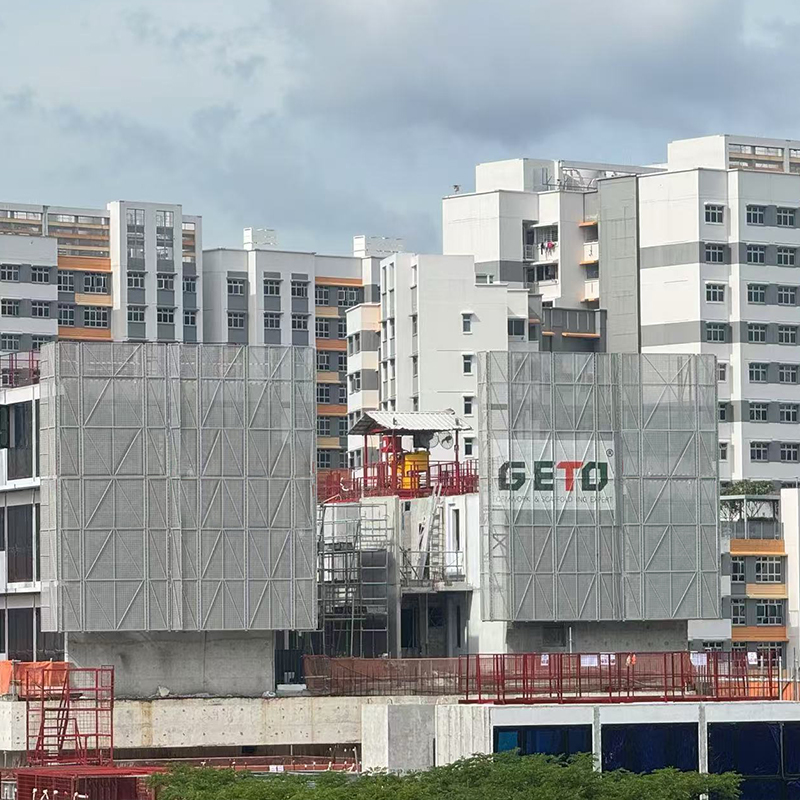
What is a Safety Screen?
In the field of construction engineering, a safety screen (safety protection screen/climbing scaffolding net) is a protective structure installed around the perimeter of a building's facade. Its core mission is very straightforward: to create a physical barrier to prevent accidental falls and to intercept potentially falling construction materials or tools.
Unlike traditional green safety nets, modern safety screens typically use perforated metal panels or high-strength steel mesh, and are mostly used in the construction of high-rise and super high-rise buildings with more than 20 stories, acting as a "golden shield" for the building's facade.
What is a Safety Screen System?
When we talk about a safety screen system, we are referring not just to the net itself, but to a complete, mobile engineering system.
A standard safety system consists of the following core components:
• Steel Frame: The skeleton of the system, providing rigid support.
• Protective Screen: Fully or semi-sealed metal panels providing wind, dust, and fall protection.
• Lifting Mechanism: Utilizing hydraulic or tower crane power, the entire system is raised as the building ascends.
• Anchor System: Securely anchors the system to the building's floor slabs, beams, or shear walls.
This systematic design allows it to tightly wrap around the construction level at the top of the building like a "glove," rising in tandem with the structure's growth.
What is the Safety Screen System primarily used for?
The applications of construction safety screens extend far beyond simple "fences." They are a core component of modern construction site management, primarily used in the following three aspects:
Preventing Falls from Heights
This is the system's most fundamental purpose. In high-altitude work, gravity is the greatest enemy.
• Personnel Protection: Provides psychological safety and physical fall protection for workers operating at the building's edge.
• Impact Protection: Prevents concrete blocks, rebar fragments, tools, etc., from falling into the street or onto floors below, protecting the public and people on the ground.
Controlling Construction Risks at the Building's Exterior
The safety screen system creates a relatively enclosed and stable microenvironment for exterior wall work:
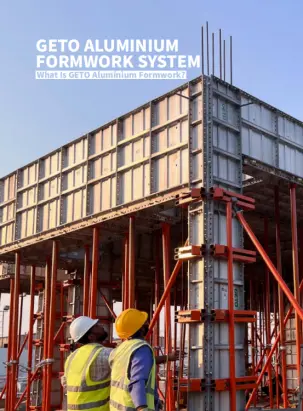
• Exterior formwork construction: Workers can safely dismantle and install aluminum formwork inside the safety screen.
• Coordination with climbing scaffolding construction: Seamless integration with the aluminum formwork system enables streamlined construction.
• Concrete pouring stage protection: Reduces the impact of wind on pouring quality.
Enhancing the Overall Safety Level of the Construction Site
In Europe, America, and other developed regions, the use of construction safety screens is often a compliance requirement. It helps projects:
• Meet stringent international HSE (Health, Safety, and Environment) standards.
• Significantly reduce the risk of work stoppages and compensation due to safety accidents.
• Enhance the contractor's brand image and showcase a "safety first" corporate culture.
The Role of High-Rise Safety Screens in High-Rise Buildings
Why Must High-Rise Buildings Use Safety Screens?
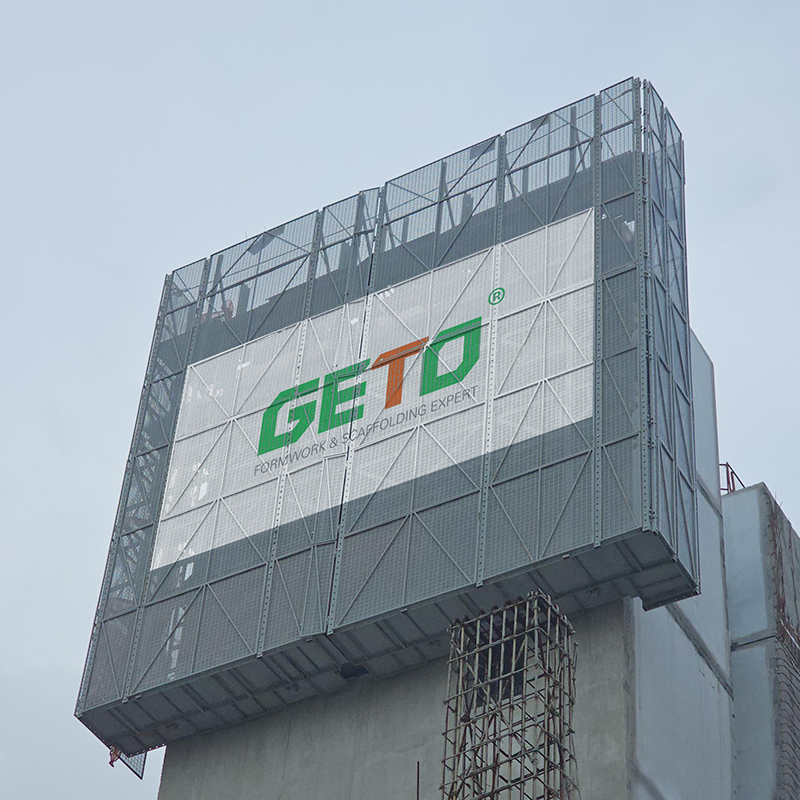
Safety Screens in High-Rise Buildings
As building height increases, environmental variables change drastically. Safety screens for high-rise buildings are the only solution to address these extreme challenges.
• High-altitude wind load: Wind speeds at high altitudes are much higher than at ground level. GETO's system design can withstand wind loads up to level 9 without additional reinforcement, ensuring the stability of the work platform.
• Psychological fear effect: Transparent or open scaffolding can cause dizziness among workers, reducing efficiency. Fully enclosed safety screens effectively alleviate fear of heights.
Special Risks of High-Rise and Super High-Rise Construction
In skyscraper construction, high-rise safety screens address the following pain points:
• Large exposed facade area: Traditional cantilever scaffolding cannot cover the enormous facade requirements of super high-rise buildings.
• Long construction cycle: The climbing scaffold system is installed once and used until the top is reached, eliminating the need for repeated erection and dismantling like traditional scaffolding.
• Multi-trade cross-operation: Multiple platforms can be set up inside the safety screen, allowing steelworkers, carpenters, and concrete workers to work simultaneously without interference.
How does the Safety Screen System work?
Basic Structure and Principle of the Safety Screen System
The working logic of the Safety Screen System can be summarized as "attachment-lifting-fixing".
• The main load-bearing steel structure is fixed to the already poured floor via attachment supports.
• The guide rail system guides the safety screen to slide vertically upwards.
• The hydraulic or electric lifting system provides power. GETO recommends using GETO hydraulic drive system, which is smoother, has a lower failure rate, and is more cost-effective than traditional electric hoists.
Unique Safety Screen System Workflow
Once one floor is completed and the concrete has reached a certain strength, workers operate the hydraulic system to lift the entire safety screen one floor higher and then re-lock it onto the new floor. The entire process is completely enclosed, and the internal changes are almost imperceptible to outsiders.
Ultimate Comparison with Traditional Scaffolding
To help you understand more intuitively why safety screen systems are the inevitable trend, please see the table below:
Traditional Scaffolding vs. Safety Screen System
|
Feature |
Traditional Scaffolding |
Safety Screen System |
|
Safety Level |
Low (High risk of falling objects) |
High (Fully enclosed protection) |
|
Automation |
None (Manual erection/dismantling) |
High (Hydraulic/Crane climbing) |
|
Wind Resistance |
Low |
High (Engineered for high wind loads) |
|
Labor Cost |
High (Requires large scaffolding teams) |
Low (Minimal team to operate climbing) |
|
Facade Access |
Full coverage required |
Covers only active working floors |
|
Aesthetics |
Cluttered visual impact |
Clean, professional appearance |
|
Material Reuse |
Low |
High (Steel components reusable) |
Core Advantages of Construction Safety Screens
Enhanced Construction Safety (Safety First)
Construction safety screens offer a fully sealed design (including guide rails, corners, and protrusions), creating an impenetrable barrier. The fall arrestor installed during climbing is independent; even if the lifting system malfunctions, the fall arrestor locks instantly, minimizing safety issues caused by operational errors.
Improved Construction Efficiency
• No Re-erecting: Assemble once and use it until the top is reached.
• Rapid Lifting: The hydraulic system can complete lifting in a short time, without occupying tower crane time (if it's a self-climbing type), allowing the tower crane to focus on lifting steel bars and concrete.
Cost-Effectiveness
While the initial investment may seem higher than scaffolding, the overall cost-effectiveness is very high:
• Reusability: Steel components have a long lifespan, which is a major reason for the popularity of the GETO system.
• High versatility: Component compatibility exceeds 95%, facilitating inventory management.
• Reduced labor costs: The labor required for dismantling, transportation, and operation is significantly lower than traditional solutions.
Technical Advantages of the GETO Safety Screen System
As an industry pioneer, the GETO safety screen system features refined innovations tailored to different building types. We understand the differences in facades between commercial and residential buildings, and therefore offer targeted solutions.
Customized Design for Residential and Commercial Buildings
• Residential Screen: Residential buildings typically have complex facades and many balconies. The GETO system features multiple platform levels, perfectly covering the external construction area and facilitating workers to handle complex details.
• Commercial Screen: Office building facades are flat, typically requiring work only from the internal edges. GETO's lightweight system, with fewer platform layers, is more economical and efficient.
GETO's Technical Strengths
- High Wind Resistance Design: Our system undergoes rigorous wind tunnel testing and can withstand wind loads up to level 9 without additional reinforcement.
- Hydraulic Drive Advantages: GETO utilizes an advanced hydraulic cylinder and pump station system, offering more precise control and lower maintenance costs than electric hoists.
- Versatile Adaptability: Even on irregularly shaped facades with varying or constant tilt angles, GETO's adjustable floor supports adapt perfectly. Platform panels and sealing covers can be completely flush with the ground, eliminating tripping hazard.
- Global Project Application Cases: From high-end apartments in Southeast Asia to commercial complexes in the Middle East, the GETO safety screen system is safeguarding landmarks worldwide. We have proven experience in implementing safety screens in complex mixed-use buildings, dense apartment buildings, and modern office buildings.
Which Building Projects is Safety Screen Applicable To?
Vertically growing buildings are all suitable for safety screen systems:
1. High-rise residential buildings: Multiple standard floors maximize the advantages of climbing scaffolding.
2. Super high-rise office buildings: Extremely high requirements for both appearance and safety.
3. Commercial complexes: Complex structures require flexible protection solutions.
4. Hotel projects: Low noise and a clean appearance must be maintained during construction.
5. Urban mixed-use development projects: The first choice for large-scale construction.
What should be considered when choosing a Safety Screen System?
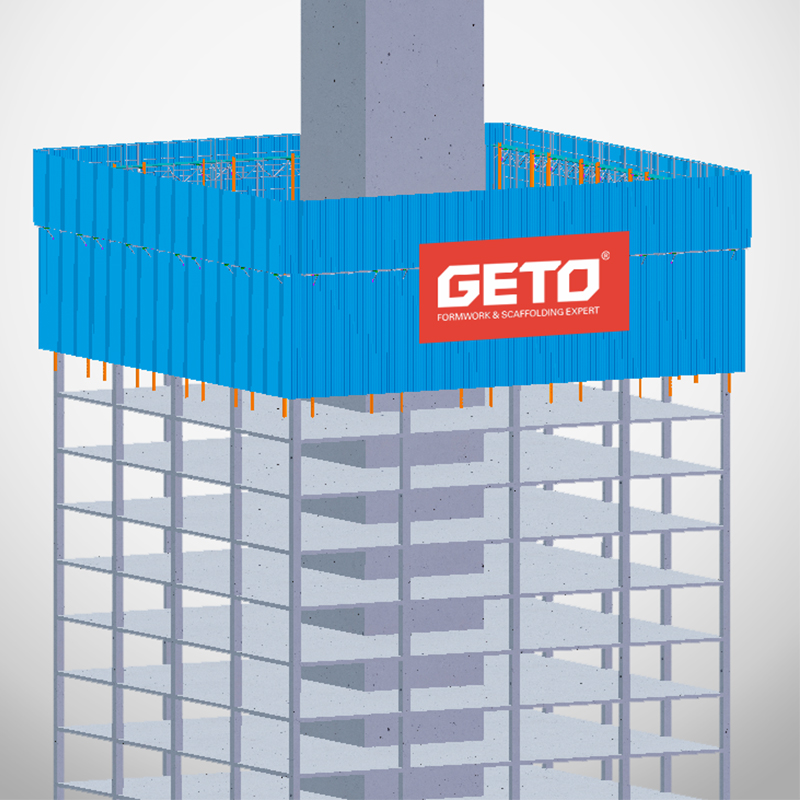
When purchasing or leasing, please be sure to evaluate the supplier using the following checklist:
1. Compliance: Does it comply with local and international safety standards (such as CE, OSHA, etc.)?
2. Climbing capacity: Is it hydraulically automated or does it require a tower crane? (GETO can provide both, depending on the project).
3. Load-bearing capacity and wind resistance: Can it withstand local typhoons or strong winds?
4. Design adaptability: Does the manufacturer have the capability to provide detailed designs for irregular structures?
5. Technical Support: Does the supplier provide on-site guidance services?
Future Trends: Intelligent High-Rise Safety Screens Future safety systems will be smarter:
- Remote Monitoring System: Real-time transmission of load data and wind speed alarms.
- Structural Health Monitoring: Sensors automatically detect loose bolts or structural fatigue.
- BIM Integration: Simulate the climbing process during the design phase to prevent collisions.
- Green Construction: Lighter materials and lower carbon emissions from transportation.
FAQ
Q1: What are safety screen systems used for?
A: They are used to provide a perimeter protection barrier for high-rise construction, preventing falls of personnel and materials, while also shielding the work area from wind and dust.
Q2: What's the difference between safety screens and scaffolding?
A: Safety screens are integrated systems that rise with the building, providing all-around protection and offering greater safety. Scaffolding is a static structure that must be erected from the ground or uses a cantilever structure, offering poorer protection and lower efficiency in high-rise buildings.
Q3: Are safety screens mandatory for high-rise buildings?
A: In many developed countries and regions, due to strict safety regulations, buildings exceeding a certain height must install safety screens to ensure the safety of the public and workers.
Q4: How does a safety screen system work?
A: It is secured to the building structure using anchoring devices. After each floor is completed, the system uses hydraulic cylinders or a crane to lift itself to the next floor and lock into a new anchor point.
Q5: Why choose the GETO safety screen system?
A: GETO offers specialized designs for residential and commercial buildings, featuring hydraulic drive for excellent stability, high wind resistance, and up to 95% component commonality, ensuring both safety and cost-effectiveness.
Conclusion
Safety screen systems have revolutionized the construction logic of high-rise buildings. They’re no longer just a simple auxiliary tool, but a core asset ensuring timely and safe project delivery.
From the wind and fall protection of high-rise safety screens to the cost-efficiency optimization of building safety screens, choosing a superior protection system is crucial. GETO safety screen systems, with their innovative hydraulic technology, exceptional versatility, and adaptable commercial/residential solutions, are becoming the preferred choice for contractors worldwide.
Want to make your high-rise projects safer and more efficient? Contact the GETO expert team today for a customized safety screen system solution. Let us equip your landmark buildings with the most robust "protective armor."