
Most people start with the price. The more useful place to start is the drawing. The same square metreage of aluminium formwork behaves very differently depending on whether the building repeats one layout forty times or changes shape every third floor, and a supplier who ignores that is quoting you a product, not a plan for your site.
Begin with the building
Before you ask anyone for a number, get clear on what the formwork has to do. What is the structure, what is the storey height, how many floors repeat, what cycle are you aiming for, and how regular is the facade. Aluminium pays for itself when the same layout is poured again and again; on a building that changes constantly, the maths falls apart. A decent supplier will ask these questions before quoting, and will say so if aluminium is the wrong tool for the job.
The system itself varies more than the catalogue suggests. Wall ties, panel layout, corners, stairs, all of it changes between suppliers. Ask them to explain their way of doing it against your building, not against their brochure.
Check the metal, not just the price
Aluminium formwork is usually extruded from 6061-T6. That is not a detail; it is the difference between panels that hold their shape and panels that flex on every pour. Ask for the alloy, the temper, and the certificates.
Wall thickness is where the cheap quotes hide. Two panels that look the same can contain very different amounts of aluminium. Thin sections are cheaper to make and move in the concrete. Weigh a sample if you can, and look at the welds while you are at it. Rough, incomplete welds and a poor surface finish will show up in your concrete for the rest of the project.
Look at how they draw before they cut
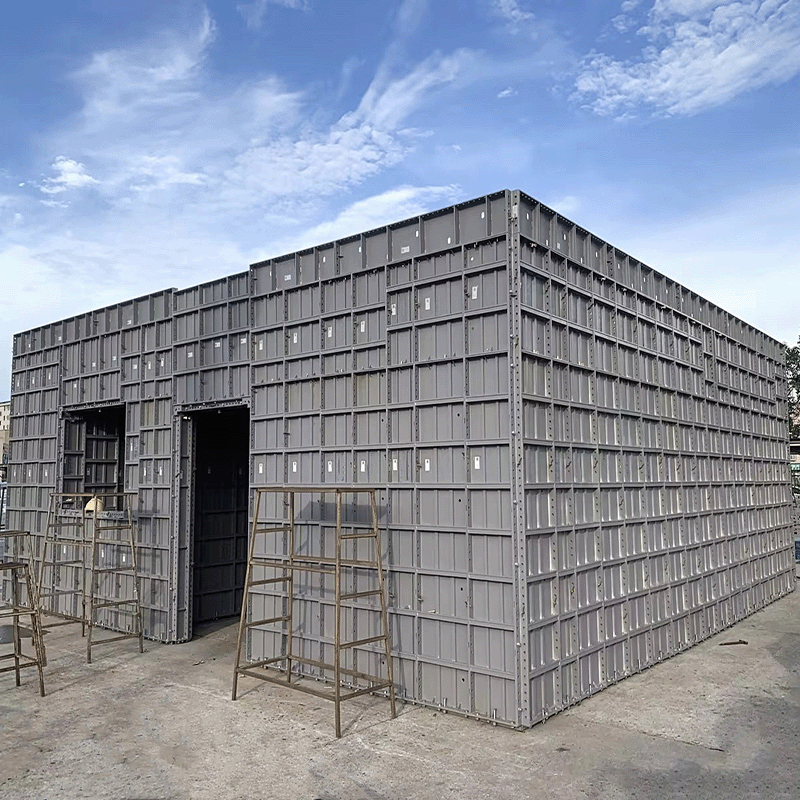
Aluminium formwork is won or lost at the drawing stage. The supplier should model the building, run the clashes, and hand over fabrication drawings that a crew can build from without asking questions. Ask to see drawings from a project like yours, not a marketing render.
Drawings without calculations are not enough. Someone has to work out the pour pressure, the tie spacing, the props and the striking sequence, and that work should come with the panels. A supplier that will not produce a calculation is leaving that risk on your site.
Customisation is the honest test. Every real building has bay windows, balconies, stairwells, service openings. See how the supplier handled those on jobs they have already finished. A manufacturer with a track record will show you the work; an intermediary will change the subject.
Ask how it gets made and when it arrives
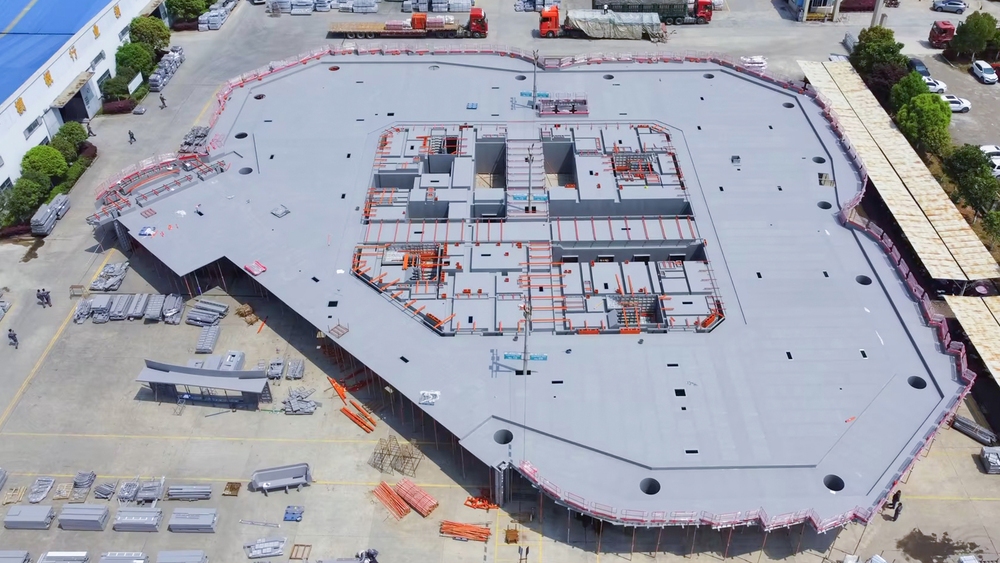
Formwork that turns up after the pour is worth nothing. Ask about capacity, not just whether they are busy now. Ask how the panels are produced. Robotic welding gives repeatable joints on standard panels, while skilled welders handle the custom and tight-corner work — a good supplier runs both and can show you which applies to your job.Get the lead time in writing, and ask what happens to it if the drawings change mid-production, because they usually do.
Ask for a sample panel or a trial assembly before the full run. It verifies the design and fabrication before they are repeated across a thousand pieces — and a supplier that designs with industrial 3D software catches most issues at the drawing stage, so the first panel already comes out right.
Make sure the paperwork is real
ISO 9001, material certificates, third-party test results. None of it is decorative, and all of it is easy to fake with a PDF. Ask to see the documents and ask where the aluminium came from.
Traceability matters when something goes wrong, which it eventually does. If a batch of panels fails on site, you want to know which pour and which material lot produced them. A supplier who can trace that can fix it; one who cannot is guessing.
Count the whole cost, not the sticker
Aluminium costs more up front than timber, and comparing the two on unit price is pointless. The number to ask for is cost per pour. A good panel does two to three hundred pours or more, and that is where the first cost disappears.
Weight shows up as crane time and handling on every single cycle, which is a cost even if it never appears on an invoice. Scrap value is real too, because aluminium keeps its value at the end of the job.
Then add the things that are not on the quote: transport, modifications after fabrication, and the cost of redoing a bad drawing set. Those are the differences between a cheap supplier and a disciplined one, and they are why the sticker price is the least reliable number you will be given.
Find out what happens after delivery
Most formwork problems happen on site, not in the factory. Ask who comes with the delivery: engineers, supervisors, someone to train the crew and fix a panel that needs altering at the last minute.
A supplier that sends people to the first few pours catches small problems before they become delays. One that disappears after the invoice is a problem no matter what it charged. Get the names, and make sure the support is in the contract.
A short checklist
· Materials and certificates confirmed — alloy, temper and test results.
· A sample panel checked and weighed.
· Drawings, clash checks and calculations from a similar project.
· Production capacity and a delivery schedule agreed.
· Traceability and references from finished projects.
· On-site support discussed and agreed on terms.
Choose a supplier who treats it as engineering
We make aluminium formwork at GETO, and we would rather show you the drawings, the calculations and a real project than argue about unit price. Look at our project cases, or send your drawings and quantities through the contact page and we will come back with a system recommendatio.