
If you have seen both terms on quotes, drawings and supplier websites, it is easy to assume they are two different products. They are not. In practice the two names describe the same families of temporary structures, and the real difference is how they are used. "Building scaffolding" usually means the access platforms wrapped around or inside a building for facade, masonry and finishing work. "Construction scaffolding" is the broader term that covers everything erected during a project, including access scaffolding, support scaffolding and shoring. What changes between the two is not the tube; it is the load they carry and the standard they have to meet.
This article explains what each term means, where the two overlap, and how to make sure you buy or rent the right one for the job.
What each term actually means
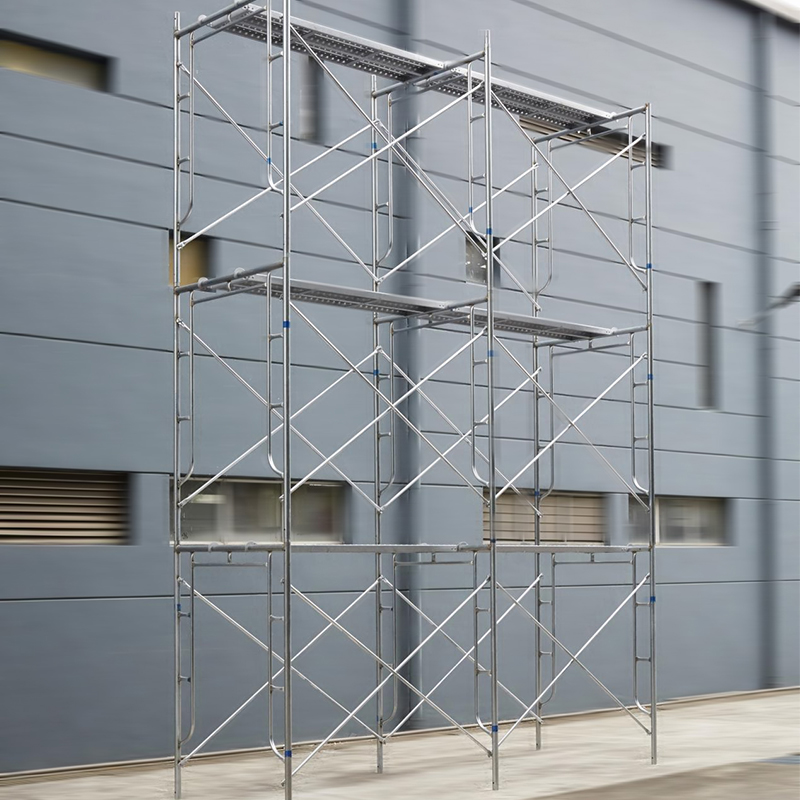
Building scaffolding is the everyday image most people have of a scaffold: a working platform against a facade, used for bricklaying, rendering, painting, cladding and general finishing work. The load is mostly people, hand tools and light materials. Frame and ringlock scaffolding systems dominate this kind of work because they are quick to erect and easy to move between elevations.
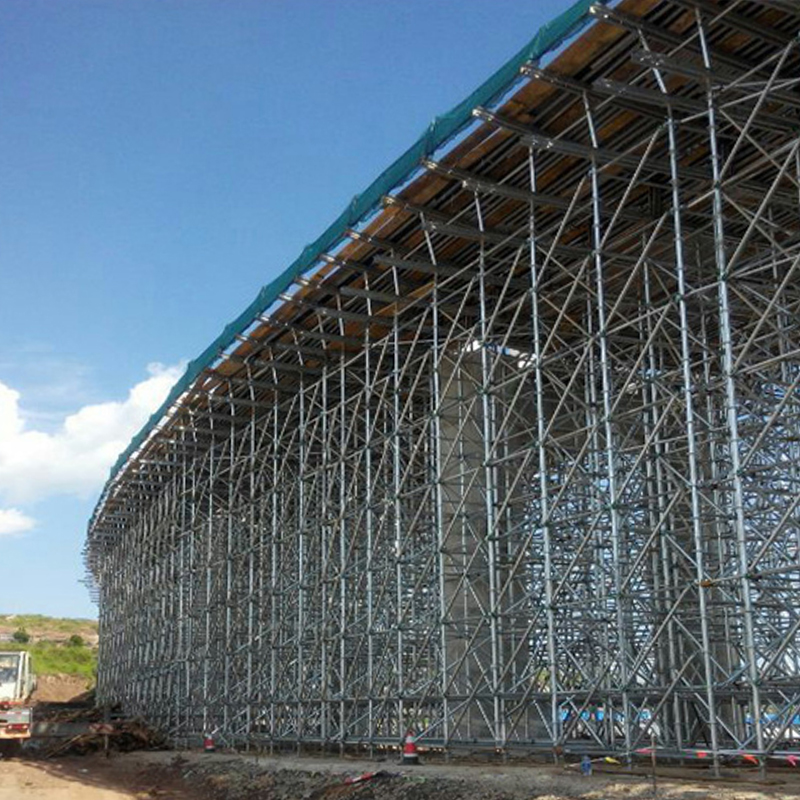
Construction scaffolding is an umbrella term, not a separate product. It covers every temporary structure used while a building or civil structure is under construction. That includes facade access, but it also includes support scaffolding (falsework) that carries the weight of wet concrete and formwork, and shoring that braces walls or excavations. A support tower holding up a slab and an access platform for a painter are both "construction scaffolding", but they are engineered to very different loads.
The overlap is the point. Most systems sold as building scaffolding can be configured as construction scaffolding, and vice versa. The distinction is functional, not a difference in material.
The differences that matter
When the two terms appear on a specification or a quotation, they usually point to different expectations. The table below shows the practical differences.
|
|
Building scaffolding (facade access) |
Construction scaffolding (structural support) |
|
Typical purpose |
Facade, masonry, rendering, painting, cladding |
Slab soffits, beams, columns, bridge decks, propping |
|
Typical load |
Workers, tools, light materials |
Formwork plus wet concrete, often much higher |
|
Common systems |
Frame, ringlock access towers |
Ringlock support towers, steel props, shoring |
|
Safety focus |
Guardrails, ties, working platforms, falls |
Load capacity, bracing, base support, deflection |
|
Design calculation |
Usually follows standard access configurations |
Almost always needs a specific design and calculation |
A useful rule of thumb: if the scaffold holds people working on a surface, it is access. If it holds the structure until the structure can hold itself, it is support. Mixing the two is where most problems start.
How to choose when you buy or rent
Match the system to the project phase rather than to the name on the quotation.
During the structure phase, you need support capacity. Slab and beam soffits, tall cores and long spans call for ringlock support towers, steel props and engineered falsework. The design calculation matters more than the brand, because the scaffold is carrying structural load for hours or days at a time.
During the finishing phase, you need safe access. Frame or ringlock access platforms with guardrails and toe boards are enough for most facade and interior work, and they cost less to erect and move.
A single system can often serve both phases. Ringlock, in particular, is used as both an access tower and a support tower, which is one reason it has become the default on so many sites. If your project moves from structure to finishes, confirm with the supplier that the same components can be reconfigured without overloading them.
The safest check is the load class. Whatever the scaffold is called, confirm what load class it is designed for and match that to how you intend to use it. A light access configuration must not be pressed into service as falsework without a fresh design.
Common misconceptions
The first is that the two terms describe different products. They do not. The same ringlock standard and ledger can appear in both an access scaffold and a heavy support tower; only the configuration and the calculation change.
The second is that any scaffold can hold concrete. A facade access platform is not falsework. Putting wet concrete on a scaffold rated for workers and tools is how overloaded standards and collapses happen.
The third is comparing systems on unit price while ignoring the load class and design. A cheap access-rated system is not a saving if the project later needs it to support structure and it cannot.
Frequently asked questions
Can building scaffolding be used as construction support?
Only if it is reconfigured and re-calculated for support loads. A facade access platform and a falsework tower may use the same components, but the support configuration needs its own design, bracing and base.
What should I use for brickwork on a facade?
A frame or ringlock access scaffold with guardrails, toe boards and the correct tie pattern is the normal choice. It is light, fast to erect and moves easily between elevations.
How do I tell an access scaffold from a support scaffold?
Look at the job and the documentation. If it carries people working on a surface, it is access. If it carries formwork and concrete, it is support and should come with a design calculation and a stated load class.
Do I need two different systems for access and support?
Not necessarily. Systems like ringlock cover both roles, which lets you carry one fleet across the structure and finishing phases. Each configuration still needs its own load check.
Choose the right configuration with GETO
GETO manufactures ringlock scaffolding, steel props and integrated formwork systems, and supplies them with design calculations and material tracking. See how the systems perform on real projects in our project cases, or send your project type and intended use through our contact page and we will confirm the right configuration and load class for the job.