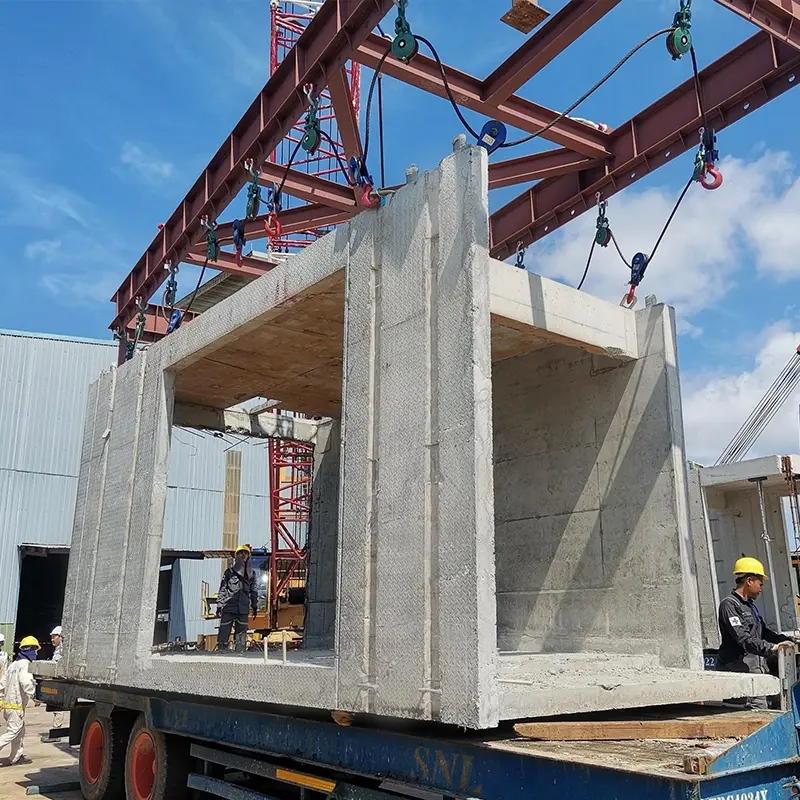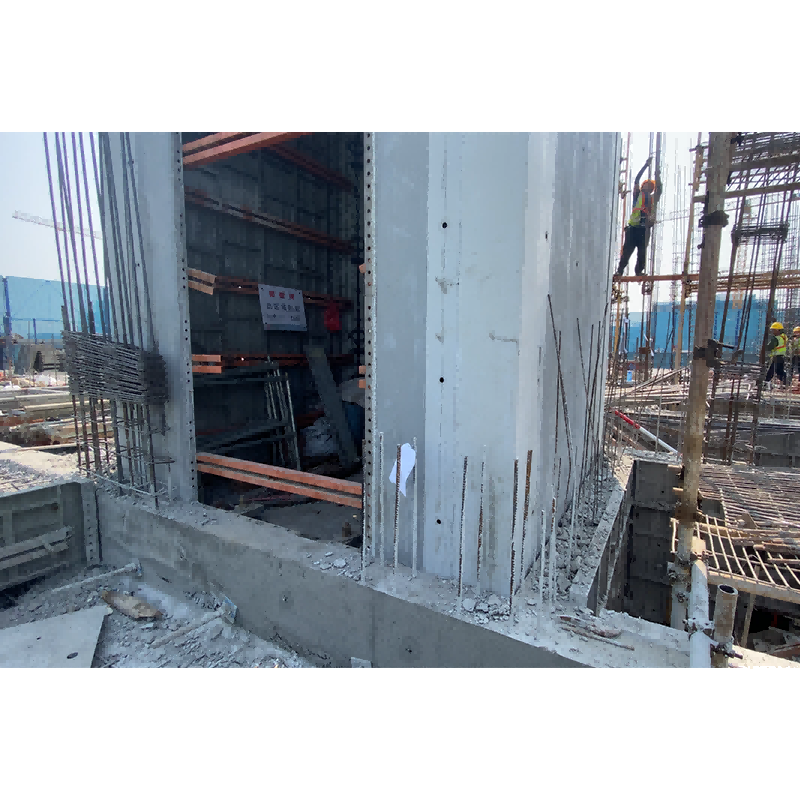

Modern construction projects require scaffolding systems that are safe, stable, efficient, and capable of supporting substantial loads. As buildings and infrastructure projects become more complex, contractors are looking for alternatives to traditional tube-and-coupler scaffolding that can reduce installation time while providing reliable structural performance.
Ringlock scaffolding is one of the modular scaffolding systems designed to meet these requirements. Its standardized components and wedge-locking connections allow workers to assemble stable structures efficiently without relying on numerous individual couplers.
But what exactly is ringlock scaffolding, and how does it work? This guide explains its basic structure, connection mechanism, main components, advantages, and common applications, with a focus on the GETO ringlock scaffolding system.
What Is Ringlock Scaffolding?
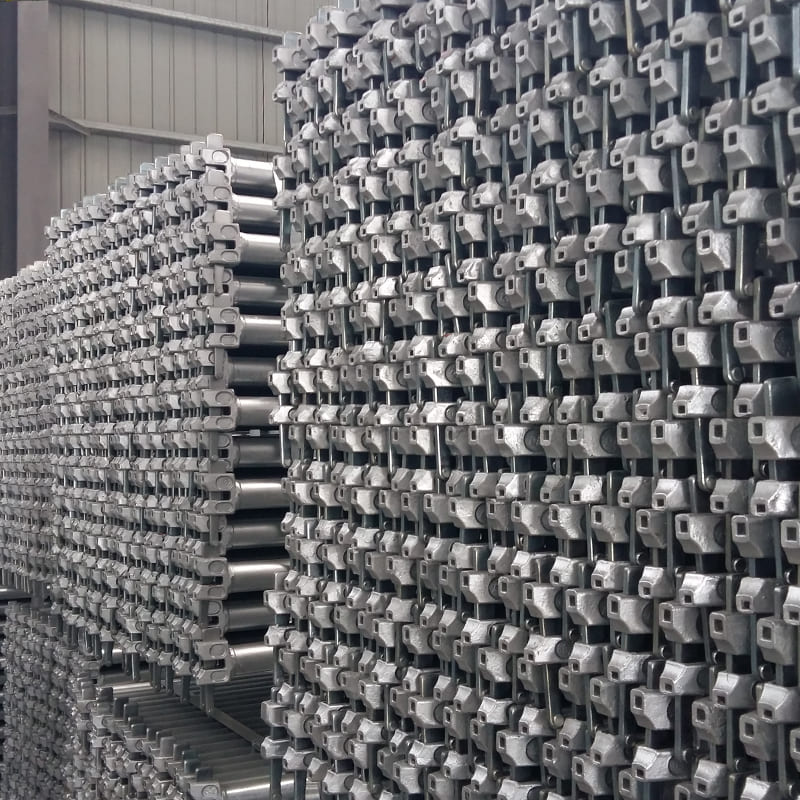
Ringlock scaffolding is a modular scaffolding system consisting of vertical standards, horizontal ledgers, diagonal braces, and connecting components. It is named after the ring-shaped rosettes welded to the vertical standards.
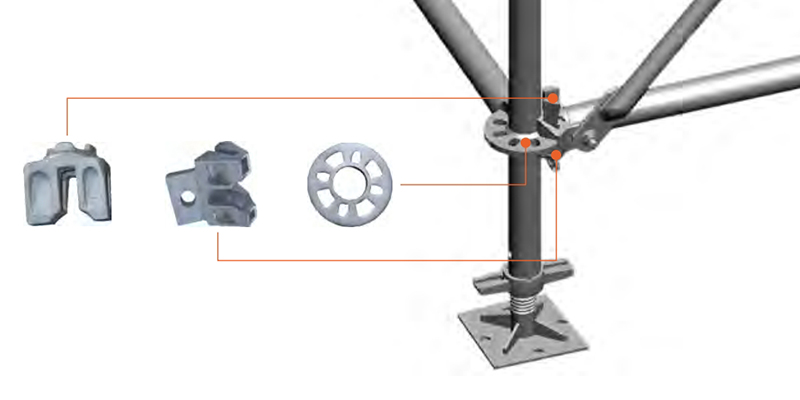
These rosettes act as connection points for the horizontal and diagonal members. A single rosette can provide multiple connection positions, allowing the scaffolding structure to be configured in different directions and layouts.
Unlike traditional tube-and-coupler scaffolding, which uses separate clamps to connect steel tubes, ringlock scaffolding uses a built-in connection mechanism. The head of a ledger or brace is positioned against the rosette, and a wedge pin is inserted and secured with a hammer.
This modular design makes ringlock scaffolding suitable for different construction environments. Components can be combined according to the required height, width, load capacity, and structural configuration.
For projects that require a standardized temporary support and access solution, the GETO Ringlock Scaffolding System provides a modular system designed for construction and heavy-duty applications.
How Does Ringlock Scaffolding Work?
The working principle of ringlock scaffolding is based on two key elements: the rosette connection and the self-locking wedge.
The vertical standards provide the main load-bearing structure, while ledgers and diagonal braces connect the standards horizontally and diagonally. Together, these components create a stable three-dimensional framework.
1. The Rosette Connection
Rosettes are welded onto the vertical standards at standardized intervals. Each rosette has multiple openings that allow ledgers and diagonal braces to be connected in different directions.
This design provides flexibility when creating scaffolding structures around buildings, bridges, industrial equipment, and other complex construction areas.
Because the connection points are fixed on the standards, workers do not need to manually determine the position of a separate coupler for every connection. This helps make assembly more consistent and straightforward.
2. The Self-Locking Wedge Connection
The connection process is simple:
Step 1: Position the ledger or diagonal brace head against the appropriate opening on the rosette.
Step 2: Insert the wedge pin through the component head and rosette.
Step 3: Strike the wedge with a hammer to lock the connection securely.
Once the wedge is properly locked, the component is firmly connected to the standard. The connection mechanism provides a stable joint while reducing the need for bolts, nuts, and multiple types of couplers.
One practical advantage is that basic assembly does not require a large number of specialized tools. This can help simplify installation and dismantling, particularly on large construction sites.
Main Components of Ringlock Scaffolding
A ringlock scaffolding system consists of several standardized components, with each one performing a specific structural function.
Standards
Standards are the vertical members that provide the primary load path within the scaffolding structure. They transfer loads from upper components toward the supporting surface.
GETO provides M48 and M60 standard series manufactured using Q355 steel. The M60 series is designed for applications requiring higher load-bearing performance.
According to GETO's product specifications, the load-bearing capacity of a single standard in the M60 series can reach up to 19 tons under specified conditions. The actual capacity of a complete scaffolding structure depends on factors such as component spacing, height, bracing, foundation conditions, and engineering design.
Ledgers
Ledgers are horizontal members that connect the vertical standards. They maintain the spacing between standards and contribute to the overall stability of the scaffold.
GETO ledgers are generally manufactured using Q235 steel and are available in standardized sizes for different system configurations.
Diagonal Braces
Diagonal braces strengthen the scaffolding structure by connecting standards diagonally. They help reduce lateral movement and improve overall rigidity.
By forming triangular structural arrangements, diagonal braces are particularly important for taller scaffolding structures and heavy-duty support applications.
Rosettes and Wedge Pins
The rosette is the main connection point welded to the standard, while the wedge pin locks the ledger or brace head into position.
Together, these components form the characteristic connection mechanism of ringlock scaffolding.
Jack Bases
Jack bases are installed at the bottom of the standards. They help transfer loads to the supporting surface while providing height adjustment.
A properly prepared and stable foundation is essential for the safe operation of any scaffolding system. The base arrangement should therefore be considered as part of the overall structural design.
Key Advantages of Ringlock Scaffolding
High Load-Bearing Capacity
One of the main reasons ringlock scaffolding is used for infrastructure and heavy-duty construction is its ability to support substantial loads.
GETO's M60 series is designed for demanding applications, with a single standard capable of reaching a load-bearing capacity of up to 19 tons under specified conditions.
This makes the system suitable for applications involving heavy temporary loads, including concrete support and large structural projects.
Fast and Simple Assembly
Traditional scaffolding can require a large number of couplers and fastening operations. Ringlock scaffolding simplifies this process through its integrated rosette and wedge connection.
Workers can position the component, insert the wedge pin, and secure the connection with a hammer. This straightforward installation method can reduce repetitive fastening work and improve labor efficiency.
Stable Connections
The standardized rosette connection helps create consistent connection points throughout the scaffolding structure.
When properly assembled and braced, the system can provide a stable framework capable of handling demanding construction conditions.
GETO ringlock scaffolding can also use hot-dip galvanizing to improve corrosion resistance. This protective treatment helps extend the service life of steel components when they are properly stored, maintained, and used in suitable environments.
Modular and Flexible Design
Ringlock scaffolding is based on standardized components, allowing the system to be configured for different project requirements.
It can be adapted to various heights, widths, layouts, and structural conditions. This makes it suitable for both temporary access scaffolding and heavy-duty support structures.
Where Is Ringlock Scaffolding Used?
Ringlock scaffolding is used across construction, infrastructure, industrial, and temporary structure projects.
Infrastructure Construction
Bridge construction, tunnel projects, large-span structures, and other civil engineering projects often require temporary structures capable of supporting significant loads.
The modular design of ringlock scaffolding allows contractors to create support structures that adapt to different project geometries.
Industrial Facilities
Ringlock scaffolding can be used in power plants, refineries, chemical facilities, shipyards, and other industrial environments.
It can provide temporary access platforms and support structures during construction, installation, inspection, and maintenance.
Commercial and Residential Buildings
For building construction, ringlock scaffolding can be used for exterior work, high-rise construction, concrete support, and other applications where workers need safe temporary access or structural support.
Stages and Temporary Structures
The modular nature of ringlock scaffolding also makes it suitable for temporary structures such as stages, grandstands, viewing platforms, and event-related structures.
For applications involving public access or significant loads, proper structural design and safety verification are essential.
Ringlock Scaffolding vs. Traditional Scaffolding
Ringlock and traditional tube-and-coupler scaffolding can both provide temporary access and support, but their connection methods are different.
|
Feature |
Ringlock Scaffolding |
Traditional Tube-and-Coupler |
|
Connection |
Rosette and wedge |
Couplers and clamps |
|
Assembly |
Standardized connection |
Individual tube connections |
|
Tools |
Mainly hammer-based |
Fastening tools commonly required |
|
Configuration |
Modular |
Highly flexible |
|
Installation efficiency |
Generally higher |
More labor-intensive |
|
Heavy-duty applications |
Suitable |
Suitable with proper engineering |
The performance of any scaffolding system depends on correct engineering, installation, inspection, and site conditions. Ringlock scaffolding is particularly attractive when standardized connections, installation efficiency, and structural support are important project requirements.
Frequently Asked Questions
Is Ringlock Scaffolding Safe?
Ringlock scaffolding uses standardized connection points and self-locking wedge connections that can provide stable joints when properly installed. Safety also depends on correct structural design, bracing, foundation conditions, inspection, and compliance with applicable regulations.
Can Ringlock Scaffolding Be Customized?
Yes. Its modular design allows different component sizes and configurations to be selected according to project height, load requirements, working environment, and site conditions. GETO can provide project-specific scaffolding solutions based on different construction requirements.
Is Ringlock Scaffolding Suitable for Heavy-Duty Projects?
Yes. The system is widely suited to heavy-duty applications. GETO's M60 series is designed for higher load requirements, with a single standard capable of reaching up to 19 tons under specified conditions.
What Materials Are Used in GETO Ringlock Scaffolding?
GETO uses Q355 steel for its M48 and M60 standards, while the ledgers generally use Q235 steel. Components can also receive hot-dip galvanizing treatment for improved corrosion resistance.
Conclusion
Ringlock scaffolding is a modular system designed to provide efficient assembly, reliable connections, and strong structural support. Its rosette and self-locking wedge mechanism simplifies the connection between standards, ledgers, and diagonal braces, making it suitable for a wide range of construction and industrial applications.
With Q355 steel standards, M48 and M60 series options, and a load-bearing capacity of up to 19 tons for a single M60 standard under specified conditions, GETO ringlock scaffolding can meet the requirements of many demanding temporary support projects.
From bridges and tunnels to industrial facilities, buildings, and temporary structures, ringlock scaffolding provides a practical solution for projects where safety, efficiency, and load-bearing performance are essential.
For more information, visit the GETO Ringlock Scaffolding System and contact GETO to discuss the right scaffolding configuration for your project.