
The choice of formwork system is one of the most consequential decisions a construction project manager can make. It directly influences not only the project timeline but also the labour budget, material procurement strategy, and even the final quality of the concrete structure. While the initial quotation for an aluminium formwork system typically exceeds that of traditional timber alternatives, this surface-level comparison masks a far more complex financial reality. For projects of sufficient scale, particularly those involving repetitive floor layouts in high-rise construction, aluminium formwork delivers substantial cost advantages that become increasingly pronounced with each additional storey.
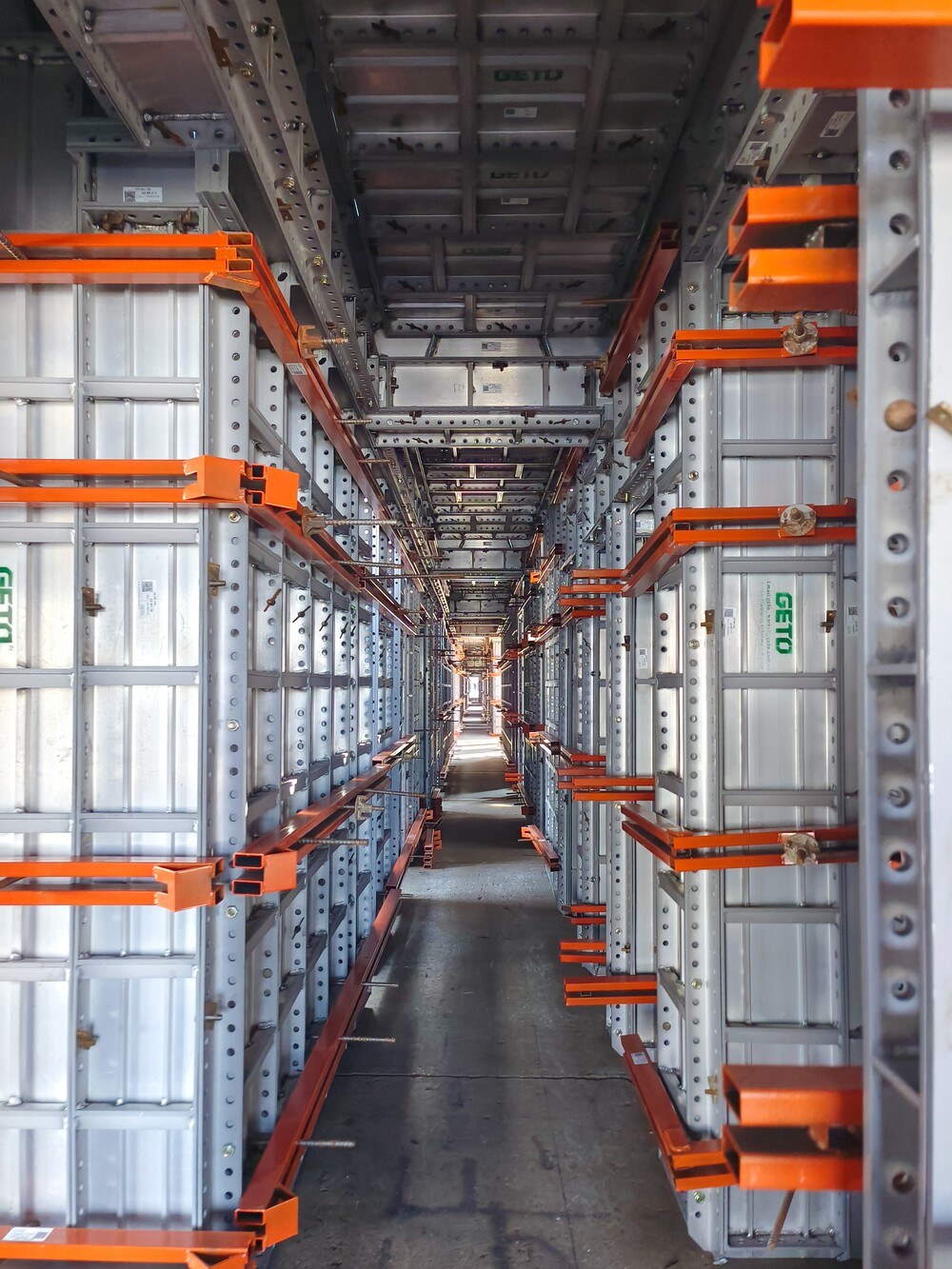
The Economics of High Turnover: Calculating the Per-Cycle Amortisation Cost
The foundation of aluminium formwork’s economic viability lies in its exceptional reusability. A traditional timber formwork system, depending on the material quality and handling practices, can typically be reused several times before signs of wear affect its performance and surface finish. Steel formwork provides higher durability and can achieve a significantly longer service life through repeated use. Due to its robust structure and weight, steel formwork requires proper lifting and installation planning to maximize construction efficiency.
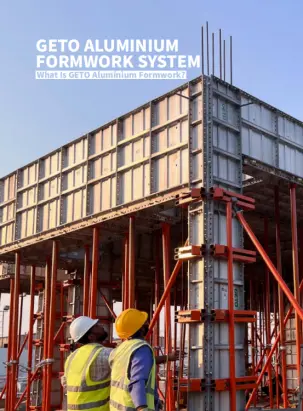
Aluminium formwork fundamentally changes this equation. Manufactured from high-strength aluminium alloy, particularly the 6061-T6 grade, these systems are engineered to withstand the rigours of repeated concrete pours while maintaining their dimensional integrity. A well-maintained aluminium formwork system can achieve between two hundred and three hundred use cycles, and in some cases even exceeding this range depending on project conditions and maintenance protocols .
This longevity translates directly into per-cycle amortisation costs that are remarkably low. While a timber formwork system may need to be fully replaced multiple times over the course of a single high-rise project, an aluminium system purchased at the outset can serve the entire build with minimal replenishment. The procurement cost of aluminium panels and associated components is spread across hundreds of pours, resulting in a per-square-metre cost that diminishes with each completed floor. For projects with twenty or more identical storeys, this financial dynamic becomes particularly compelling, as the initial investment has sufficient repetitions to achieve full payback and begin generating significant savings relative to the cumulative cost of repeatedly purchasing and disposing of timber alternatives .
Labour Cost Comparison: Achieving Approximately 35% Savings Over Timber Formwork
Labour represents one of the largest variable costs in any construction project, and the formwork installation and stripping phase is notoriously labour-intensive. The physical characteristics of the formwork material play a decisive role in determining the workforce required and the speed at which they can operate.
Timber formwork, while familiar to most construction crews, demands considerable physical effort. Individual panels are heavy, and the assembly process is less standardised, requiring on-site cutting, fitting, and adjustment that consumes valuable time. The process is also more susceptible to errors, as the flexibility of timber can lead to misalignments that require correction during installation.
Aluminium formwork presents a fundamentally different proposition. The system typically weighs approximately twenty-five kilograms per square metre, significantly lighter than steel alternatives and manageable for workers to handle without the need for continuous crane support . The modular nature of the system means that panels are designed to fit together with precision, reducing the need for on-site modifications and enabling installation teams to work with greater efficiency. The learning curve is relatively short; with basic training, workers can quickly become proficient in the assembly process, which is often compared to constructing with interlocking building blocks.
The productivity gains are substantial. Construction teams working with GETO aluminium formwork systems can complete a floor cycle in three to five days, compared to eight to twelve days for timber formwork and eight to ten days for steel systems under comparable conditions . This acceleration is not merely a matter of speed; it also reduces the total labour hours required per floor. Industry data indicates that switching to aluminium formwork can reduce workforce expenditure by approximately thirty-five percent compared to traditional timber methods . For a project spanning dozens of floors, the cumulative labour savings alone can be sufficient to justify the higher upfront investment in the aluminium system.
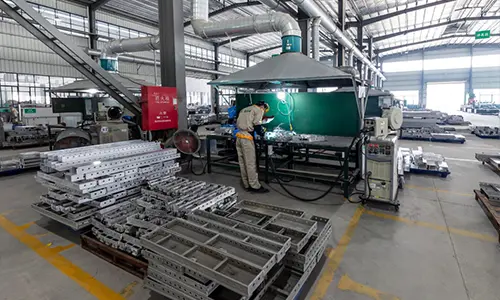
Elimination of Plastering and Reduction in Heavy Equipment Rental
The cost benefits of aluminium formwork extend well beyond the immediate labour of installation and stripping. Two significant sources of savings often overlooked in initial budget comparisons are the elimination of plastering requirements and the reduced dependency on heavy lifting equipment.
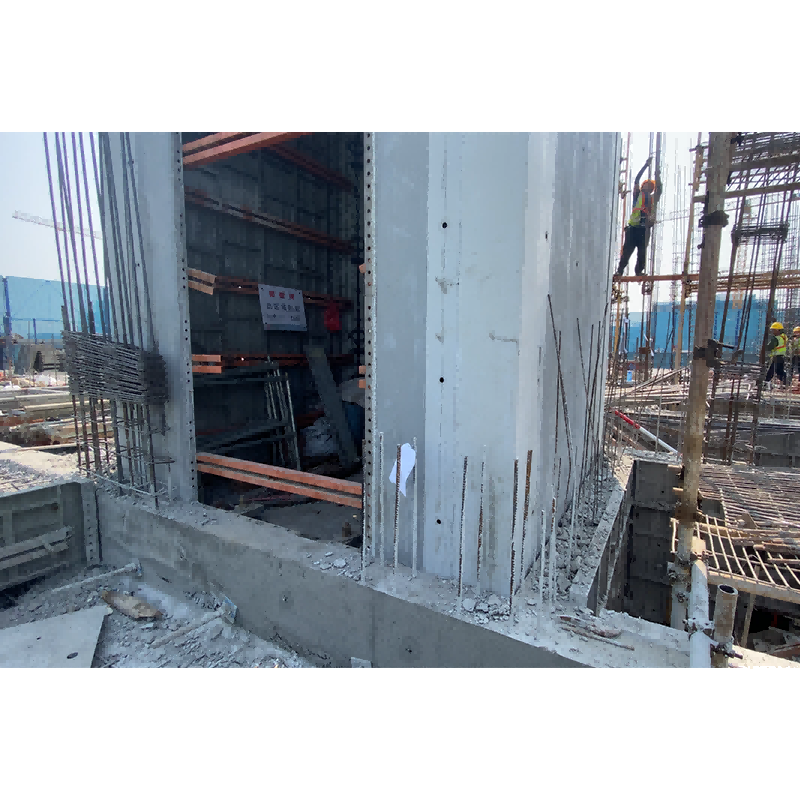
The precision engineering of aluminium formwork produces concrete surfaces with exceptional finish quality. Verticality and flatness can be consistently controlled within five millimetres, meeting what the industry terms a “fair-faced concrete finish” standard . This surface quality eliminates the need for plastering as a corrective measure on interior walls and ceilings, which is often required when using timber formwork due to its inherent surface irregularities and the greater variation in dimensional accuracy. Removing the plastering step saves both material costs and the labour of an entire trade crew, representing a substantial line item in the project budget.
Equipment costs also decrease. The lightweight nature of aluminium panels means that the installation process can be performed by hand for the majority of components, reducing the time that cranes and other lifting equipment need to be on hire . In timber formwork projects, the heavier panels and the need to transport bulk quantities of plywood and lumber to upper floors creates a near-continuous demand for crane time. Minimising this dependency not only reduces equipment rental costs but also frees up crane capacity for other critical tasks, potentially accelerating other work streams and reducing the overall project duration.
The Twenty-Storey Threshold: Identifying the Optimal Return on Investment
The economic advantages of aluminium formwork are not uniform across all project types. For a single-storey building or a low-rise structure with limited repetition, the upfront cost of an aluminium system may not be recoverable. Based on project experience, buildings with around 20 to 30 storeys or above, as well as developments consisting of multiple buildings with similar layouts, are generally considered suitable for maximizing the economic benefits of aluminium formwork. The overall project scale, repetition rate, and potential for future reuse should also be evaluated when selecting the most suitable formwork solution.Below this threshold, the number of use cycles may be insufficient to amortise the initial purchase cost to a level that beats the cumulative expense of multiple timber formwork purchases and the associated labour inefficiencies. At twenty storeys and above, the aluminium system has been used enough times that its per-use cost drops below that of timber, and the additional savings from reduced labour, eliminated plastering, and lower equipment rental begin to accumulate meaningfully.
Moreover, the residual value of aluminium formwork extends the economic benefit beyond the life of a single project. Unlike timber, which has minimal scrap value after its useful life, aluminium panels retain their material worth. The high recyclability of aluminium means that even after several hundred uses, the panels can be recycled, recovering a significant portion of the original material cost . This residual value can be factored into the total cost of ownership, further improving the investment case for aluminium systems.
For developers and contractors looking to maximise the return on their investment, the decision to adopt aluminium formwork is best made with a clear understanding of the project scale and repetition. Where the conditions align, the financial outcomes are consistently positive. GETO’s experience across numerous high-rise residential and commercial projects confirms that the combination of high turnover, labour efficiency, reduced finishing requirements, and material recyclability delivers a clear path to improved project economics. More information about the comprehensive GETO aluminium formwork system and its broader advantages is available for those considering the transition from traditional methods.