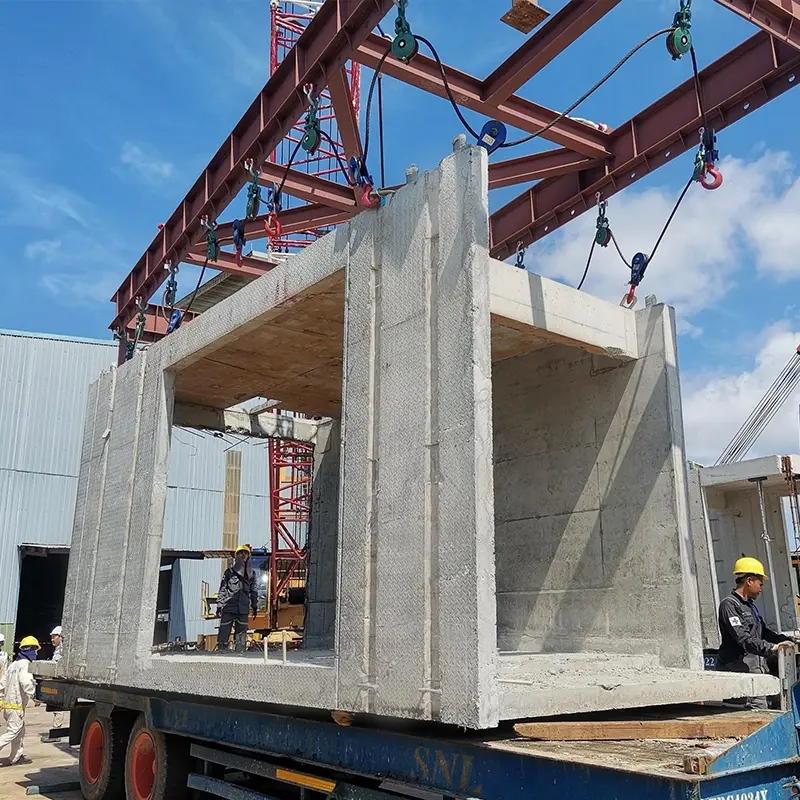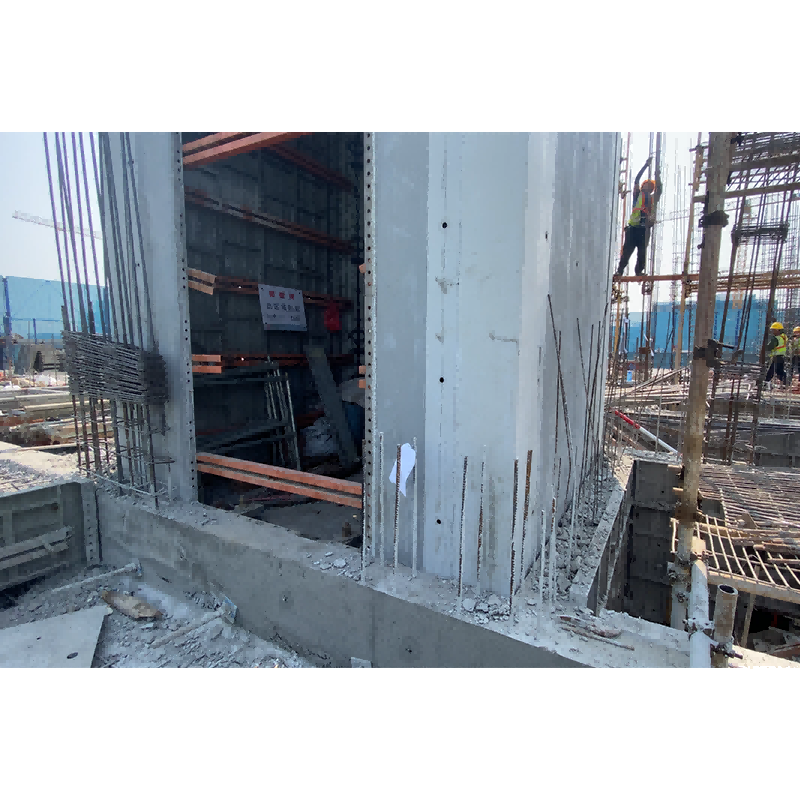

Choosing the right PPVC/MIC mold determines how fast a modular factory can produce, how accurately the modules fit together on site, and how much labour each cast requires. A mold is not a commodity: the series, the automation level, the dimensional tolerance, and the production capacity all change what you can build and what it will cost.
This guide explains the four factors that matter most when selecting a PPVC mold: the K/R/H series, manual versus hydraulic operation, tolerance, and capacity. If you are new to PPVC, start with the PPVC basics guide, then return here for the selection criteria.
What a PPVC mold does
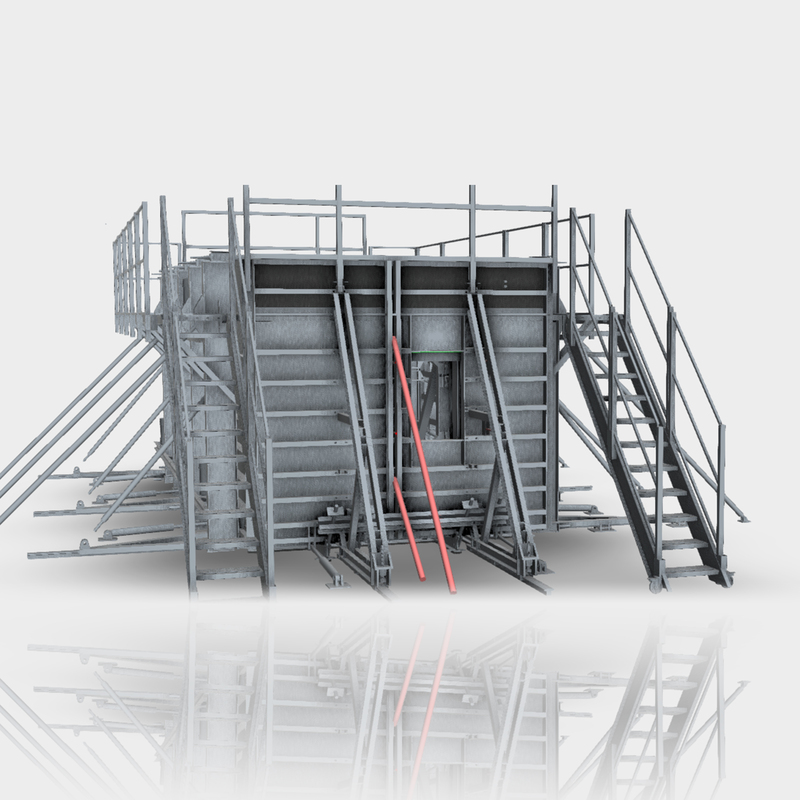
PPVC stands for Prefabricated Prefinished Volumetric Construction. A PPVC mold is a reusable steel formwork system that casts an entire room-sized volumetric module in a controlled factory environment. The system takes the whole room of a building as one module unit, completes the mold structure prefabrication in the factory, and transports the finished module to site for assembly. A PPVC/MIC mold can form the major structural components of a volumetric module—deck, side wall, base floor, door opening, and window—in a single cast.
GETO divides its prefabricated building molds into two groups. PPVC/MIC molds produce high-precision 3D volumetric modules, while PC component molds mass-produce 2D panelised elements such as walls, stairs, beams, and columns. This guide focuses on the 3D PPVC/MIC molds.
Selection factor 1: the K/R/H series
The first decision is which mold series matches the module geometry you need. GETO offers three series, each named for its structural configuration.
K Series is a semi-enclosed structure consisting of a horizontal bottom slab, a horizontal top slab, and three vertical walls. It suits modules where the fourth side is open or completed by another component.
R Series is a semi-enclosed structure consisting of a horizontal top slab and four vertical walls that form an integrated module. It suits room modules that need four finished walls and a top slab in one cast.
H Series is a semi-enclosed structure consisting of four vertical walls forming an enclosed or semi-enclosed module body, with no top or bottom slabs and cavity-free wall construction. It suits wall-frame modules where the floor and ceiling are handled separately.
The series affects how the mold opens and demoulds, so it also affects cycle speed and how much manual work is needed around the cast. Matching the series to the module type is the fastest way to avoid a mold that is overcomplicated for a simple module or too rigid for a complex one.
Selection factor 2: manual versus hydraulic operation
The second decision is the level of automation. GETO provides automated and non-automated mold systems, and the difference is mostly felt in labour, speed, and repeatability.
A non-automated (manual) mold system costs less in material, is easy to design, and uses mature technology. It is the right choice when initial investment is the priority and production volume is lower.
An automated (hydraulic) mold system uses a hydraulic control system and an automatic moving outer formwork to open, close, adjust, and demould the mold. The extendable steel structure and automated control system enable mechanical clamping and demoulding, reducing labour costs by over 40% compared to traditional steel formwork. Automation also improves dimensional consistency because the mold movements are repeatable rather than operator-dependent.
In practice, the choice comes down to volume and consistency. If a factory produces hundreds or thousands of the same module, the hydraulic system pays for itself through faster cycles, fewer workers, and tighter repeatability. If the programme is short or the module geometry changes often, a non-automated mold may be the more economical route. GETO also offers an aluminium formwork system option within the mold range, which has a short lead period, is easy to assemble and dismantle without cranes, and carries high scrap value.
Selection factor 3: tolerance
Tolerance is what makes volumetric construction work. Because modules must fit together precisely on site, small dimensional deviations turn into alignment problems, installation delays, and costly corrections. The mold is the single biggest control on that tolerance.
GETO PPVC/MIC molds are engineered for high-precision forming of 3D volumetric modules in a controlled factory environment, with dimensional accuracy, a superior surface finish, and batch consistency. The self-supporting internal and external frame system resists concrete side pressure without a tie-rod system, which reduces manual operations and improves the quality of the precast module. The finish reaches a fair-faced concrete effect, which reduces the risk of water leakage in the finished building.
The same precision discipline carries across the wider GETO precast range. For example, the dimensional deviation of floor slabs produced by GETO precast floor slab molds can be controlled within ±2mm. When you select a PPVC mold, ask the supplier how they hold tolerance across hundreds of repeated casts, because consistency between units matters as much as the accuracy of a single module.
Selection factor 4: capacity
Capacity determines whether the mold can support the project schedule. It is driven by automation, cycle time, and how many molds are turned over across the structural types on the project.
The clearest evidence of capacity is what GETO molds have already delivered. On the Yishun North Gaia project, GETO supplied 35 sets of automated molds and 17 sets of non-automated molds to cast 2,444 precast modules across 91 structural types in 11 towers. On the One Bernam project, 21 sets of automated molds were turned over to cast 38 precast modules. On the Piermont Grand EC project, GETO supplied 22 sets of PPVC molds for turnover in casting.
These examples show how capacity planning works in practice. A project with many structural types needs a mold strategy that turns molds over across types rather than dedicating one mold to one module. Automation increases the number of cycles a factory can complete in a day, while the mold design determines how smoothly modules are stripped, moved, and reset for the next cast.
Beyond the housing module
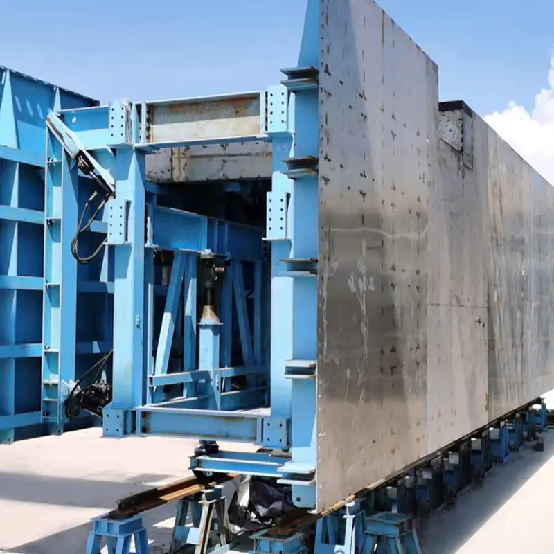
PPVC/MIC mold selection also extends to specialised units. GETO provides molds for prefabricated bathroom units (PBU), prefabricated household shelters (PHS), box culverts, pipe galleries, and lift shafts. The same four selection factors apply: the series must match the unit geometry, the automation level must match the volume, the tolerance must suit the installation interface, and the capacity must support the schedule.
A simple selection framework
Use the structure first, then confirm the other three factors.
- Match the series to the module. K Series for bottom-and-top slab modules with three walls, R Series for top slab plus four walls, H Series for wall-frame modules without top or bottom slabs.
- Match the automation to the volume. High, repeated volume favours an automated hydraulic mold; short or varied programmes favour a non-automated mold.
- Hold tolerance as a gate, not an afterthought. Confirm dimensional accuracy and batch consistency before committing, especially where modules must connect to MEP systems or adjacent units.
- Size capacity to the schedule. Count the structural types and required modules, then plan how many molds must be turned over to meet delivery.
Frequently asked questions
What is the difference between K, R, and H series PPVC molds?
The K Series has a bottom slab, top slab, and three vertical walls. The R Series has a top slab and four vertical walls forming an integrated module. The H Series has four vertical walls with no top or bottom slabs and cavity-free wall construction.
Should I choose an automated or non-automated PPVC mold?
Choose an automated hydraulic mold for high, repeated production where mechanical clamping and demoulding can cut labour by over 40%. Choose a non-automated mold when material cost and design simplicity matter more and volumes are lower.
How accurate are GETO PPVC molds?
GETO PPVC/MIC molds are engineered for high-precision forming, dimensional accuracy, and batch consistency in a controlled factory environment. Across the precast range, GETO precast floor slab molds hold dimensional deviation within ±2mm.
What types of modules can PPVC/MIC molds produce?
Beyond whole-room housing modules, GETO molds produce prefabricated bathroom units, household shelters, box culverts, pipe galleries, and lift shafts.
Select the right mold for your modular project
The best PPVC mold is the one that matches your module geometry, production volume, tolerance requirement, and delivery schedule. GETO provides PPVC/MIC precast housing molds with K, R, and H series, automated and non-automated systems, and project-proven capacity across high-rise residential and public housing projects.
Ready to discuss your modular construction drawings and select the right mold? Contact Us to talk with our engineering team, or visit www.getoformwork.com to explore the full product range.