
The selection of a formwork system represents a fundamental decision that ripples through every subsequent phase of a construction project. It influences the speed of construction, the quality of the finished concrete, the size of the workforce required, and ultimately, the bottom line. For decades, timber and steel dominated the formwork landscape, each with its own set of trade-offs. Timber offered familiarity but suffered from limited durability, while steel provided strength at the cost of significant weight and handling difficulty. The emergence of aluminium formwork systems has introduced a compelling alternative that addresses many of the limitations of its predecessors. This guide provides a comprehensive examination of the GETO aluminium formwork system, exploring its technical characteristics, economic advantages, and the ways in which it is reshaping construction practices across the globe.
What Is the GETO Aluminium Formwork System?
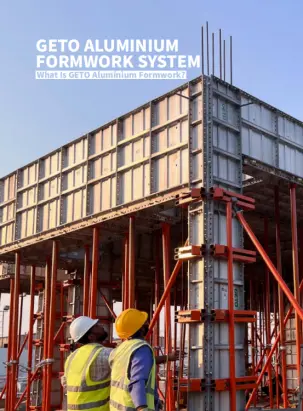
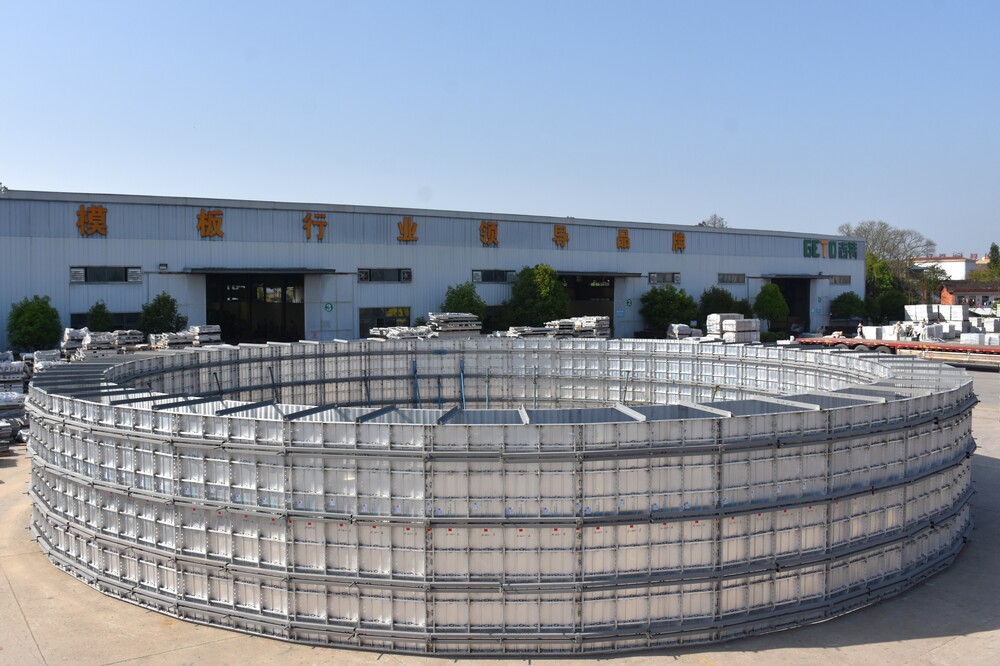
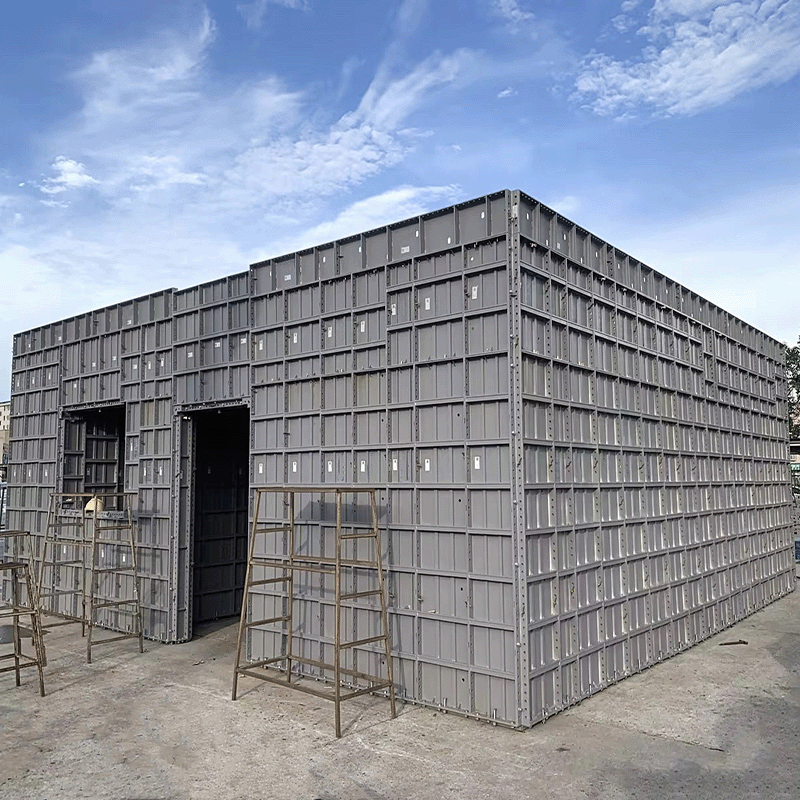
The GETO aluminium formwork system represents a new generation of construction formwork technology that provides an advanced alternative to traditional timber and steel formwork systems. At its core, the system consists of precision-engineered aluminium panels, connectors, and supporting components that assemble into a rigid mould for cast-in-place concrete structures. The aluminium alloy used as the primary material undergoes machining, welding, and finishing processes to create panels that can be freely configured according to different structural designs and dimensions.
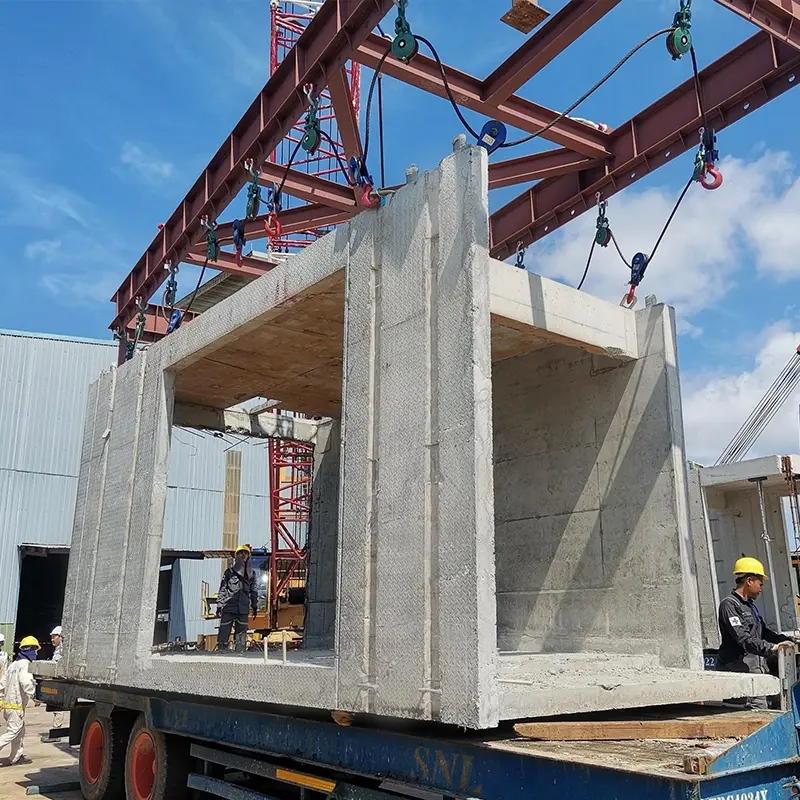
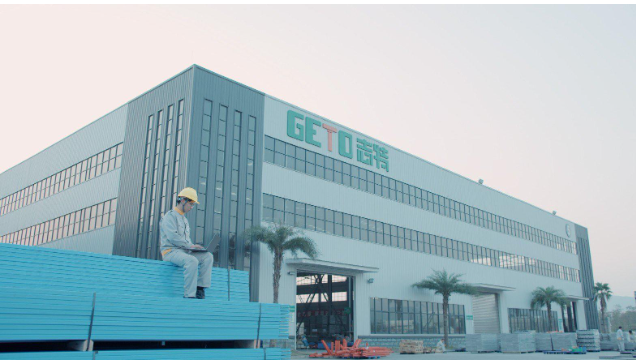
The system is designed for versatility, accommodating a wide range of construction types including residential buildings, villas, high-rise office towers, and infrastructure projects such as utility tunnels and subway stations. What distinguishes GETO's offering is not merely the material itself, but the comprehensive ecosystem of design, production, and technical support that surrounds it. As an A-share listed company with twelve production facilities and an annual production capacity of five million square metres, GETO has positioned itself as a significant player in the global formwork industry, with projects completed across more than sixty countries.
To provide a clear overview of the GETO system's positioning within the broader formwork landscape, the following table summarises the key distinctions between the major formwork types:
|
Parameter |
GETO Aluminium Formwork |
Timber Formwork |
Steel Formwork |
|
Material Weight |
Approx. 25 kg/m² |
Approx. 20-30 kg/m² |
Approx. 35-85 kg/m² |
|
Cycle Life (Reuses) |
200-300 cycles |
3-5 cycles |
30-40 cycles |
|
Labour Requirement |
Low; simple modular assembly |
High; requires skilled cutting and fitting |
Moderate to high; heavy panels require crane support |
|
Surface Finish |
Plaster-free; flatness within 5mm |
Requires plastering; irregular surface |
Good finish; susceptible to rust without treatment |
|
Typical Floor Cycle |
3-5 days |
8-12 days |
8-10 days |
|
Residual Value |
High; material is recyclable |
Low; minimal scrap value |
Moderate; scrap steel value |
Next-Generation Construction Formwork: The 6061-T6 Aluminium Alloy
The performance characteristics of the GETO aluminium formwork system derive largely from the material specification. The system utilises 6061-T6 aluminium alloy, a heat-treated grade known for its favourable combination of strength, formability, and corrosion resistance. This alloy exhibits a yield strength of 200 N/mm² and shear strength of 115 N/mm², providing sufficient structural capacity to withstand the pressures exerted by wet concrete during pouring and initial curing.
The 6061-T6 specification is not arbitrary. It represents a carefully selected balance between strength and workability. The material is processed through a complete extrusion method and joined using friction stir welding, a technique that produces strong, consistent welds without the defects that can arise from conventional fusion welding. The resulting panels weigh approximately twenty-five kilograms per square metre, significantly lighter than steel alternatives that typically range from thirty-five to eighty-five kilograms per square metre. This weight reduction has profound implications for handling, installation speed, and equipment requirements, as will be explored in subsequent sections.
Application Scenarios: Residential, Villa, and High-Rise Construction
The GETO aluminium formwork system demonstrates its strengths most clearly in projects with repetitive floor layouts and multiple storeys. The system is particularly well-suited to residential buildings, villas, hotels, office buildings, and high-rise structures of twenty storeys or more. The modular design enables consistent reuse across identical floor plates, with the economics improving as the number of repetitions increases.
The system adapts to various structural elements including walls, columns, beams, slabs, and staircases. For stair construction, the system offers a whole-moulding approach, with the ability to cast stairs in stages by opening selected portions of the stair cover panels to achieve higher quality forming results. For projects with specialised requirements, the system can integrate with timber formwork in areas where the use of aluminium would be economically unjustified, or with prefabricated components where the project design incorporates precast elements. This flexibility ensures that the system can be applied to a broad spectrum of building types without forcing the adoption of a single, rigid construction methodology.
Core Advantages: Why Choose Aluminium Formwork Over Timber?
The comparison between aluminium and timber formwork reveals differences that extend far beyond the initial material cost. While timber systems have long been the default choice for many contractors due to their low upfront expense and widespread availability, the cumulative costs and performance limitations associated with timber often make aluminium the more economical and practical choice for projects of sufficient scale.
Construction Speed: Completing a Floor Pour in 3 to 5 Days
Construction speed is a critical metric in project planning, directly affecting financing costs, labour deployment, and the ability to meet contractual deadlines. The GETO aluminium formwork system can support a 3-5 day floor cycle in well-managed projects. This represents a significant acceleration compared to traditional timber systems, which typically require eight to twelve days per floor cycle.
Several factors contribute to this speed advantage. The lightweight nature of aluminium panels allows workers to handle and position components manually, reducing the time spent waiting for lifting equipment. The modular design and standardised components enable rapid assembly and dismantling, with the process often described as being as straightforward as working with interlocking blocks. The precision engineering of the system ensures that panels fit together correctly the first time, minimising the need for on-site adjustments and rework that can consume substantial time in timber formwork projects. The high-strength aluminium construction also permits earlier stripping of the formwork, enabling faster cycling of the system to the next floor level.
Economic Efficiency: 200 to 300 High-Turnover Cycles and High Residual Value
The economics of formwork selection are heavily influenced by the number of use cycles a system can deliver. A standard timber formwork system typically achieves three to five cycles before the panels degrade to the point where they compromise concrete finish quality or structural integrity. Steel systems offer greater durability, with a typical lifespan of thirty to forty cycles, but their weight introduces handling inefficiencies that partially offset their longevity advantages.
Aluminium formwork fundamentally changes this equation. GETO systems are engineered to achieve between two hundred and three hundred cycles, and in some cases, the reuse potential extends even further depending on project conditions and maintenance practices. This longevity translates directly into per-use amortisation costs that are substantially lower than those of timber. For a project of twenty storeys or more, the investment in an aluminium system is spread across so many repetitions that the per-floor cost of the formwork itself becomes significantly lower compared to the cumulative expense of repeatedly purchasing and disposing of timber alternatives.
Beyond the longevity of the panels, the residual value of aluminium formwork provides an additional economic benefit. At the end of its useful life, the aluminium material can be recycled, recovering a significant portion of its original material value. This contrasts with timber formwork, which has minimal scrap value once the panels have been used and are no longer serviceable. The high scrap value of aluminium effectively reduces the total cost of ownership for the system, improving the overall return on investment.
Quality Assurance: Achieving Plaster-Free Surfaces with Vertical Flatness Within 5mm
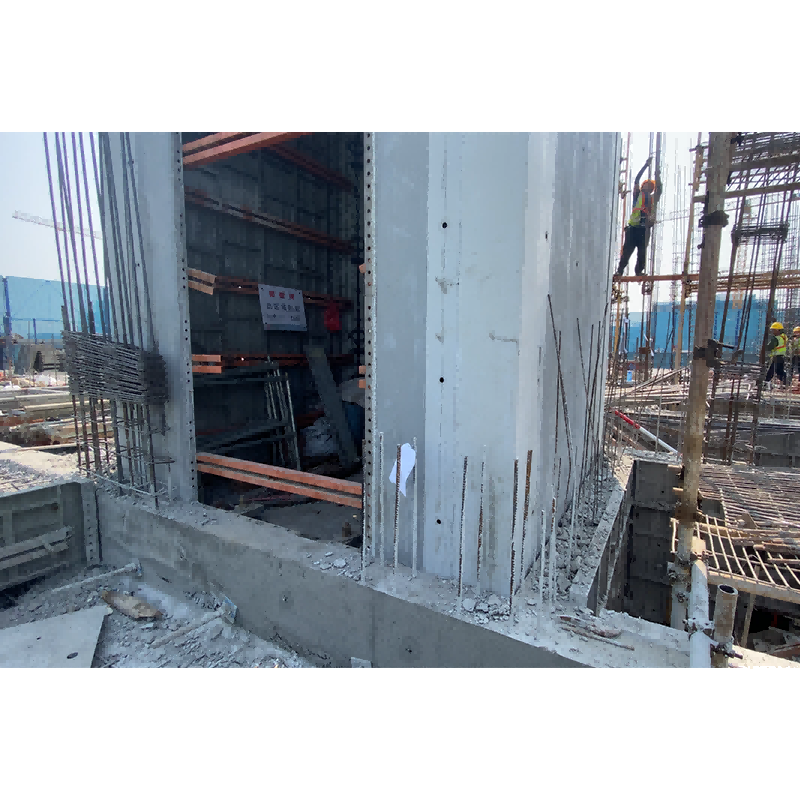
The quality of the concrete surface produced by a formwork system has implications that extend well beyond aesthetics. A smooth, precise surface reduces the need for plastering and additional surface treatment, saving both time and material costs. The GETO aluminium formwork system consistently achieves verticality and flatness within five millimetres, meeting the standards required for plaster-free interior and exterior walls.
This precision is made possible by the inherent stiffness of the 6061-T6 aluminium alloy and the careful engineering of the panel connections. The system minimises joints through the use of large, single-piece panels, reducing the potential for misalignment and surface imperfections. The high load-bearing capacity of the aluminium construction ensures that the formwork remains stable under the weight of wet concrete, maintaining dimensional accuracy throughout the pouring and curing process. The resulting surface has been described as achieving the effect of fair-faced concrete, with smooth walls that are ready for painting or other finishing treatments without the need for plastering.
GETO's Technical Foundation: Industrialisation and Digital Collaboration
The performance of the GETO aluminium formwork system is underpinned by a suite of digital tools and manufacturing capabilities that extend the reach of traditional formwork technology. These technical assets enable more efficient design, more accurate production, and more reliable installation than would be possible with analogue processes alone.
H3: Industrial 3D Design Software and Model Optimisation
The design phase of a formwork project is critical to its ultimate success. Errors or inefficiencies in the layout of panels and components can lead to installation difficulties on site, delays in the construction schedule, and unnecessary material costs. GETO has developed proprietary Industrial 3D Design Software, which incorporates automatic clash detection and assembly error checking. This system enables designers to optimise the formwork layout virtually, identifying and resolving potential issues before any physical production begins.
The software operates at a level of precision that ensures high accuracy in the panel layout. The 3D modelling capability allows for detailed visualisation of the formwork assembly, facilitating communication between design teams and on-site personnel. The integration of 3D design with the formwork planning process represents a departure from the traditional approach, where design and construction were more loosely coupled. The result is a more streamlined workflow that reduces the risk of errors and the need for costly corrections during the construction phase.
QR Code Management: Achieving Precise On-Site Assembly
The transition from digital design to physical construction presents its own set of challenges. The GETO system addresses these through a QR code management system that links each formwork panel to its designated position in the overall assembly. Each panel is assigned a unique code that can be scanned on site, allowing installation workers to quickly locate the correct panel and confirm its placement according to the construction drawings.
This system has practical advantages for workforce deployment. Workers can be brought up to speed relatively quickly, as the QR code system provides clear guidance on panel placement without requiring extensive experience with the system. The reduction in reliance on highly experienced, specialist labour is a significant benefit in markets where skilled formwork installers are in short supply. The QR code approach also supports quality control by enabling the tracking of individual panels, facilitating maintenance and inventory management over the life of the system.
Friction Stir Welding and Manufacturing Precision
The manufacturing process for GETO aluminium formwork panels incorporates friction stir welding, a solid-state joining technique that produces welds of exceptional quality. Unlike conventional fusion welding, which melts the base materials and can introduce porosity, cracking, or distortion, friction stir welding generates heat through mechanical friction between a rotating tool and the workpiece. The material softens but does not melt, allowing the tool to forge a strong, homogeneous joint.
This technique delivers several advantages for formwork panel construction. The weld quality is consistent and free from the defects that can compromise the structural integrity of conventionally welded panels. The absence of melting means that the heat-affected zone is narrower, preserving the mechanical properties of the 6061-T6 alloy. The resulting panels exhibit flat, smooth surfaces at the joints, contributing to the overall surface quality of the cast concrete. The precision of the friction stir welding process also ensures that panels maintain their dimensional accuracy over hundreds of use cycles.
Full-Chain Services: From Design to On-Site Technical Guidance
The adoption of an aluminium formwork system involves more than the purchase of physical panels and components. The success of the system on a particular project depends on the quality of the design provided, the accuracy of the manufacturing, the logistics of delivery, and the availability of technical support during installation. GETO offers a comprehensive service model that addresses each of these areas.
One-Stop Solutions: Covering R&D, Production, Transportation, and After-Sales
The GETO service offering spans the entire lifecycle of the formwork system. This begins with system design, where the GETO team works with the project stakeholders to develop a formwork layout that optimises the use of the system while accommodating the specific structural requirements of the building. The design phase includes the selection of appropriate panel types and sizes, the configuration of the reinforcing and bracing system, and the preparation of detailed installation drawings.
Production is handled at one of GETO's twelve manufacturing facilities, with a total annual capacity of five million square metres. The production process involves the extrusion of aluminium profiles, cutting to length, punching, grooving, welding, and full inspection before the panels are prepared for shipment. For projects where additional assurance of fit is required, factory pre-assembly can be carried out before the panels are transported to the site.
The transportation and logistics function ensures that panels and components arrive on site according to the project schedule. For international projects, GETO can arrange for production at the nearest facility to minimise lead times and freight costs. On-site technical guidance is available to support installation teams during the initial setup of the system, helping to ensure that the formwork is assembled correctly and safely. The after-sales service includes ongoing technical support and maintenance advice, helping to maximise the lifespan and performance of the system.
Frequently Asked Questions About Aluminium Formwork Systems
The following section addresses common questions that project managers and contractors raise when evaluating aluminium formwork for their construction projects.
How does the initial cost of aluminium formwork compare with timber?
The upfront procurement cost of an aluminium formwork system is higher than that of timber. A complete aluminium system represents a significant capital investment, whereas timber can be purchased in smaller quantities as needed for each floor. The comparison, however, should account for the full project duration. For a high-rise building with twenty or more storeys, the aluminium system is used repeatedly across all floors, spreading the initial cost across hundreds of pours. Timber, by contrast, must be replaced every three to five cycles, meaning that multiple sets of timber formwork are purchased over the course of the same project. When the cumulative cost of multiple timber purchases, the labour inefficiencies, and the plastering requirements are factored in, aluminium often emerges as the more economical choice for projects of sufficient scale.
What is the typical lead time for GETO aluminium formwork production?
Lead times vary depending on the project size, the complexity of the design, and the production facility location. For standard residential projects with repetitive floor layouts, the design and production phase typically ranges from four to eight weeks. This includes the time required for the Industrial 3D Design Software to generate the panel layout, the production of the panels at the manufacturing facility, and the quality inspection process. For projects requiring factory pre-assembly before shipment, the lead time may be extended by one to two weeks. GETO's twelve production facilities across multiple regions allow for shorter logistics times for international projects, as panels can be manufactured at the facility nearest to the project site.
Can aluminium formwork be used for curved walls or non-standard geometries?
The standard GETO aluminium formwork system is designed primarily for straight walls, columns, and slabs with regular geometries. For curved walls or structures with complex shapes, the system can be adapted through the use of custom-fabricated panels. The design team works with the project specifications to develop panels that match the required curvature, using the 3D design software to verify the fit and structural integrity of the custom configuration. For projects where only a small portion of the structure involves curved elements, the aluminium system can be combined with timber formwork in those specific areas, allowing the bulk of the project to benefit from the efficiency of the aluminium system while accommodating the special requirements through supplementary timber.
How much training do workers need to use the aluminium formwork system?
One of the advantages of the GETO system is the relatively short learning curve for installation crews. The modular design and the QR code management system allow workers to identify each panel's correct position from the construction drawings. After proper training, typical installation team can become proficient in the assembly process within one to two floor cycles. This is substantially shorter than the learning curve associated with timber formwork, which often requires skilled carpenters with years of experience to achieve efficient and accurate installation. The GETO system includes on-site technical guidance during the initial setup, helping the installation team to become familiar with the procedures and to address any questions that arise during the first floor pour.
What maintenance is required to achieve 200 to 300 use cycles?
Achieving the full reuse potential of an aluminium formwork system requires a program of regular maintenance and careful handling. After each use, the panels should be cleaned to remove concrete residues that can accumulate on the surface. The application of a release agent before each pour prevents concrete from adhering to the aluminium, facilitating clean stripping and preserving the surface finish. Damaged or worn components, such as connectors or bracing elements, should be replaced promptly to prevent them from affecting the performance of the system. With appropriate maintenance, the panels can achieve two hundred to three hundred cycles, and in many cases, the system continues to perform well beyond this range. GETO provides maintenance guidance as part of its after-sales service, helping customers to maximise the lifespan of their investment.
Is aluminium formwork suitable for cold weather or extreme climates?
The 6061-T6 aluminium alloy used in GETO systems performs well across a wide temperature range. The material retains its mechanical properties in cold conditions, and the dimensional stability of the panels is not affected by temperature fluctuations that would cause timber to warp significantly. In cold weather, the same precautions that apply to any formwork system should be observed, including the use of appropriate curing methods to protect the concrete from freezing. The lightweight nature of the aluminium panels also offers an advantage in cold conditions, as the reduced weight makes handling easier for workers wearing heavy protective clothing. For projects in extreme heat, the aluminium panels should be managed in the same way as any formwork system, with attention to the curing conditions for the concrete to prevent rapid moisture loss.
What is the scrap value of aluminium formwork at the end of its service life?
The aluminium material used in the formwork panels has inherent value as a recyclable commodity. At the end of the system's useful life, after hundreds of cycles have been completed, the panels can be sold to metal recycling facilities. The scrap value of aluminium is determined by market prices, which fluctuate, but it typically recovers a meaningful portion of the original material cost. This residual value is unique among formwork materials. Timber formwork has negligible scrap value and often incurs disposal costs. Steel formwork offers some scrap value, but the weight of steel means that transport to recycling facilities is more expensive. The high scrap value of aluminium, combined with its long service life, contributes significantly to the overall economic case for aluminium formwork systems.
How does the GETO system support sustainability goals in construction?
Sustainability in construction encompasses material efficiency, waste reduction, and the responsible use of resources. The GETO aluminium formwork system contributes to sustainability objectives in several ways. The high reuse rate of two hundred to three hundred cycles means that a single set of panels serves the needs of an entire high-rise project, eliminating the waste generated by the repeated purchase and disposal of timber formwork. The elimination of plastering reduces the consumption of cement and sand, materials with significant environmental footprints. At the end of its service life, the aluminium panels are fully recyclable, with the material returning to the supply chain for use in new products. These attributes make aluminium formwork a choice that aligns with the growing emphasis on sustainable construction practices.
Summary: How Aluminium Formwork Enhances Overall Construction ROI
The decision to adopt an aluminium formwork system is not merely a technical choice; it is an investment decision with implications for project cost, schedule, and quality. The GETO aluminium formwork system offers a combination of attributes that directly contribute to a positive return on investment for the projects where it is deployed.
The economic benefits are multi-faceted. The high reuse rate of two hundred to three hundred cycles allows the initial investment to be amortised over a large number of pours, reducing the per-use cost of the formwork to levels that timber systems cannot match. The reduced labour requirement, with savings of approximately thirty-five percent compared to timber systems, reduces one of the largest variable costs in construction. The elimination of plastering saves the labour and material costs associated with finishing walls and ceilings. The reduced reliance on lifting equipment lowers rental costs and frees up crane capacity for other tasks.
The schedule benefits are equally significant. The ability to complete a floor pour in three to five days accelerates the construction timeline, reducing financing costs and enabling earlier occupancy or sale of the completed building. The quality benefits, including the plaster-free concrete surfaces, enhance the marketability of the finished product and reduce the risk of defects that could lead to costly repairs or disputes.
The GETO system is further strengthened by the digital and service infrastructure that supports it. The Industrial 3D Design Software and QR code management system reduce the risk of installation errors, while the full-chain service model ensures that technical support is available when needed. The combination of these factors positions the GETO aluminium formwork system as a solution for projects where efficiency, quality, and cost control are paramount. For contractors and developers seeking to improve their construction outcomes, the adoption of a well-designed aluminium formwork system represents a proven path to enhanced project performance. To explore the full range of capabilities and project applications, visit the GETO aluminium formwork system product page.